Jeremy Grantham says US stocks may not recover for 20 years and Wall Street knows it
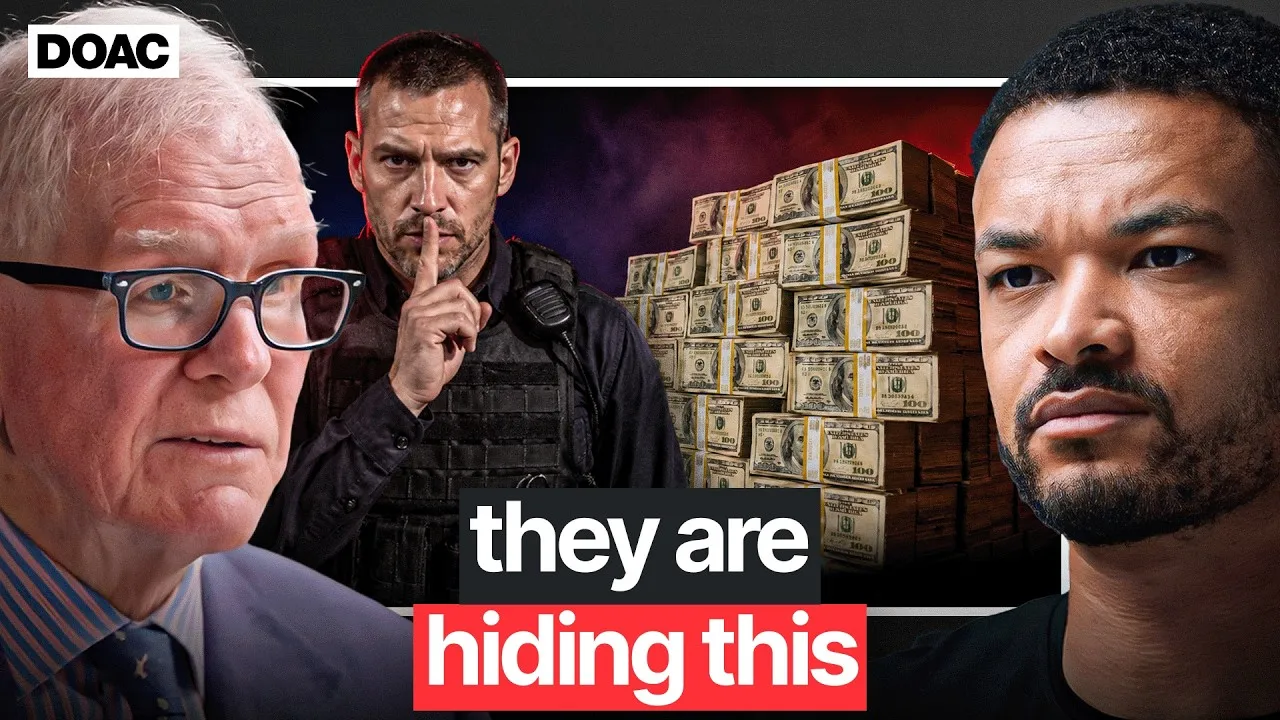
The veteran investor who called the 2000 and 2008 crashes says a 70% decline in US tech stocks would not be unexpected, and your financial advisor will never warn you.
Listen on YouTube · Spotify · Apple Podcasts
 WATCH NOW↓
 Jeremy Grantham thinks a 70% crash in US tech stocks would not be unexpected. He also thinks it might not matter, because the more alarming number is not the drop but the wait: 20 years, possibly 35, before you get your money back. That is what happened in Japan after 1989, and Grantham, who has spent 50 years watching markets inflate and implode, considers Japan the relevant comparison, not the dot-com bust, not 2008.
On this episode of Diary of a CEO, Grantham tells host Steven Bartlett that the US market today may be more overpriced than it was at the peak of the 2000 tech bubble. The NASDAQ fell 82% from that peak. Grantham is not predicting an exact repeat. He is saying the math is worse this time.
The Betrayal on the Podium
The most damning thing Grantham says is not about markets. It is about the people paid to explain markets to you. He describes a debate he had at a financial industry conference in 1999, just before the tech crash. He asked 400 professional analysts whether a reversion from 31 times earnings to a more normal 17 times would guarantee a major bear market. All 400 said yes. He then asked whether they thought that reversion would happen. Ninety-nine percent said it would.
The engine room who worked for them, the guys doing the analysis, doing the work, all believed in data that guaranteed a major bare market, which happened. But the people who employed them or represented them from a marketing point of view were on the podium with me saying, ‘Oh, Jeremy, Jeremy, don’t get excited. We’ll muddle through quite nicely.’ It was a huge betrayal of trust, if you wanted to put it that way.
His explanation for why nothing has changed is structural and brutal: if you manage other people’s money and you tell them to get out, you lose the fee. You lose it today, immediately, whether you turn out to be right in 18 months or not. He is not accusing Goldman Sachs of lying out of malice. He is accusing them of something harder to fix: a business model that makes honesty too expensive.
You will not receive the advice from investment advisors to get your tail out of the market ever. It is not good business for them to do that and they will not ever say it to you.
What He Actually Thinks You Should Do
Grantham’s practical advice is almost aggressively boring: bonds, cash, a little gold and silver, real estate only if you already own it, and if you must hold stocks, hold them outside the United States. Foreign and emerging market equities, he says, are genuinely cheaper and have already outperformed US stocks since the start of last year. His phrase for the US alternative is blunt.
I am not confident that US equities will be intact in 5 years, 10 years.
That is a sentence worth sitting with. Not ‘US stocks may underperform.’ Not ‘expect a correction.’ Intact. He uses the word intact.
On AI, he refuses to play oracle. He notes, with some apparent pleasure, that Nobel Prize winners violently disagree with each other on whether artificial intelligence will make everyone rich or accidentally destroy civilization, and that this is unusual, because usually the academics and the practitioners at least cluster into camps. On AI, even the people inside the same companies disagree. His skepticism of the AI-inflated valuations is clear; his willingness to bet against the technology itself is not.
Is Grantham right? His track record is genuinely exceptional. He is also famously early, which in markets is another word for wrong until suddenly it isn’t. His own firm lost half its clients in 1999 for warning about the bubble two and a quarter years before the crash vindicated him. The timing problem is real. But ‘he might be early’ is a very different rebuttal than ‘he is wrong,’ and the episode does not produce anyone to make the second argument. Bartlett mostly nods. That is not a flaw in the episode. It is a flaw in the available counterarguments.

Jeremy Grantham says investors should wish SpaceX fails because success would supercharge AI robots
The billionaire investor gives Steven Bartlett the rare anti-hype SpaceX take, then tells him his own stake may be sitting on a bubble story.

Jeremy Grantham says median male sperm count will hit zero by 2045
The billionaire fund manager behind GMO has spent decades tracking civilizational collapse, and he thinks the most urgent one fits in a test tube.

Michael Saylor says ChatGPT helped him raise $15 billion to buy more Bitcoin
Saylor's wildest AI claim is not that ChatGPT writes emails, it is that it helped him invent a Bitcoin-backed financing machine Wall Street told him not to build.

Nate Soares says humanity would be lucky to have 10 years unless we stop building superintelligence
The AI safety researcher’s doomsday clock is blunt, but his stronger argument is that a global pause might actually be enforceable because frontier AI training is huge, scarce and visible.
The circuit, read weekly. No noise.