John Lennox Told Peter Singer That Atheism Is a Faith, and the Internet Lost Its Mind
The Oxford mathematician and Christian apologist sits down with Steven Bartlett and refuses to give easy answers, which turns out to be the most persuasive thing he can do.
Listen on YouTube · Spotify · Apple Podcasts
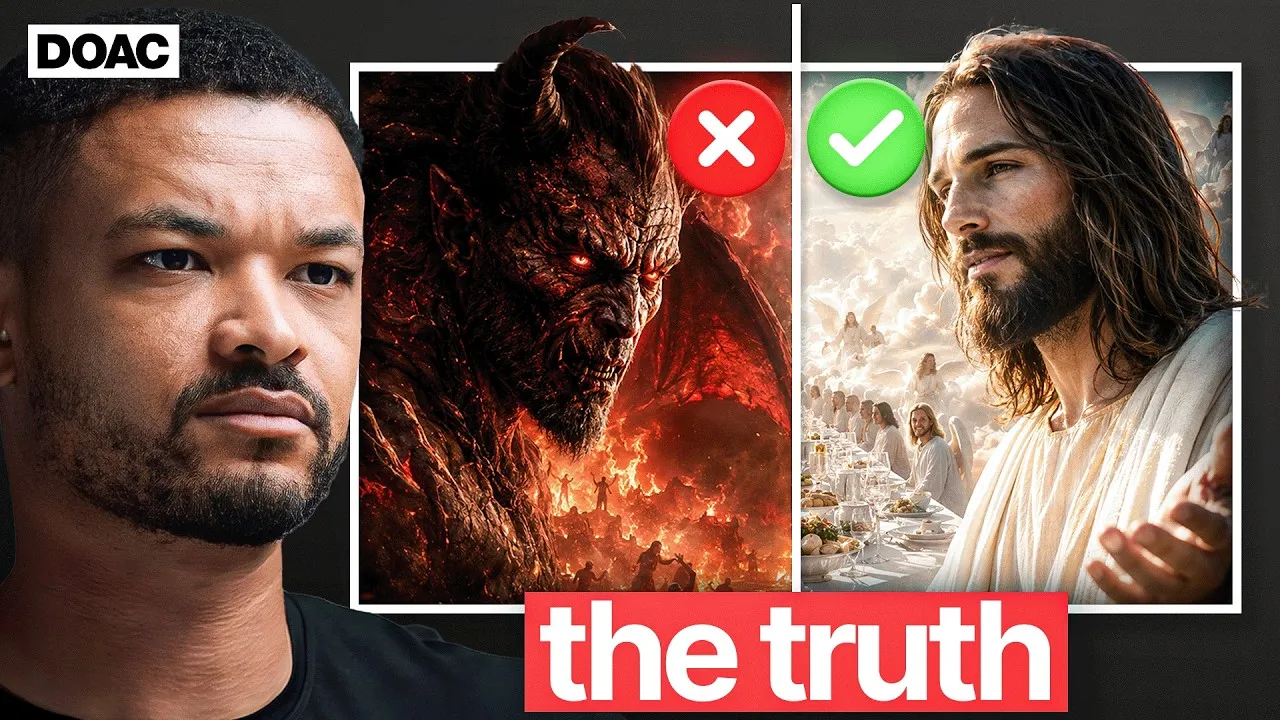 WATCH NOW↓
 Peter Singer walked into a debate in Australia, waited for John Lennox to finish explaining his Christian upbringing, then stood up and said that his best objection to religion is that people simply stay in the faith they were raised in. Lennox let him finish. Then he asked Singer whether his own parents had been atheists. They had. ‘Oh,’ Lennox said, ‘then you remained in the faith in which you were brought up.’ The cyberspace, as Lennox puts it with wonderful period-specific energy, went mad.
Here’s one of the world’s top philosophers. He doesn’t understand that his atheism is a belief system.
That is the move Lennox keeps making across this conversation with Steven Bartlett, and it never really gets old. He is not a preacher. He is a mathematician who treats the existence of God like a proof by contradiction, poking at the premises until something gives. When Bartlett, a self-described agnostic and former teenage Richard Dawkins fan, lays out the classic objections, Lennox does not dodge them. He sits with them. The baby born with a parasite eating its eye from the inside. The birth-lottery problem. Hell for the uninformed. He says, more than once, that he finds these questions genuinely hard and has no satisfying answers. For an apologist, that admission lands harder than any argument.
The Resurrection Is Either Everything or Nothing
Lennox’s actual position, once you strip the pleasantries, is maximalist. He thinks the resurrection of Jesus is either the most important event in the history of the universe or it is nothing. There is no middle ground he will accept. He recalls Dawkins wrapping up their first debate by calling any talk of the resurrection ‘petty, parochial, unworthy of the universe.’ Lennox’s response, delivered with the quiet timing of a man who has been doing this for fifty years, is simple: if it happened, it is the opposite of small. It is the one data point that changes the whole moral calculus of children dying in pain. Not an explanation. A promise of compensation.
Once you remove God, that child, there’s no hope for it. It’s dead, gone, out, nothing. But suppose God can compensate that child because he has the power to raise from the dead as he did with Jesus. That changes everything for me.
You can push back on this, and Bartlett mostly does not, but the logic is at least internally consistent in a way that fire-and-brimstone Christianity rarely is. Lennox is not offering a God who is obviously good by human standards. He is offering a God whose goodness operates at a scale and timeframe we cannot audit from here. That is a much harder claim to dismiss, and he knows it.
On Feeling Good vs. Knowing Things
The sharpest friction in the episode comes when Bartlett, being genuinely fair-minded, points out that the psychological research shows devout Muslims and devout Hindus report the same gains in meaning and peace as devout Christians. Same boost, different deity. This should be uncomfortable for Lennox. He does not fully escape it. He questions how you measure such things, insists his own experience of peace through Christian forgiveness is qualitatively different, and then adds, carefully, that a positive feeling reinforces truth but does not prove it. Bartlett notes, with real dryness, that fiction films have also made him feel deeply connected and motivated. Lennox concedes the point. That exchange, brief as it is, is more honest than most religion podcasts manage in an hour.
Bend over backwards to criticize yourself because you are the easiest person for yourself to deceive.
He is quoting Richard Feynman there, physicist and committed non-believer, in service of his own faith. That is either the most intellectually honest thing a Christian apologist has said on a podcast this year, or the cleverest rhetorical judo. Maybe both. Lennox, who once said goodbye to his wife before going under for surgery fourteen years ago and came out the other side in what he describes as ‘total peace,’ is not performing any of this. He has been thinking about it for decades. Whether that makes him right is a different question entirely. But it makes him worth listening to.
John Lennox Says Transhumanists Are 2,000 Years Late to Solving Death
The Oxford mathematician makes his case that AI is idolatry, atheism is self-defeating, and Christ already beat Silicon Valley to the resurrection.
John Lennox says transhumanists are too late because Jesus already solved death
The Oxford mathematician and Christian apologist turns Silicon Valley’s dream of defeating death into a setup for Easter.
John Lennox on Hell, AI, and Why the Output Is Not the Point
The Oxford mathematician and Christian apologist comes to Diary of a CEO to argue that consciousness, not computation, is what separates humans from machines, and that hell is something you choose.

Michio Kaku Calls Genesis a Fairy Tale and Then Explains Why That's Fine
The theoretical physicist comes to the Diary of a CEO to talk immortality, nuclear annihilation, and why the Bible is a metaphor he actually respects.
The circuit, read weekly. No noise.