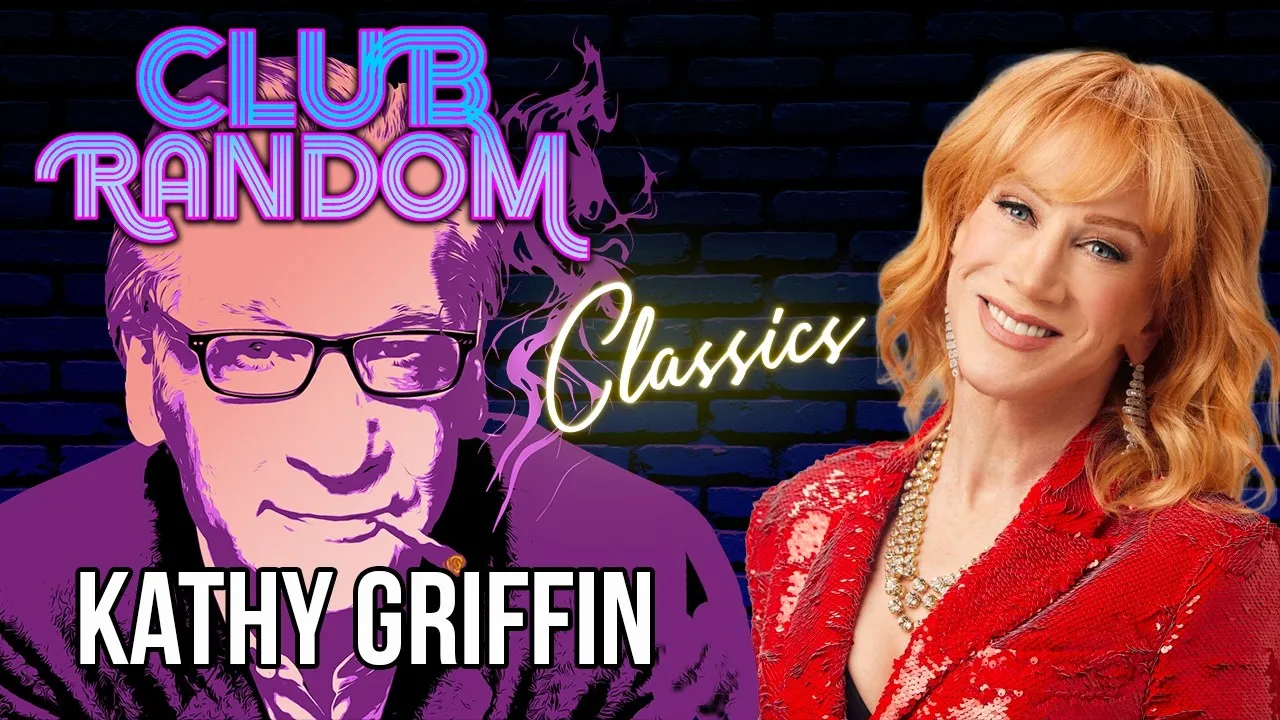
Kathy Griffin says she hasn't been in the black for six years since the Trump head photo
On Club Random, Griffin makes the cancellation sound less like a scolding and more like a long, expensive layoff with lawyers.
Listen on YouTube
 WATCH NOW↓
 Kathy Griffin’s cancellation, by her accounting, was not a bad week on Twitter. It was six years of not being profitable, being sued, losing buyers, losing friends, and discovering that Hollywood’s favorite moral posture is distance.
That is the claim that gives this Club Random classic its charge. Not the Trump head photo itself, which has been argued to death by people who still say “the discourse” like it pays rent. The new part is Griffin describing the afterlife of the scandal as a financial purgatory. Not “I was misunderstood.” Not “people were mean.” She says the work stopped, the money stopped making sense, and the punishment lasted long enough to become an operating system.
I haven’t been in the black for six years now. I’m not crying poor. I’ve done well. All this other stuff. I’m thrilled.
That “I’m not crying poor” is doing important comedy-person damage control. Griffin knows exactly how fast an audience can turn on a rich celebrity complaining about money. But the claim is still sharp. She is not saying she became destitute. She is saying that the business of being Kathy Griffin stopped working after the 2017 Trump photo, the infamous image that got her investigated by the Department of Justice, the U.S. Attorney’s Office, and the Secret Service, according to her telling here.
Bill Maher, who has built a second career out of telling people they are overreacting, is not in “well actually” mode with Kathy Griffin. He calls the response stupid at the time and stupider in retrospect. The two of them are not exactly ideological twins, which helps. This is not a mutual victimhood spa day. It is two comics, both allergic to apologies that look like hostage videos, comparing notes on what happens when a joke becomes a federal-feeling event.
The cancellation was a payroll problem
Griffin’s most convincing detail is not moral. It is logistical. Buyers got scared. Networks, streamers, theaters, anyone who might have bought “the Kathy Griffin product,” in her phrase, treated her as radioactive. That is how celebrity cancellation usually works in practice. Not one dramatic guillotine. A hundred people quietly deciding they don’t want the meeting, the email, the board call, the angry patrons, the lobby backlash. Death by “circle back.”
It’s like if somebody had just turned off your phone and if you went from this life that you live today and look you got a million gigs but I’m just saying I was busy and to have no one call for six years that’s that is a per that is a purgatory you know
There is self-interest here, obviously. Griffin is selling a comeback story, and comeback stories need a villain, preferably one wearing a red hat and carrying a process server. But the shape of her argument is credible because she keeps returning to specifics. The Mirage. The lawyers. The offers to do charity events for free. The way being “helped” by the industry can mean being asked to work without pay so everyone else can feel generous.
I think it’s a significant thing that it’s my first gig I’ve had in six years where they actually offered me the money they did six years ago.
That is the cleanest business read in the episode. Griffin sees Vegas as a market test. If a Mirage booking pays like the old days, then maybe the industry has decided she is safe again. Not beloved. Not forgiven. Safe. In American entertainment, safe is often better than loved. Safe gets a contract.
The lawsuits are the sequel nobody wants
The real grind in Griffin’s story is legal, which is also where the saga gets uglier than the usual cancel-culture cartoon. She says she still has two active suits and has been sued by MAGA-connected people over comments she made online. One involved families connected to Covington Catholic High School. Another, she says, involved a man in Franklin, Tennessee, after she commented on a video of him harassing a trans kid at a prom. There was also a neighbor, whom she describes as a Trump supporter, caught on her home camera threatening her.
I have been in a lot of legal battles for the last six years. So, I still have two active suits. I’ve been sued by MAGA folks.
This is where the “cancellation” label starts to feel too cute, like calling a kitchen fire a vibe shift. Griffin is describing years of professional freeze-out plus litigation. Maher, to his credit, does not try to sand it into a neat free-speech monologue. He lets the money and stress sit there. He even floats the mind-body connection, suggesting, while flagging it as pure conjecture, that extreme stress may have played a role in her lung cancer worsening.
Griffin does not run away from that idea. She says the tumor had been there since 2009 and had not grown, then suddenly doubled in size, leading to surgery that removed half her left lung and damaged her vocal cord. That is not proof of causation, and Maher should not be mistaken for an oncologist just because he owns a microphone and conviction. But as a human detail, it lands like a brick. Her voice, literally, carries the aftermath.
The comeback is not a sainthood tour
What keeps Griffin from sounding like a pure martyr is that she is still Kathy Griffin, which is to say, incapable of leaving a bruise unpoked. She talks about Anderson Cooper, Brooke Shields, Stormy Daniels, Harry and Meghan, cancer jokes, and working with a writer for the first time. She knows her fans do not come to see a repentant nun. They come for the gossip with a shiv in it.
The verdict on her big claim: probably true in spirit, impossible to audit from the couch. “Not in the black for six years” is not the same as “I had no money,” and she is careful enough to say so. But the broader point, that the Trump photo turned a very bookable comic into a liability for buyers, is supported by the concrete details she gives and by the fact that her return is being framed around one thing entertainment executives understand better than justice: the old rate.
If she is right, the lesson for listeners is bleakly practical. A public scandal does not have to end your career forever to wreck six years of your working life. Sometimes the outrage machine moves on, and the invoice stays with you.
- What did Kathy Griffin say happened to her finances after the Trump head photo?
- Griffin says she has not been in the black for six years, meaning the fallout was not just bad press or hurt feelings. Her version is that buyers, venues, and networks stopped treating her as a normal bookable comic, while legal bills kept piling up.
- Does Kathy Griffin think her Vegas booking means the cancellation is over?
- She treats the Mirage gig as a signal, not a victory lap. Her point is that Vegas is cautious and commercial, so being offered the kind of money she got before the scandal tells her the market may finally be thawing.
- Is Bill Maher sympathetic to Kathy Griffin in this conversation?
- Yes, unusually so for a man who tends to turn every grievance into a seminar on America going soft. Maher thinks the punishment was wildly out of proportion and even suggests, as conjecture, that the stress may have worsened her health.
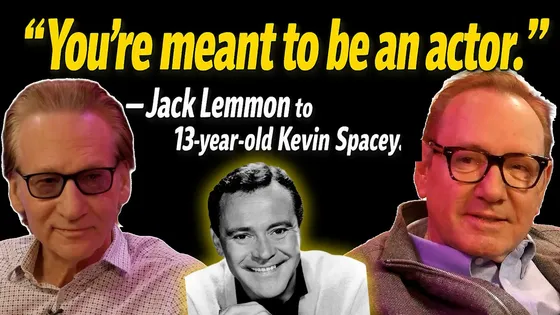
Kevin Spacey says Netflix is shelving Gore, a completed Gore Vidal movie he calls one of his best films
Spacey told Bill Maher that Netflix should release or give up the finished Gore Vidal film, and he made the pitch with maximum self-interest and one genuinely sharp point.
Kevin Spacey says Netflix has shelved his completed Gore Vidal film and should give it to Paramount
On Club Random, Spacey made his cleanest case for a comeback by arguing that Netflix is punishing an entire finished movie over allegations against him.
Jack Whitehall says Channel 4 pulled his show at 11 p.m. because Michael Jackson died after it had a pedophile sketch about him
On Club Random, Whitehall described the sort of pre-smartphone comedy near-disaster that now sounds less like showbiz lore than a deleted scene from Broadcast Standards Hell.
Bill Maher says his high school talent show was canceled after he stole a risqué Johnny Carson joke
Maher’s first cancellation story is less a free-speech epic than a very on-brand origin myth: a teenage comic, a Carson bit, and a room full of parents who were not having it.
The circuit, read weekly. No noise.