Kevin Spacey says Netflix has shelved his completed Gore Vidal film and should give it to Paramount
On Club Random, Spacey made his cleanest case for a comeback by arguing that Netflix is punishing an entire finished movie over allegations against him.
Listen on YouTube
 WATCH NOW↓
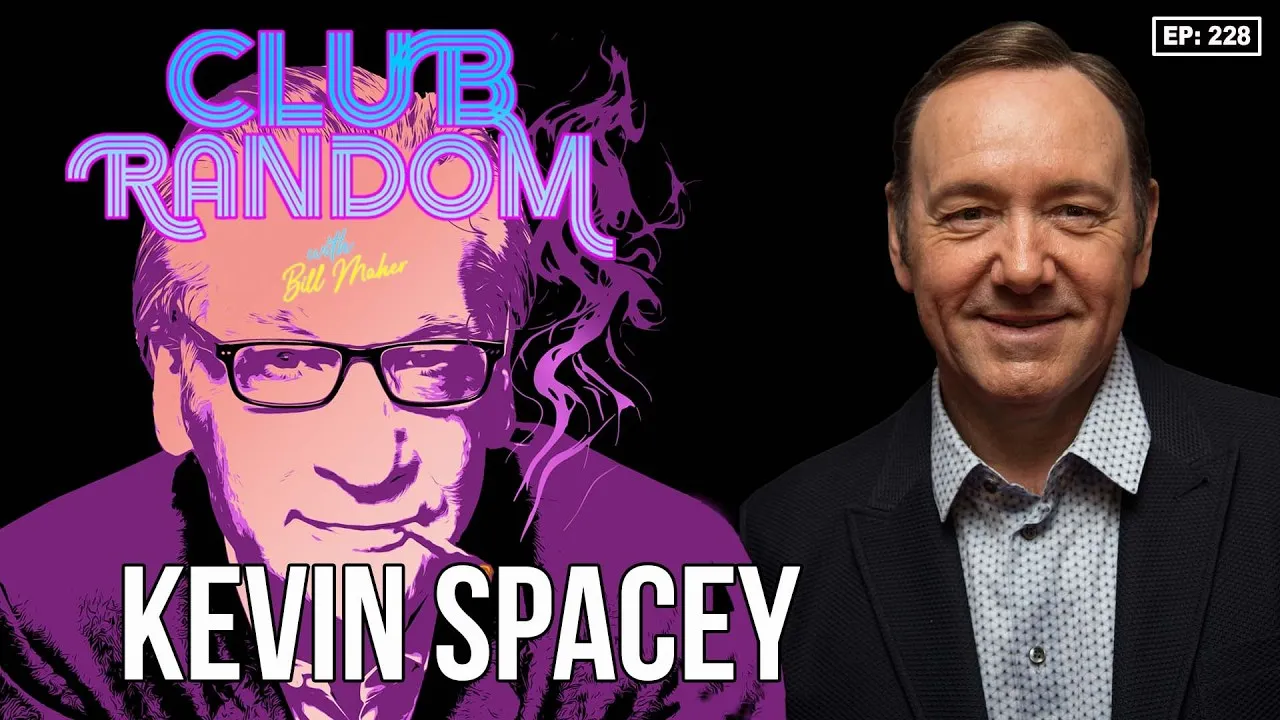
 Kevin Spacey did not come to Club Random merely to sip, spar, and wait for Bill Maher to say the unsayable on his behalf. He came with a distribution demand: Netflix, he says, is sitting on a completed Gore Vidal movie, and if the streamer won’t release it, it should give the film to Paramount.
That is the episode’s real news peg, not because Hollywood owes Spacey a victory lap, but because a buried finished movie is more concrete than the usual comeback fog. Most canceled-celebrity interviews dissolve into vibes, therapy, forgiveness, and the phrase “my truth” skulking somewhere in the walls. This one produced a target, Netflix, a thing being withheld, a completed film, and a proposed jailbreak, “Give it to Paramount.”
And Netflix has shelved it.
Spacey’s best argument is about everyone else on the call sheet
The film in question is the long-delayed Gore Vidal project that became radioactive after the allegations against Kevin Spacey surfaced in 2017. Spacey tells Maher he has seen it, that it is finished, and that Michael Stuhlbarg’s performance is Academy Award caliber. This is, naturally, a self-serving claim. Actors in shelved films are not known for saying, “Actually, the corporation showed terrific judgment in hiding my work from civilization.”
But his sharper point is not “let me back in because I am Kevin Spacey.” It is that a movie is not a solo album. If Netflix is refusing to release the film because of him, then the punishment spills onto everyone who wrote, directed, acted in, lit, edited, dressed, and hauled cables for it. That is a stronger case than the usual famous-man lament about being misunderstood by Twitter.
The other actors, the crew, they’re also being punished and they shouldn’t be. And I hope Netflix grows up about it because it’s an incredible movie and I have to say I think it’s one of the best films I’ve ever done.
Maher, who spends much of the interview acting like a defense attorney who keeps accidentally saying the quiet part into a bong microphone, is sympathetic to the proportionality argument. He tells Spacey that “a 10-year sentence is a serious sentence.” Spacey picks up that language eagerly, comparing show-business exile to being benched in sports. This is where the case gets wobbly. A streamer burying a film is not prison. It is also not nothing. In Hollywood, being unreleasable is its own velvet-rope version of oblivion.
They own it. So, I say give it to us and we’ll get it released. Give it to Paramount.
Maher gives him the friendliest hard interview possible
Maher does not pretend the allegations never happened. Early on, he says what plenty of people still think: when the number of accusers grows, the “too much smoke” instinct kicks in. Spacey responds with his kitchen-fire metaphor, which is both weirdly polished and probably the most Kevin Spacey sentence imaginable, theatrical, defensive, and a little too pleased with its own staging.
It just wasn’t a raging forest fire. It was a small kitchen fire that could have been put out with an extinguisher.
The legal record Spacey cites is real in the limited way he presents it: he emphasizes that he has been found not guilty by juries and that some cases collapsed before trial. He spends particular time on Anthony Rapp’s civil case, saying the apartment described in the allegation did not match the apartment he actually lived in. This is the spine of his comeback pitch: not sainthood, not innocence as a personality brand, but due process plus elapsed time.
The problem is that Spacey also wants the cultural system to behave like a court system, and it doesn’t. Studios are not judges. Audiences are not juries. Streaming executives are not obliged to be brave. That may be cowardly. It may also be business. The ugly trick is that both can be true without making Netflix’s shelf a courthouse.
The tell is who Spacey thinks defended him
Spacey’s broader political read is that the right has been more willing to defend him than the left. He names Douglas Murray and says “very significant figures on the right” supported his argument that he was denied due process. Then he draws the line that will get clipped, shared, and yelled about by exactly the people he is describing.
But on the left not a single journalist has stood up and said anything in my favor for 9 years.
That is the politics of cancel culture in one sentence, and it is also the sales deck for the next act of Kevin Spacey. He is not pitching himself as newly apolitical. He is pitching himself as a test case for inconsistency: Michael Jackson can remain commercial, Woody Allen can remain debatable, Johnny Depp can be rehired, but his Gore Vidal movie stays locked in the Netflix cupboard.
Is that argument convenient? Obviously. Is it absurd? Not entirely. Spacey is asking for the art to be separated from allegations against the artist, but he is also asking a corporation to take the reputational hit for him. Netflix may have no appetite for that. Paramount, in Spacey’s telling, might.
So the practical question is no longer whether Spacey can book sympathetic podcasts, concerts, or small films. He can. The question is whether any major distributor wants to be the company that opens the vault first.
- What Kevin Spacey movie does he say Netflix shelved?
- Spacey says Netflix shelved a completed film in which he plays Gore Vidal. He says the movie is ready, that Netflix owns it, and that he considers it one of the best films he has ever made.
- What does Spacey want Netflix to do with the film?
- He says Netflix should either release it or give it to someone else, specifically naming Paramount. His argument is that the director, writer, cast, and crew are being punished along with him.
- Does Spacey say he has paid enough professionally?
- Yes. He frames his post-2017 exile as a kind of sentence, telling Bill Maher that people may now believe nine years has been enough, while Maher repeatedly pushes the idea that punishment should be proportional.
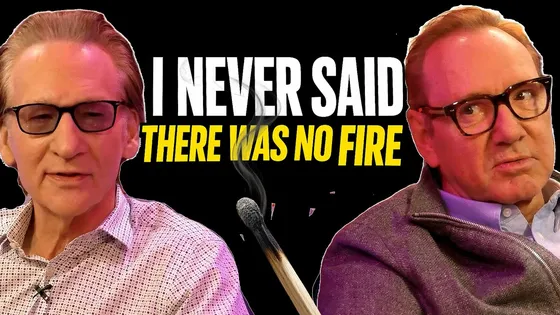
Kevin Spacey says he's been stopped 70 times a day in Europe by fans asking when he's going back to work
On Club Random, Spacey makes his case that nine years of industry exile is enough, and somehow the most revealing number he offers is 70.
Kevin Spacey says Anthony Rapp's accusation collapsed because Spacey lived in a studio apartment with no bedroom
On Club Random, Spacey walks through the detail that sank Anthony Rapp's case, and explains why Elton John showed up in a British courtroom on his behalf.
Kathy Griffin says she hasn't been in the black for six years since the Trump head photo
On Club Random, Griffin makes the cancellation sound less like a scolding and more like a long, expensive layoff with lawyers.
Jack Whitehall says Channel 4 pulled his show at 11 p.m. because Michael Jackson died after it had a pedophile sketch about him
On Club Random, Whitehall described the sort of pre-smartphone comedy near-disaster that now sounds less like showbiz lore than a deleted scene from Broadcast Standards Hell.
The circuit, read weekly. No noise.