Kenny Chesney says a tour-bus epiphany in his 40s ended his out-of-control hillbilly rockstar years
On Club Random, Chesney gives the least bro-ish possible version of a country-star hangover story: not redemption, exactly, but math.
Listen on YouTube
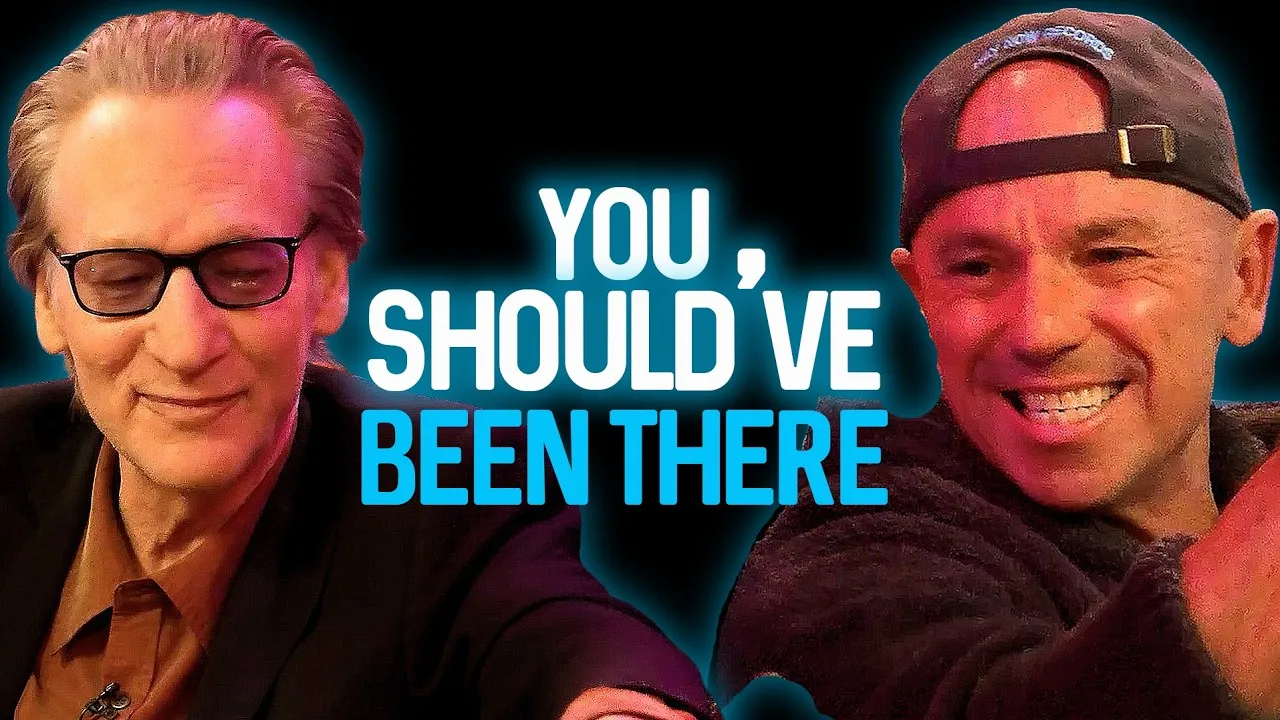 WATCH NOW↓
 Kenny Chesney says his hard-partying country-star era ended not with a scandal, a manager intervention, or a tearful paperback memoir, but with a bad morning on a bus. He woke up in his 40s, felt awful, and realized the out-of-control version of the dream might be the thing that killed the dream.
That is the useful thing about Chesney on Club Random: he doesn’t launder the past into some tidy self-help parable. Kenny Chesney still sounds like a man who remembers exactly why being a famous, adored, mobile country singer was a blast. He also sounds like a man who discovered the most boring truth in show business: eventually, the bus wins.
when you get to be a star, a celebrity, whatever, you get a year to act like an [ __ ] And I may have taken two.
That line is funny because it has the shape of confession and the timing of a toast. Chesney is talking to Bill Maher, who opens by basically telling him that his songs make aging feel like a subpoena. All those nights out. All that bad judgment. All those songs that sound like they come with a cooler, a fake ID, and a sunrise you had no intention of seeing.
The bus beat the myth
Chesney calls the old mode being a “Hillbilly Rockstar out of control,” which is both ridiculous and precise. It is also a useful reminder that in country music, the party isn’t just a lifestyle accessory. It can be a brand, a mood, a business plan, a crowd contract. Chesney’s songs often sell release, but here he describes the moment he realized the release had started charging interest.
I remember waking up on the bus one day. I was 40-something and I went, “Okay. You acting the way you’re acting out here is not why you wanted to do this.”
The believable part is that he doesn’t pretend the change happened because he stopped liking the temptations. Maher keeps poking at him, correctly, that Chesney’s catalog doesn’t exactly project monastic restraint. Chesney doesn’t deny it. He says the old stuff is never going to leave him, or “us,” meaning men, performers, bodies, appetites, the whole ridiculous human machine.
Maher, in one of his better cranky-professor riffs, offers a theory of aging that is basically geopolitics by hangover: bodies are to individuals what geography is to countries. When the body lets you be crazy, you are. When the pain starts beating the pleasure, you reconsider. Chesney’s story fits that exactly. Not virtue. Physics.
I kind of felt like shit. And I was like, “Mhm, this is not why I wanted to do this, and if I keep doing this, uh then it’s going to be over.”
The verdict here is simple: Chesney’s claim is credible because he refuses to oversell it. He doesn’t say he became a different species. He says he can still have some of that fun, just not all the time. For an artist whose empire depends on showing up in stadiums and convincing thousands of people that their life is briefly one beer-commercial sunset, that distinction matters. The audience can be loose. The guy at the center has to be able to count off the next song.
The hits are the job
That same practicality shows up when Maher talks about performers wanting to be heroes for their audience. Chesney agrees, then offers a concert philosophy that should be printed on a laminated card and handed to every legacy act before they decide tonight is the night for “the challenging new material.” He says he doesn’t play four or five deep cuts. Not because he lacks artistic pride, but because he knows how long it took to earn the room.
This is the anti-indulgence code of touring: the crowd voted already. The hits are not shackles. They’re the agreement. Chesney, at least in this telling, has figured out that the grown-up version of being a hillbilly rockstar is not denying the old chaos. It’s knowing what part of the job is for you, and what part belongs to everyone who paid to sing along.
I’ve never done that ever because it took me years to get them here. And I don’t want to I don’t want to let them
- What made Kenny Chesney change his touring lifestyle?
- Chesney says the shift came after waking up on his tour bus in his 40s and realizing the way he was acting on the road was not the reason he had wanted the career in the first place. He frames it less as a saintly conversion than as a survival calculation: if he kept doing it, the thing he loved doing would be over.
- Does Kenny Chesney say he completely stopped having fun on tour?
- No. Chesney is careful not to turn the story into a sermon. He says the fun changed, not disappeared, and admits the old chaos fed the creativity for a long time. The new standard is being able to feel good onstage and keep doing the job.
- Why does Kenny Chesney avoid playing deep cuts live?
- Chesney says he doesn't want to disappoint the people who bought tickets after years of connection to the hits. His logic is bluntly democratic: a hit record means the audience already voted, and the show is where he honors that vote.
Kenny Chesney says he has never once canceled a show in over 40 years, not even close
The country star and Bill Maher bond over performing sick, staying out all night, and never once giving the audience an excuse to demand a refund.
Ari Emanuel says Jeff Katzenberg tried to charge him $1 million for a Joe Biden meeting
The Hollywood superagent turned a book-plug visit into a live demonstration of why his grudges need their own legal department.
Dr. Daniel Amen says CTE is not untreatable and 80 percent of his NFL patients got better
Amen's football brain claim is the kind of thing parents, former players, and skeptics should all want proven by someone other than Amen.
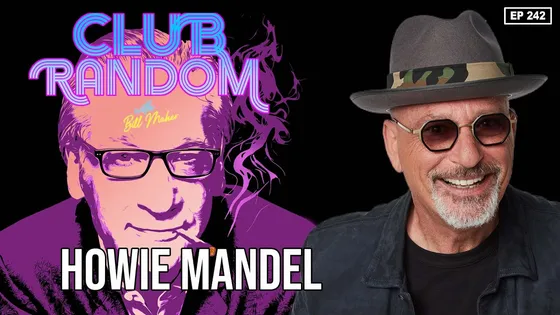
Howie Mandel says a clipped hand-job joke cost him a fortune
Mandel told Bill Maher that a joke clipped out of context made a brand walk away, which explains why the Comedy Store feels safer to him than the internet.
The circuit, read weekly. No noise.