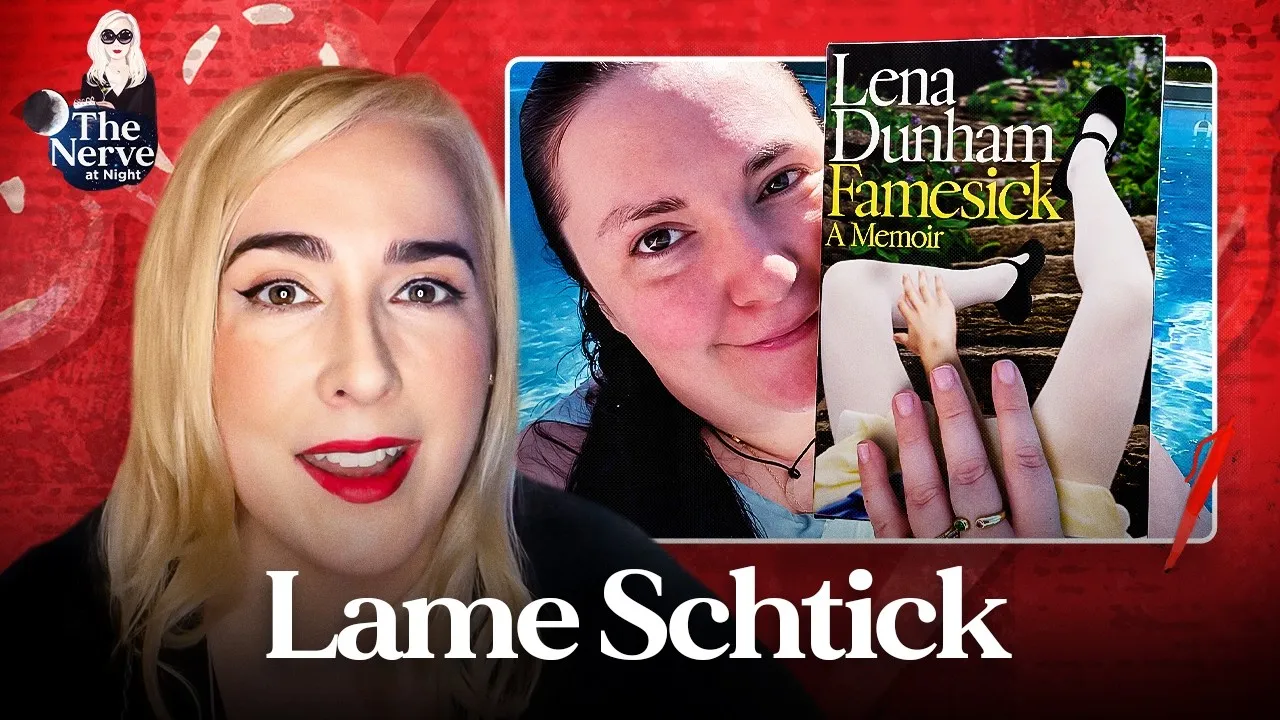
Maureen Callahan says Lena Dunham unloaded on Bruce Springsteen about Jack Antonoff in a Mayfair nightclub
Callahan’s read of Fame Sick is that Dunham protects Taylor Swift, punishes Jack Antonoff, and saves the wildest therapy session for Bruce Springsteen.
Listen on YouTube · Spotify · Apple Podcasts
 WATCH NOW↓
 The celebrity memoir detail you can actually imagine being whispered over a corner table is this: according to Maureen Callahan, Lena Dunham writes in Fame Sick that she unloaded on Bruce Springsteen in a Mayfair nightclub about Jack Antonoff breaking her heart. Not a metaphorical Bruce. The actual Boss, sitting there while Dunham apparently turned the room into a very expensive group-text spiral.
On The Megyn Kelly Show, Callahan gives the book the kind of review that arrives wearing brass knuckles. She can’t stop reading it, she says, but she also calls Dunham an unreliable narrator, a score-settler, and someone who knows exactly which celebrities not to anger. That last part is the useful read. Fame Sick, in Callahan’s telling, is less a confession than a seating chart.
I don’t find it curious. I think Lena knows where her bread is buttered, and I think Lena knows who she can afford to piss off and alienate forever and who she can’t.
The omitted name is Taylor Swift, who Callahan says doesn’t appear in the memoir despite Dunham writing about fame, friendship, and becoming a cultural lightning rod at a young age. The protected name is Judd Apatow, treated briefly and warmly. The names dragged into the mud, by Callahan’s account, include Jenni Konner and Jack Antonoff.
The Springsteen scene is the one that travels
Callahan’s killer find is a scene Dunham apparently places in London, at a fancy Mayfair club, with Robert De Niro, Joe Pesci, Martin Scorsese, Al Pacino, Harvey Keitel, and Bruce Springsteen in the room. It has the setup of a Martin Scorsese wax museum after midnight, then becomes Sex and the City by way of a celebrity trauma dump.
Springsteen, in the passage Callahan reads, tells Dunham that Antonoff has become very special to him. Dunham then chooses what she herself calls the wrong door.
reader, sometimes you see two doors in life, one marked normal behavior and one marked psycho stuff. After a brief pause to really consider what’s best, you choose psycho stuff.
Callahan loves this because it confirms her thesis about Dunham: that the memoir’s honesty comes less from moral courage than from compulsion. Dunham, as read by Callahan, tells Springsteen that Antonoff promised forever, that he shamed her for existing, and that she once imagined calling the book I Hate You Jack, You Broke Me Jack. Springsteen responds not with gossip, not with a dramatic rescue, but with high-level Boss management. He gives her a writerly platitude with enough warmth to sound humane and enough distance to escape alive.
And second, you don’t owe it to people to be honest about every little thing. That doesn’t mean you lie. It just means you can have secrets. You only owe it to them to show them how your mind works.
That advice is sneakily the whole debate around the book. A memoirist doesn’t owe us everyone’s private pain. But once you start naming exes, collaborators, parents, siblings, and former friends, the omissions become part of the text. Callahan’s point about Swift lands because it’s not just gossip. It’s a question about power. Who gets protected in a confession industry built on exposure?
Callahan is right about the map, reckless about the medicine
The best version of Callahan’s argument is that Fame Sick sounds brutally honest while still being strategically incomplete. That’s a real criticism, especially for a public figure like Lena Dunham, whose whole brand has long been radical candor with a side of control. Callahan is also right that the Springsteen story has the ring of a legal-department survivor. Her own confidence comes from the fact that Dunham names serious celebrities and quotes them.
I don’t believe she’s fabricating this because she has named Bruce Springsteen and other celebrities and she’s quoting Bruce and she’s brought him into it and this went through legal. So it’s true.
The weaker version is when Callahan moves from literary criticism into speculation about Dunham’s sobriety and a fire injury Dunham describes. That’s where the segment stops being a book report and becomes a tabloid ultrasound. You can say a memoir is evasive without diagnosing the parts it withholds. You can also say, very plainly, that the Springsteen scene is bananas without turning every ambiguous detail into proof of rot.
Still, as a reading of celebrity memoir politics, Callahan has a clean hit. Fame Sick, at least through her eyes, is not merely about fame making a person sick. It’s about the strange etiquette of who gets written into the illness and who gets left off the chart. If Callahan is right, Dunham didn’t just confess. She curated the blast radius.
- What did Lena Dunham allegedly say to Bruce Springsteen about Jack Antonoff?
- According to the passage Callahan reads, Dunham tells Springsteen that Antonoff promised to love her forever, that he broke her, and that she once imagined calling her memoir I Hate You Jack, You Broke Me Jack. Callahan treats the scene as too specific, and too legally vetted, to dismiss as invented.
- Why does Maureen Callahan think Taylor Swift is missing from Lena Dunham’s memoir?
- Callahan argues that Dunham leaves Taylor Swift out because Swift is too valuable to alienate. That’s an interpretation, not a proven fact, but it fits Callahan’s broader read of the book as a document that settles scores downward and sideways while keeping certain powerful friends untouched.
- Is Callahan fair to Lena Dunham here?
- She’s strongest when she’s reading the memoir’s power map, who gets named, who gets protected, who gets blamed. She’s much shakier when she speculates about Dunham’s sobriety and medical emergencies, which turns criticism into mind-reading with a flamethrower.
Maureen Callahan says Jason Sudeikis is a mean guy and a piece of hot garbage
The celebrity nice-guy brand takes another dent as Callahan and Rob Shuter argue that the Ted Lasso star’s image is starting to crack.
Maureen Callahan says Jack Schlossberg’s Caroline Kennedy campaign video proves the Kennedy brand is tarnished
The jab is brutal, and a little too pleased with itself, but the central point is sharp: dynastic glamour can look desperate when the heir starts losing.
Maureen Callahan says Paramount slapping Mark Ruffalo as anti-Semitic is Hollywood’s canary in the coal mine
The claim is not just that Ruffalo picked a fight with David Ellison, it’s that Paramount’s response signals a new studio posture toward anti-Israel celebrity politics.
Maureen Callahan says Prince Harry is contradicting himself about the U.K. after calling America the life Diana wanted for him
Callahan’s point is not subtle, but the tape helps her: Harry made California sound like destiny, then the royal weather changed.
The circuit, read weekly. No noise.