Meg Josephson says you cannot make kids reconcile with an alcoholic father on Father’s Day
The psychotherapist’s advice was simple and bracing: the holiday does not outrank the wound.
Listen on YouTube · Spotify · Apple Podcasts
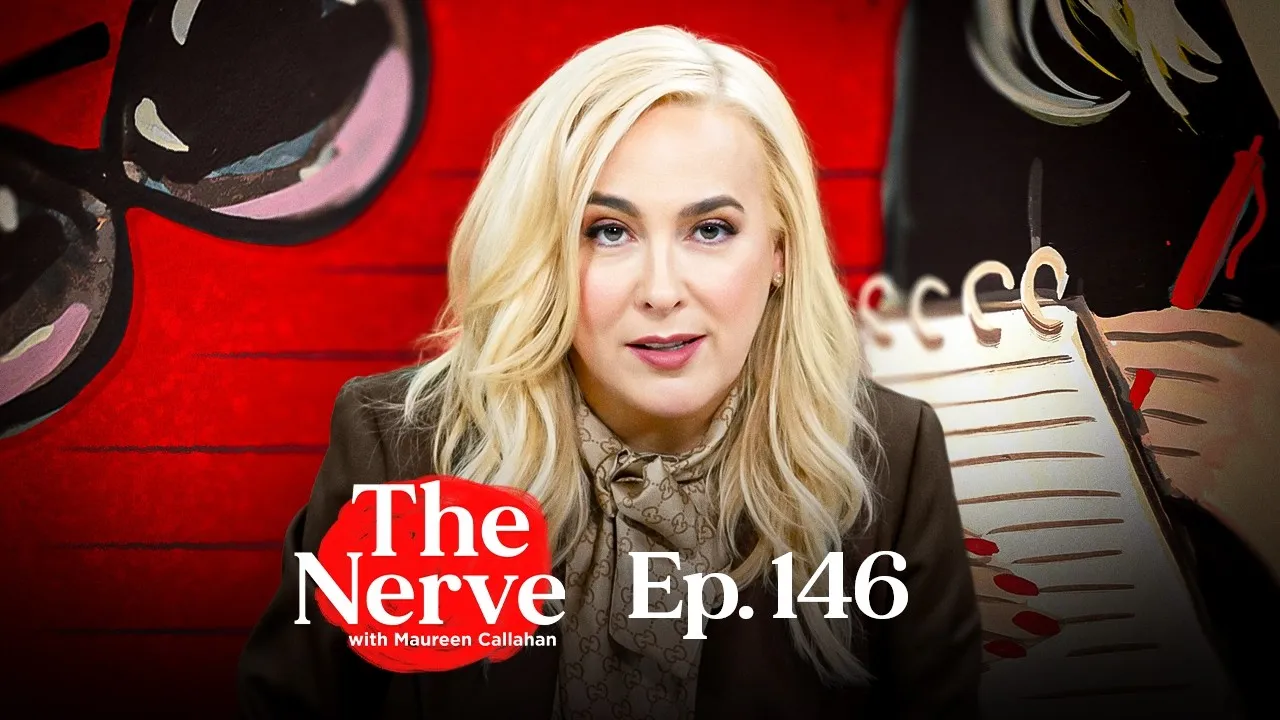 WATCH NOW↓
 Father’s Day has a way of turning every busted family into a Hallmark crime scene, all grilling tongs and emotional blackmail. Meg Josephson cut through that on The Nerve: if children do not want to acknowledge an actively alcoholic father, you do not shove them toward reconciliation because the calendar got sentimental.
The setup was painfully ordinary, which is why it stung. A mother wrote in after leaving a 22-year marriage to a man whose drinking was still out of control. Her 16-year-old son and 25-year-old daughter wanted nothing to do with him on Father’s Day. She framed her options as letting them hate him or pushing them to reconcile. Josephson’s first move was to take the steering wheel out of the mother’s hands.
even if you wanted to reconcile the relationship, could you? Probably not. It’s probably not in your control to manage where your children are at in processing that diff- really difficult, probably painful relationship with their father.
That is the useful, slightly brutal part of her advice. Parents love to imagine they are the diplomats of the family system, drafting peace accords between everyone else’s wounds. Sometimes they are just the person in the room with a phone, a guilty conscience, and no jurisdiction.
Josephson was not selling estrangement as liberation merch. She was saying the pain has to exist before anyone can metabolize it. Especially when addiction is still active. That distinction matters. A child refusing the Father’s Day call is not necessarily cruel. Sometimes it is the first boundary in a house that never had any.
As someone who grew up with a father who struggled with addiction, I it’s it’s so- it’s, you know, that pain needs to be processed and felt. That anger, that grief, it needs to be there. And so I think just being a steady presence in your children’s processing is the best thing you can do
Father’s Day is not a subpoena
Maureen Callahan, who is not exactly known for handing out laminated affirmation cards, put the cultural pressure plainly: the holiday implies that a child who does not perform gratitude is a bad child. Bad son. Bad daughter. Bad little citizen of the greeting-card industrial complex.
And I I think so much of the messaging around holidays such as this, Mother’s Day, Father’s Day, is that if you as a child aren’t acknowledging it, you are a bad child, and I think that is the absolutely wrong messaging. If If these children, one who is an adult at 25, one who is 16, say that the way that they need to deal with it is to not acknowledge their father on Father’s Day, that is absolutely okay.
Josephson agreed, and she was right to. The cult of forced family unity tends to protect the person who caused the damage, then assigns the cleanup to the child. Call your dad. Send the text. Be the bigger person. Fine advice if the conflict is mild awkwardness over politics at brunch. Rotten advice if the issue is abandonment, addiction, humiliation, or years of emotional chaos.
No whiplash from Josephson’s Mother’s Day appearance, either. The same rule applies in both directions: the holiday does not magically sanctify the parent. It does not turn neglect into nostalgia. It does not make a wounded kid responsible for the adult’s redemption arc.
The parent can be alive and still be gone
The stronger thread here was not anti-father rage. It was family estrangement without the fake TED Talk gloss. Another listener described a father who effectively ghosted him after remarrying, a familiar and hideous little trick: the child becomes evidence of a previous life the parent would rather airbrush out. Callahan named the wound as a rejection. Josephson named why logic does not fix it.
We can’t think our way out of an abandonment wound. Abandonment wounds are the deepest, most raw, painful, and so you’re totally correct. There’s there’s a disconnect. It’s like, well, I know I didn’t do anything wrong to earn this, but it still feels so painful. And those two things can be true at the same time.
That is the piece a transcript cannot quite give you: Josephson’s advice is modest, but it is not soft. She is telling listeners to stop confusing discomfort with failure. A painful Father’s Day does not mean you handled it wrong. It may mean you are finally letting the day tell the truth.
Her best answer came for a grandmother whose son died, leaving two young daughters to endure school projects, donuts with dads, and the whole municipal apparatus of cheer. Josephson did not recommend a distraction campaign. She recommended a light touch, spoken out loud.
I think the power of acknowledgement can be the biggest healer of them all, but it being an uncomfortable day doesn’t mean you need to do something differently. I think it just means it’s a it’s bringing up what was already there in the first place.
- Should I push my kids to call their alcoholic dad on Father’s Day?
- Josephson’s answer is no. If the father is still actively drinking and the children are angry, hurt, or refusing contact, the job is not to stage-manage a Hallmark repair scene. The healthier move is to support what the kids are feeling and stop treating a holiday as a custody order for their emotions.
- Does skipping Father’s Day mean the relationship is over forever?
- Not necessarily. Josephson framed distance as something that can belong to a season of healing, not a permanent legal sentence. The point is that reconciliation cannot be forced from the outside, especially by a parent who wants everyone to feel less guilty for one Sunday in June.
- What should families do when Father’s Day is painful because a dad has died?
- Josephson argued for acknowledgement over distraction. A simple message like I’m thinking of him today, or I’m thinking of you today, can be more useful than pretending the day is normal. The grieving person gets to decide how much of the door to open.
Megyn Kelly says Natasha Lyonne will die if she doesn't get treatment immediately after Tribeca meltdown
Kelly pulls no punches on the Russian Doll star's onstage appearance, calling it a failure of everyone in her orbit and drawing a direct line to Carrie Fisher and James Gandolfini.
Megyn Kelly on Anna Faris: What Entertainment Tonight Refused to Say
Maureen goes after the celebrity press for treating a visibly alarming red carpet appearance like a routine junket moment.
Maureen Callahan says David Sedaris’ New York Times home interview was extremely obnoxious because his husband flew to London to check on their other homes
Callahan’s target wasn’t just Sedaris’ money, it was the museum foyer, the expensive Christmas sculpture, and the breezy little phrase “their other homes.”
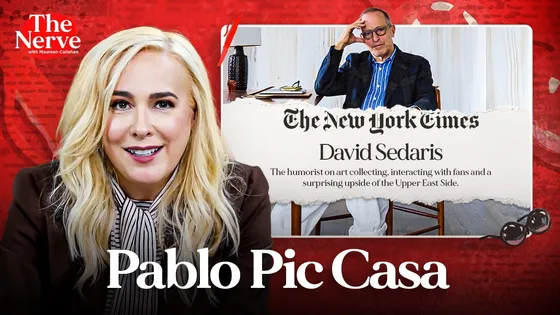
David Sedaris says he bought a $2.5 million New York penthouse for his Picasso
Maureen Callahan uses Sedaris's New York Times real estate profile as Exhibit A in the case that America's beloved literary crank has become a museum-grade rich guy.
The circuit, read weekly. No noise.