Megyn Kelly says Condé Nast should keep Chloe Malle if it wants Vogue to die
Kelly’s attack is theatrical, personal, and occasionally unfair, but her real target is the soft corporate language now passing for fashion authority.
Listen on YouTube · Spotify · Apple Podcasts
 WATCH NOW↓
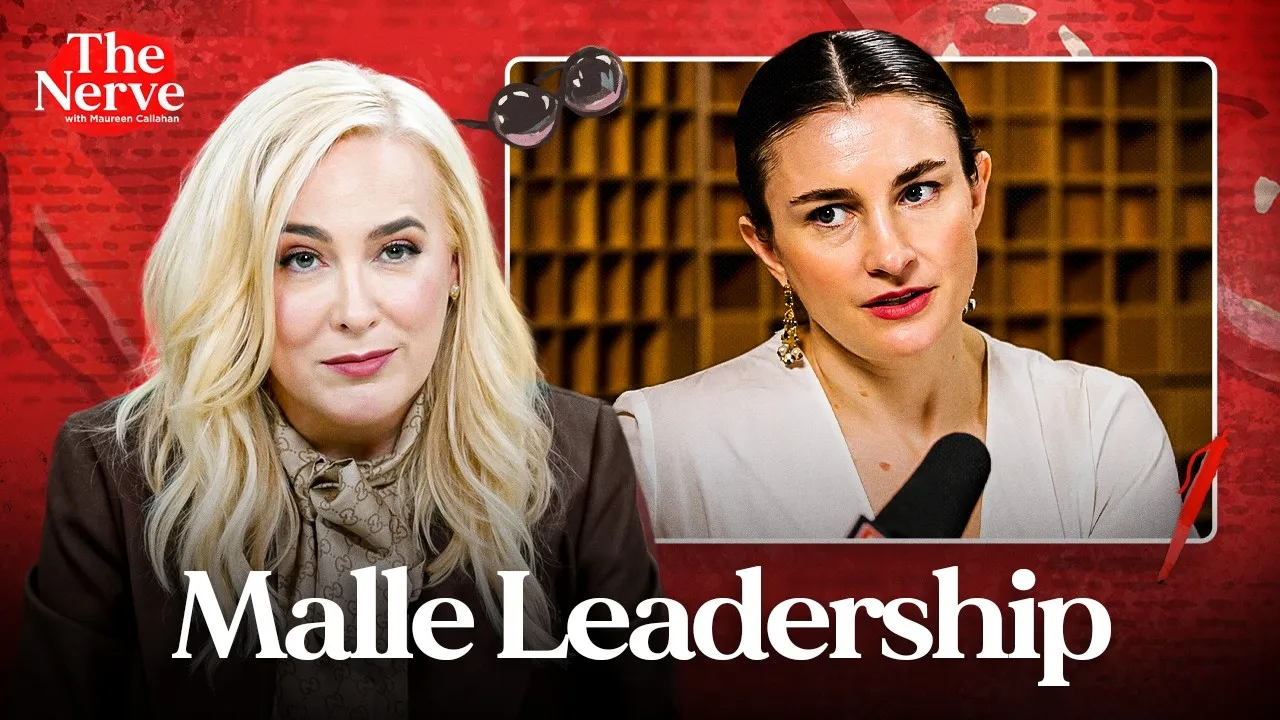
 Megyn Kelly thinks the cure for Vogue is not a new editor. It is a priest. On The Megyn Kelly Show, Kelly argued that Chloe Malle has already “destroyed what little was left of Vogue,” and that Condé Nast should keep her in place only if it wants the magazine to die.
This is not Kelly politely disagreeing with a cover choice. This is a full glossy exorcism, complete with nepo baby charges, TJ Maxx footwear analysis, and an Arrested Development “Her?” comparison. Subtlety did not RSVP.
The hook is Malle’s NPR answer about backlash to her vision for American Vogue. Kelly rejects the premise instantly, mostly because she does not think Malle has a vision at all. Malle’s sin, in Kelly’s reading, is not that she is too radical. It is that she sounds like a branding workshop that has been left in the microwave.
I don’t worry about that. Whenever I feel daunted or unsure about something uh the only thing that I find to be a real through line for myself is to be authentic to what I care about and I’m inspired by.
Kelly hears that and reaches for the flamethrower. Her point is mean, but not empty. Fashion magazines have never been democratic little reflection pools. At their best, they tell you what you did not yet know you wanted. A Prada sunglass, a black and white cover that breaks the checkout aisle, Madonna photographed like an icon instead of a group chat warning. Vogue’s old power was not “authenticity.” It was authority.
The authenticity trap
Kelly’s best criticism is that Malle’s language sounds more like self care than editorship. “Authentic to what I care about” is fine if you are journaling after Pilates. It is less persuasive when you are running a magazine whose whole reason for being is external judgment. Taste is not therapy. It has to travel.
Vogue is representing people that we really passionately believe in then if some people don’t like that, then that’s a choice we’ve made.
That answer is defensible. Editors should make choices. Advertisers should not get veto power over every face in a magazine. But Malle’s phrasing gives Kelly the opening she wants, because it frames Vogue as a place where the staff’s sincere belief is the product. The problem is that sincerity is cheap. A great fashion image is expensive, even when the clothes are not.
She’s destroyed what little was left of Vogue. She has destroyed with her narcissism and her sheer ordinariness, right?
That is the part that feels unfair and also, annoyingly for anyone trying to be calm here, connected to something real. Vogue has spent years fighting the same enemy as every legacy magazine, the internet’s total destruction of scarcity. When everyone can see the runway instantly, when celebrity styling circulates on Instagram before a magazine ships, the cover has to justify itself. It cannot just be worthy. It has to be magnetic.
Kelly’s case is taste, not proof
Kelly gestures at the business case, subscribers, ad dollars, newsstand sales, online performance, but she does not bring receipts. That matters. A magazine can look culturally limp and still survive as a brand machine. A glossy can lose its old magic while remaining commercially useful. Condé Nast knows how to sell prestige long after the object itself has begun to feel haunted.
Still, Kelly is strongest when she stops pretending this is a spreadsheet and admits it is about desire. She describes buying international fashion magazines in New York, calling Prada because a pair of sunglasses on a Vogue France cover made her want them before they were even available. That is the whole business, really. The magazine makes the reader feel late to a future worth catching.
Her weakest move is the personal pileup. Malle’s parents, Candice Bergen and Louis Malle, are relevant to a conversation about elite media succession, sure. But “nepo spawn” is a club, not an argument. The clothes critique is also a little too easy. Fashion editors have always dressed oddly, severely, sometimes badly, sometimes brilliantly. Looking expensive is not the same as having an eye.
But Kelly’s larger complaint has teeth: if Vogue becomes a magazine about the editor’s authenticity rather than the reader’s fantasy, it has surrendered the one thing Instagram cannot fully fake. Command.
You want to You want Vogue to die? You want it to just die die die? Pull the plug on it. Keep her installed.
- Did Megyn Kelly really say Chloe Malle is killing Vogue?
- Yes. Kelly said Malle has “destroyed what little was left of Vogue” and ended by saying Condé Nast should keep her installed if it wants Vogue “to just die die die.” The line is less a business analysis than a cultural prosecution.
- Why is Kelly so critical of Chloe Malle?
- Kelly argues that Malle projects ordinariness rather than fashion authority, especially in her NPR comments about authenticity and advertisers. She also frames Malle’s famous parents, Candice Bergen and Louis Malle, as part of a larger case against inherited media power.
- Is the claim that Chloe Malle is destroying Vogue proven here?
- Not really. Kelly points to taste, styling, tone, and the brand’s loss of mystique, but she does not cite hard numbers on subscriptions, ad revenue, or newsstand sales. The critique works better as an attack on Vogue’s aura than as a financial diagnosis.
Megyn Kelly says Al Roker wears a decent mask and has rage under the surface
Kelly uses Billy Bush's Today show story to turn friendship envy into a bigger theory about suspicious public niceness.
Megyn Kelly says Jennifer Lopez's True Romance sex list is J.Lo playing a game
Kelly bought Christian Slater as a believable celebrity crush, then bailed the second the list became a whole 1993 movie cast.
Megyn Kelly says Jamie Lee Curtis’s “Los Angeles” pronunciation is an insufferable affectation
A tiny morning-show pronunciation squabble became, in Kelly’s hands, a felony-grade culture crime.
Megyn Kelly says Natasha Lyonne will die if she doesn't get treatment immediately after Tribeca meltdown
Kelly pulls no punches on the Russian Doll star's onstage appearance, calling it a failure of everyone in her orbit and drawing a direct line to Carrie Fisher and James Gandolfini.
The circuit, read weekly. No noise.