Mel Chancey says the Outlaws broke bikers' “no homes and no families” rule by beating a girlfriend
The former Hells Angels figure describes a biker feud code that sounds like restraint until you hear what happened when someone crossed it.
Listen on YouTube · Spotify · Apple Podcasts
 WATCH NOW↓
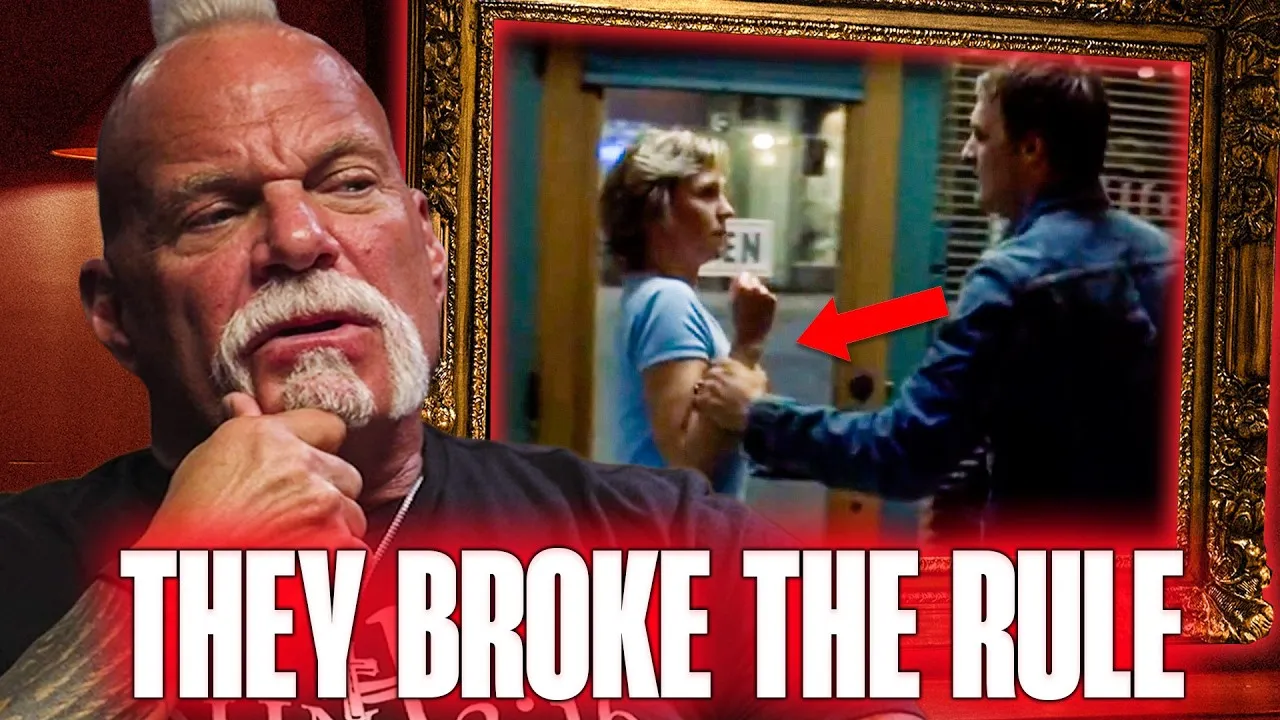
 Mel Chancey says the line in his biker war was simple, until it wasn’t: no homes, no families. On The Shawn Ryan Show, the former Hells Angels figure says the rival Outlaws broke that code by beating up a Hells Angels member’s girlfriend while she was working behind a bar, and his side answered by attacking one of their women in return.
That is the part that sticks, not because it’s noble, but because it reveals how criminal codes market themselves. Every underworld rule sounds almost civilized when phrased correctly. No kids. No mothers. Keep it in the street. Then someone breaks the rule, and suddenly the rule becomes a permission slip.
You know, there’s always an unwritten rule. No homes and no families.
Chancey is not telling this like a guy polishing a trophy. He keeps swerving between old-war logic and present-day disgust, which is exactly why the story is more convincing than the usual clubhouse mythmaking. The detail is too ugly to flatter him. He says the girlfriend was a bartender, the rival side took over the bar, and she ended up with a broken nose. Then comes the retaliation.
Last thing I wanted to do was go to sock up some girl, but you brought us there, and I was the one that wanted to do it, and I was the one who did it.
The code was real. That doesn’t make it clean.
There is an old temptation with stories like this, especially on long-form tough-guy podcasts, to confuse specificity with absolution. A rule against attacking families is better than no rule at all, sure. But Chancey’s account is also a reminder that a criminal honor code is still built on criminal math. If you violate the boundary, we violate it back. If we see you alone, we act. If there are witnesses, we calculate.
His restaurant story is the cleanest example of the contradiction. Chancey says he walked into a place after training and spotted an Outlaw with a woman and a small child. In his telling, the man recognized him immediately. Chancey let him leave because the child was there. This is restraint, biker edition, which means it comes with a loaded asterisk the size of a pickup truck.
If he was there by himself Shawn it was on the spot, on sight.
The phrase “on sight” does a lot of work in regular internet beef. Here it means actual violence. Chancey says if rivals ran into each other, “You can’t be in the same room as them.” This wasn’t posturing for a comment section. It was a standing operating system.
RICO turns macho folklore into paperwork
The legal punchline is that the code didn’t save anyone from the machinery of RICO. Chancey says he tried to avoid obvious club kickbacks and direct orders, but prosecutors could still treat beatings, shootings, attempted coverups, and club violence as acts done for the enterprise. That’s the gap between outlaw romance and federal court. One has patches. The other has predicate acts.
His explanation of orders is telling. Chancey says it was not always some movie-scene command, no cigar smoke, no “take care of him” theatrics. The expectations were ambient. Everybody knew the job.
Everybody knew what they needed to do. It was being in the We all had to pull our own weight.
That is probably the most honest line in the clip. Violence didn’t need constant instruction if membership itself carried the instruction. Chancey says nobody in the group was allowed to sit home while the others were in the street. The club didn’t need a memo. It had culture.
The verdict here is not that Chancey has discovered a beautiful moral distinction inside biker war. It’s that he describes, with unusual bluntness, how a boundary can be both sincerely held and morally bankrupt. “No homes and no families” may have prevented worse violence. It also created the exact retaliatory logic that let him justify hitting a woman because someone else hit one first.
I look back now, Shawn, and I think this, bro. Like I couldn’t do that again for all the money in the world.
- What was the “no homes and no families” rule?
- Chancey describes it as an unwritten line in biker violence, rivals could be attacked in the street, but homes, parents, partners, and children were supposed to stay out of it. His own telling makes the rule sound less like morality than battlefield management.
- What does Mel Chancey say the Outlaws did to break it?
- He says members of the rival side entered a bar, surrounded it, and beat a Hells Angels member’s girlfriend who was working as a bartender, breaking her nose. Chancey says his side retaliated by doing the same to one of their women at a strip club.
- Does Chancey present himself as remorseful?
- Yes, but not in a neat redemption-poster way. He says he is not proud of it, that he blocks out parts of that period, and that he could not live that way again, while also describing the logic of the violence with chilling clarity.
Brian Keating says UFO disclosure is “bread and saucers” distraction, not alien evidence
The physicist’s best point isn’t that aliens are fake. It’s that teasing civilization-shaking secrets while showing no data is a cheap trick with a saucer on it.
Shawn Ryan says he went through four exorcisms after a psychedelic vision of hell
The former Navy SEAL and podcast host frames his recent supernatural experiences as a reason to push harder into Christianity, while Bishop Joseph Strickland calls it spiritual warfare.
Sadhguru says turning your palms over changes which part of your lungs expands
On The Shawn Ryan Show, Sadhguru turns a mystical woods story into a very physical claim about hands, breath, and the body’s hidden switches.

Erin Brockovich says AI data centers can push water bills from $40 to $800 a month
Brockovich’s warning on The Shawn Ryan Show is specific, scary, and still missing the paperwork that would turn it from alarm bell into indictment.
The circuit, read weekly. No noise.