Johnnie Clark says he got his Silver Star 30 years late because a Marine wanted a Purple Heart license plate
On The Shawn Ryan Show, the Vietnam Marine ties one of his highest honors to a surreal chain of bureaucracy, destroyed records, and a war story that wrecked him decades later.
Listen on YouTube · Spotify · Apple Podcasts
 WATCH NOW↓
 The wildest thing Johnnie Clark says on The Shawn Ryan Show is not that he survived the Vietnam War. It is that his Silver Star, lost for 30 years in the smoking junk drawer of military paperwork, came back to life because another Marine wanted a Purple Heart license plate.
That sounds like a rejected Coen brothers subplot with a VA office instead of a bowling alley. Clark’s version is grimly plausible in the way old war stories often are: heroic acts, dead witnesses, missing forms, one guy at a counter saying the sacred wound does not exist because the right box is blank.
The license plate theory of history
Clark says he had been told during the war that he was being recommended for the Silver Star after a firefight in a cemetery. Then the war ended, the men scattered, and the whole thing dissolved into rumor. His explanation is brutally literal: a Chinese 122mm rocket hit the records shop at An Hoa Combat Base, killed the people working there, and destroyed the unit’s records.
أصاب صاروخ صيني من طراز 122 قاعدة أنوا القتالية، وللذين لا يعرفون، فإن 122 بحجم عمود هاتف تقريبًا. أعني أنه صاروخ ضخم جدًا، وقد أصاب متجر التسجيلات وقتل جميع العاملين فيه ودمر جميع أسطواناتنا.
The resurrection, according to Clark, starts with Pat McDermott, another Marine wounded that same night. McDermott wanted a Purple Heart license plate. The state, or whoever was holding the paperwork, told him the wound was not on his DD214. McDermott, in Clark’s telling, showed them the bullet hole. That is not a filing system. That is a man turning his own body into an exhibit.
بسبب رغبة بات ماكديرموت في الحصول على لوحة ترخيص وسام القلب الأرجواني ، هو السبب في حصولي على النجمة الفضية
As a claim, this is not something the episode independently proves. It is Clark’s account, told from memory, with names and incidents tumbling out like they have been sitting behind a locked door for years. But the mechanism has the awful ring of the military awards bureaucracy: no paper, no event. No event, no medal. Then one absurd administrative errand cracks open the archive.
The medal is not the wound
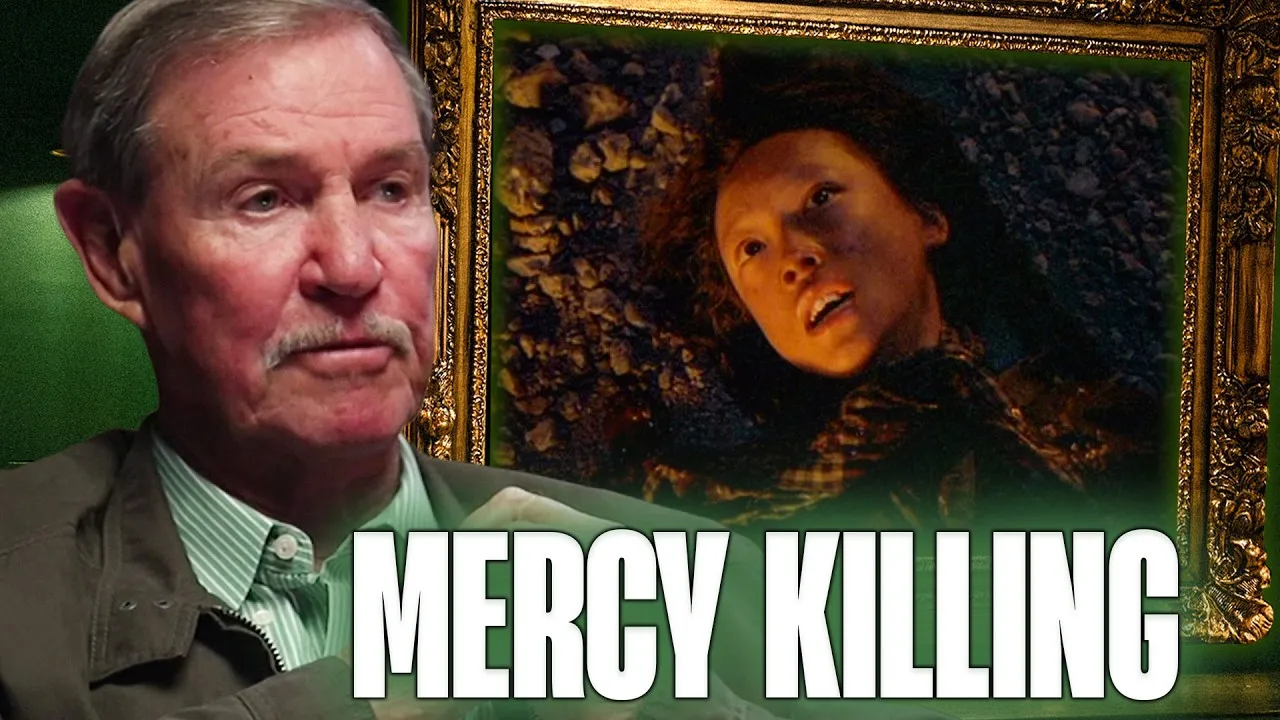
The episode title promises the war story that haunted him, and Clark delivers something uglier than a clean hero narrative. He describes an ambush near the Ho Chi Minh Trail, a wounded female fighter or helper, and the Marines’ realization that the body in the stream was a young woman, alive, badly injured, cursing them as devils. He also says they risked men and a helicopter to evacuate her.
وإذا بها فتاة. فتاة جميلة. فتاة آسيوية جميلة. شعرها الطويل الجميل يتساقط. إنها فتاة جميلة حقًا. لم نرَ فتاة منذ زمن طويل. وهي على قيد الحياة.
This is the part of Vietnam stories that refuses to become an inspirational poster. Clark is angry at the old American accusation that Marines were simply “baby killers,” and he has a counterexample ready: men under fire trying to save a wounded enemy woman. Then he gives you another story, even worse, about a young woman in a bunker whose skull was cracked by grenade concussion, still breathing, past saving. He calls it mercy killing, then immediately admits the euphemism does not spare anyone.
The real detonation comes decades later, after a memorial for “Big Red,” when Sergeant Stacey Watson shows Clark the identification papers of the woman from that day. Not an abstraction. Not “enemy personnel.” A name. A birthplace. A file on a life that ended in front of them.
كانت معه تلك الفتاة. كان عليه تفتيش الجثث ذلك اليوم . كان لديه هويتها الكاملة. أعني، هوية كاملة.
That is why the Silver Star story lands sideways. The medal is the official memory. The license plate is the bureaucratic miracle. The girl’s ID is the thing no ceremony can absorb. Clark says he was eventually told he had been misdiagnosed, that what had been called mild combat fatigue was severe combat fatigue. In modern language, we would place that near PTSD, though Clark uses the older combat vocabulary of his generation.
تساقط شعري بالكامل في ليلة واحدة
So yes, the searchable headline is the license plate. It is too strange not to be. But the reason it sticks is that the paperwork story and the trauma story are the same story wearing different uniforms. America misplaced the records. Clark did not misplace the memory.
- Why does Johnnie Clark say his Silver Star took 30 years?
- Clark says the paperwork tied to his Vietnam service was destroyed when a 122mm rocket hit the records shop at An Hoa Combat Base. Decades later, another Marine, Pat McDermott, tried to get a Purple Heart license plate and was told the wound was not on his DD214. That fight apparently opened the paper chase that led back to Clark’s buried Silver Star nomination.
- What Vietnam story haunted Johnnie Clark for decades?
- The story that breaks through is not the medal story itself, but the discovery of a wounded Vietnamese woman after a firefight and, later, the identity papers of another young woman killed in a bunker. Clark describes seeing her full identification decades afterward and says that moment pushed him over the edge psychologically.
- Did Clark say Marines tried to save a wounded Vietnamese woman?
- Yes. Clark says his small Marine unit called in a helicopter to evacuate a wounded Vietnamese woman even though they were near the Ho Chi Minh Trail and in serious danger. His point is pointed and bitter: the returning-veteran stereotype of Marines as indiscriminate killers did not match the risks he says they took that day.
A former SEAL Team 6 operator says his only regret is not sharing his faith with Louie before Louie died two nights later
The combat story is brutal, but the confession is stranger: he says the fear that still haunts him was not the door, it was the conversation about God he avoided.
John Stryker Meyer says MACV-SOG reports went directly to the White House and he could not talk for 20 years
The Vietnam veteran’s account of the secret war is less a war story than a lesson in how a country hides a war from itself.
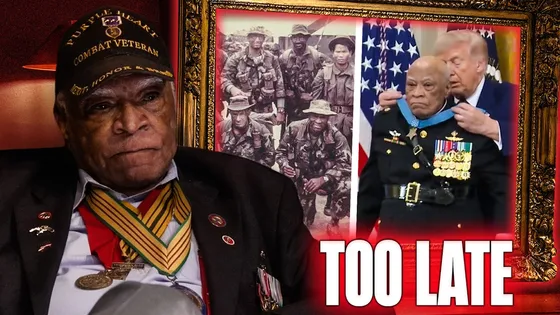
Jim Capers says his Operation Bulwark Silver Star may be upgraded to the Medal of Honor
The Vietnam veteran frames the possible Medal of Honor upgrade less as vindication than as a cruelly late receipt for men who never came home.
Brian Keating says UFO disclosure is “bread and saucers” distraction, not alien evidence
The physicist’s best point isn’t that aliens are fake. It’s that teasing civilization-shaking secrets while showing no data is a cheap trick with a saucer on it.
The circuit, read weekly. No noise.