Nathan Apffel says pastor Ed Young Jr. may be claiming $3.6 million a year in tax-free housing allowance
The church accountability podcaster spent a night in a Texas jail just for showing up with a sign asking a pastor one question about his finances.
Listen on YouTube
 WATCH NOW↓
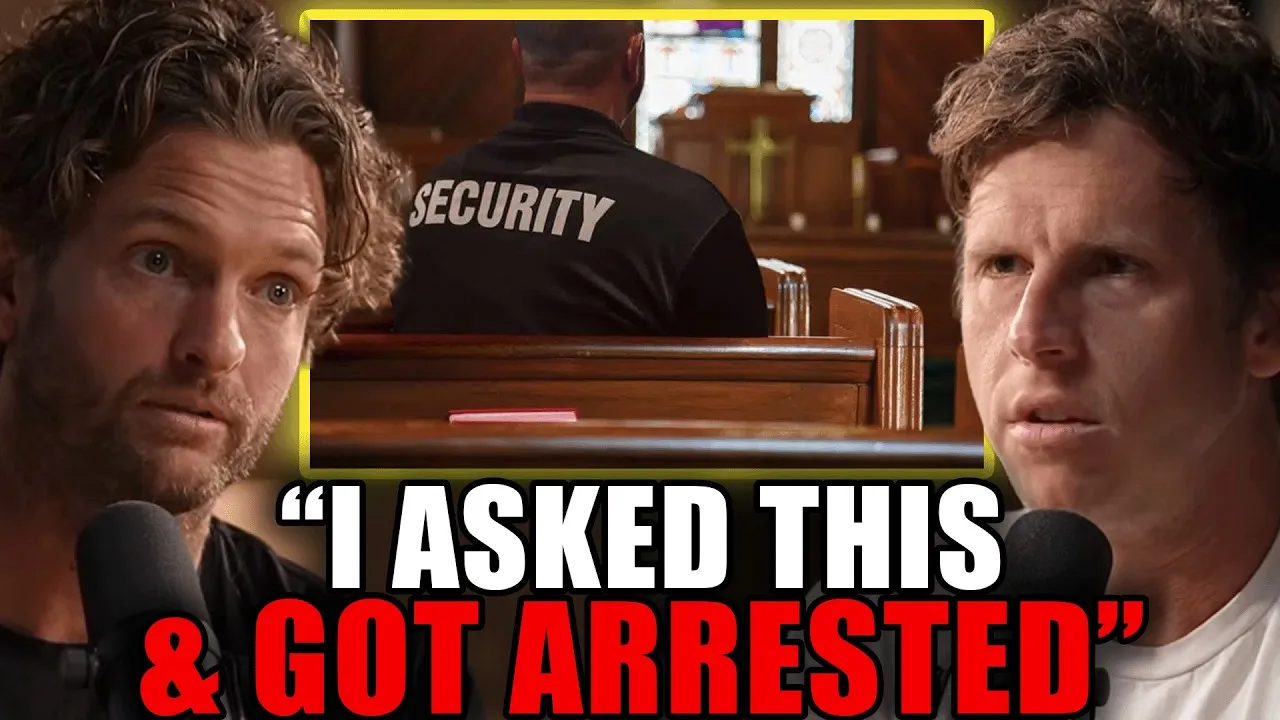
 Nathan Apffel went to a Dallas-area church to buy a sweatshirt and ask a question. He left with a torn tendon in his elbow and a criminal trespassing charge. The question, printed on a sign he was carrying in the parking lot: what is your housing allowance? That’s it. That’s the whole crime.
Apffel, who investigates megachurch finances for his podcast, had been trying to get answers about pastor Ed Young Jr. for years. A 2005 lawsuit put discovery documents into the public record showing Young’s housing allowance at $240,000 per year. That was nearly two decades ago. Young now, per Apffel’s research, owns a beachfront home in Florida valued at roughly $10 million and a $6.5 million home in Dallas. Run the math on the mortgages alone and you get somewhere around $300,000 a month. Which means, Apffel argues, the housing allowance today could be in the neighborhood of $3.6 million annually, all of it tax-free, all of it legally none of your business under current IRS rules for churches.
This is how capitalism creeping into religious organizations works. His church is tens of millions a year in revenue. No one knows where the money goes. No one knows his housing allowance. No one knows his salary. He drives golden Range Rovers.
The Sign, the Security Army, and the Arrest
Apffel’s account of the arrest is equal parts absurd and alarming. He’d already been walked off the property during the first church service, told he was on private property and had to leave. So he came back for the second service with signs. Just the signs, in the parking lot. Twenty armed security guards materialized, some in camo, some in all black, some with vests apparently ordered from Amazon. One actual sheriff’s deputy arrived to make the arrest official. Before that happened, a guard grabbed Apffel’s arm hard enough to tear a tendon. He still cannot fully straighten his elbow.
They arrest me. And they charge me with criminal trespassing for just wanting to ask him about his housing allowance.
The housing allowance gimmick Apffel is describing is real and well-documented. Under federal law, pastors can receive a portion of their compensation as a housing allowance, exempt from income tax. The IRS has fought to limit or eliminate the provision and lost in court. What makes Young’s situation particularly pointed, in Apffel’s telling, is the scale. This is not a small-town minister getting a modest break on a parsonage. This is a $100,000 salary layered under potentially millions in untaxed housing benefits, which, at least under current law, the church has zero legal obligation to disclose.
The Billion-Dollar Family Business
If the housing allowance story is striking, the governance story is stranger. Ed Young Jr.’s father, Ed Young Sr., runs Second Baptist Church in Houston, a congregation of roughly 90,000 members controlling about a billion dollars in assets. Because it’s a Baptist church, those members traditionally vote on financial decisions. Then, according to Apffel, Ed Young Jr. and his church’s lawyer, who also serves as the church’s CFO, traveled to Houston, removed the elder Young from leadership, installed a brother in his place, and stripped the 90,000 members of their voting rights. The church is now governed by six people, four of whom are related to each other.
They now have carte blanche reign over a billion in assets, all in the name of God, and there’s a lawsuit happening right now over that.
Apffel is not a lawyer, a journalist, or a regulator. He is a guy with a podcast, a sign, and a documented willingness to spend a night in a Texas jail over a math question. You can decide how much weight to give his estimates on the housing allowance, which are extrapolations, not confirmed figures. But the underlying mechanics he’s describing, the housing allowance provision, the lack of required disclosure, the conflict-of-interest governance structure, those are not fringe claims. They are features of American church law that have survived every serious legal challenge. The question Apffel is asking, what do you actually spend it on, is genuinely one nobody has been able to force an answer to. That’s the story.

Darcy Weir says the US Air Force planned to nuke the moon in 1958 to flex on the Soviets
The UFO documentary filmmaker revisits Project A119, a Cold War scheme that proves our actual space history is much weirder than the flying saucer rumors.

Ioan Grillo says Mexican cartels are dropping fire extinguisher bombs from drones to empty villages
The cartel arms race is not just bigger guns, Grillo argues, it is cheap drones, hacked phones, and a grim little feudal project in the mountains.

Nathaniel Gillis says Chris Bledsoe's 'Merlin' label means a category of UFO contactee, not the wizard
On Danny Jones Podcast, Gillis turns the goofiest-sounding Bledsoe lore into a darker theory about government study, contactees, and weaponized ridicule.

Heather Lynn says the Anunnaki wristwatches were poppy cuffs from Nimrud, not alien watches
On Danny Jones, Lynn gives the ancient aliens internet a delightfully terrestrial answer, then pushes it into a bigger claim about opium, mushrooms and Mesopotamian altered states.
The circuit, read weekly. No noise.