Patrick Bet-David says Amy Coney Barrett should resign if threats made her vote less conservative
The PBD Podcast turned Barrett's bulletproof vest story into a much bigger accusation, that fear may be changing Supreme Court votes.
Listen on YouTube
 WATCH NOW↓
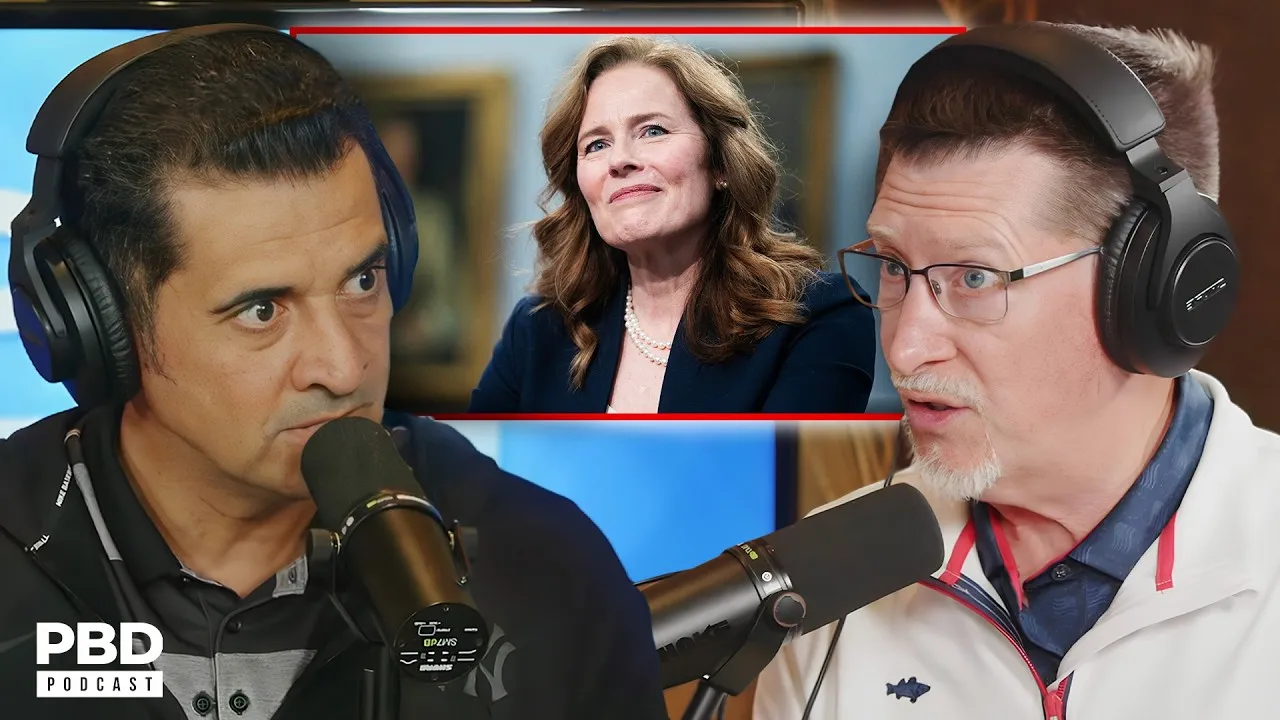
 Patrick Bet-David wants Amy Coney Barrett to quit the Supreme Court if threats have made her drift from conservative votes. That is the live grenade in this PBD Podcast segment, and the pin he pulls is a chart claiming Amy Coney Barrett went from voting with conservatives 81 percent of the time before Dobbs to roughly 50 to 60 percent after it.
The raw material is genuinely awful. Barrett, in a Fox interview clip played during the segment, describes threats, a swatting incident, and the surreal domestic horror of bringing home body armor and having a child ask what it is. This is the nightmare version of civics class. Mommy interprets the Constitution, so now the police might be outside.
my security details sent me home with a bulletproof vest and I carried it into my house, put it into my bedroom, dropped it down on a table, turned around and my 12-year-old son was standing in the doorway of my bedroom and he wanted to know what it was and why I had it.
Patrick Bet-David starts by saying the right thing, that nobody should have to live like this. Then he takes a hard turn. If Barrett is scared, he says, she should resign. Not because threats are acceptable. Because, in his telling, a justice who can be moved by fear turns the Supreme Court into a hostage negotiation with robes.
if this job comes with threats, this job is risky, this job has a lot of pressure, this job isn’t for everybody, but if you’re scared for your life, then quit.
The accusation is bigger than the evidence
Bet-David’s case rests on a seductive little machine: threat happens, voting chart changes, therefore threat changed the votes. It has the clean lines of a political meme and the evidentiary strength of a bar napkin. Supreme Court voting metrics depend on the cases in front of the court, how the categories are defined, and whether a justice is joining a judgment, narrowing a rationale, or breaking from a bloc for reasons that are boring but real.
That does not mean Barrett’s critics have nothing to complain about. Conservatives have been increasingly irritated by her votes and her style, especially when she joins Chief Justice John Roberts or refuses to go as far as Clarence Thomas and Samuel Alito. But irritation is not proof of intimidation. If the charge is that death threats are warping constitutional law, you need more than a chart built for a retweet.
correlation doesn’t necessarily mean causation. Did it actually change after that or did the cases change?
That was the sanest objection in the room, and it came from inside the house. Sosnick also argued that Barrett remains, by ordinary standards, pretty conservative. Bet-David was not buying it. For him, Dobbs is the dividing line, threats are the explanation, and Barrett’s public vulnerability is now part of the evidence file.
Clarence Thomas as action hero
The segment’s emotional counterweight is an old Clarence Thomas clip, with Joe Biden visible during the confirmation fight, where Thomas refuses to withdraw. Bet-David uses it like a locker room poster. Barrett comes home with a vest. Thomas says he’d rather die. One is treated as shaken, the other as Supreme Court Wolverine.
I’d rather die than withdraw from the process. I don’t like bullies.
It’s a potent comparison, but also a slightly deranged job description. The standard for a justice should not be theatrical fearlessness. It should be independent reasoning. Threats against justices, including the armed man arrested near Brett Kavanaugh’s home in 2022, are not hypotheticals. They are an attack on judicial independence. But turning Barrett’s account of danger into an argument that she lacks the guts for the job is a nasty bit of political alchemy.
Bet-David is right about the stakes and too confident about the diagnosis. If mobs can change votes, the system is in real trouble. If pundits can declare a justice compromised every time she disappoints their side, that is not exactly a rescue mission either.
The next real question is not whether Barrett has been frightened. She told us that. It is which votes, specifically, her critics think fear changed, and whether they can prove anything beyond the oldest trick in political media: a scary chart, a human story, and a demand for someone else’s resignation.
- Did Patrick Bet-David actually call for Amy Coney Barrett to resign?
- Yes. He said Barrett should step aside if fear for her life or her family is changing how she votes on the Supreme Court. He framed it as sympathy, not punishment, but the demand was blunt.
- What evidence did PBD use against Barrett?
- He cited a chart claiming Barrett voted with conservative positions 81 percent of the time before Dobbs and only around 50 to 60 percent afterward. He tied that drop to threats following the Dobbs leak, but the segment did not prove the threats caused the voting shift.
- Did anyone on the panel push back?
- Adam Sosnick did. He noted that Barrett still has a largely conservative record and raised the obvious problem with the whole theory, that correlation is not causation and the mix of cases may have changed.
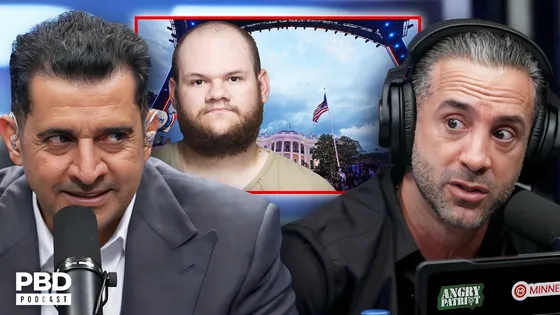
Patrick Bet-David says the alleged White House UFC terror plot was not even a top 10 media story
The PBD Podcast framed the alleged FBI-disrupted attack as a media scandal, then accidentally made its own argument wobble by racing through it in about three minutes.
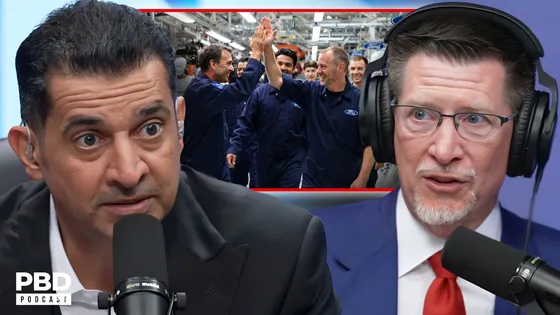
Patrick Bet-David says a $300,000 AI UBI would make most people miserable
A Ford AI quality-control story turned into Bet-David’s bigger anti-utopia: money without resistance is not freedom, it’s spiritual mush.
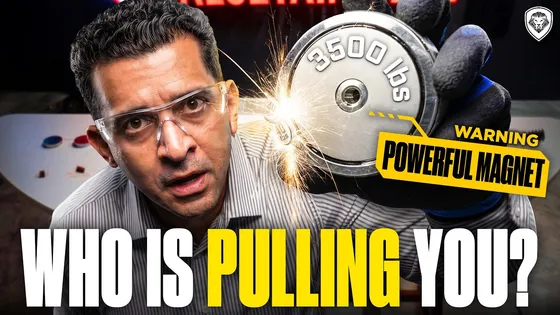
Patrick Bet-David says Elon Musk made a friend's $1 million SpaceX investment worth $100 billion
Bet-David's magnet stunt is really a sermon about proximity, but the SpaceX example is the number that makes you stop and check the math.
Patrick Bet-David says robots will make sports teams more valuable because fans will pay more to watch humans
The PBD panel was reacting to Elon Musk’s sci-fi future reel, but the sharpest business take was about why the robot age may be great for the Cowboys, Lakers, and UFC.
The circuit, read weekly. No noise.