Patrick Bet-David says robots will make sports teams more valuable because fans will pay more to watch humans
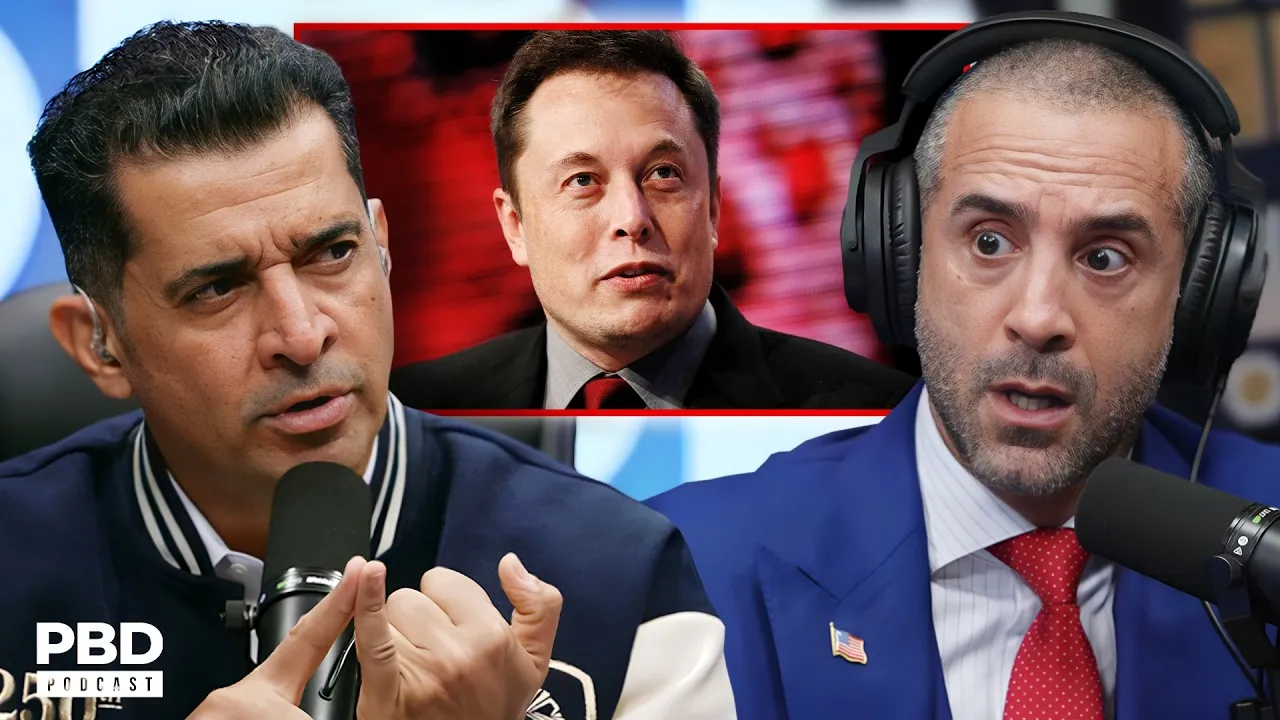
The PBD panel was reacting to Elon Musk’s sci-fi future reel, but the sharpest business take was about why the robot age may be great for the Cowboys, Lakers, and UFC.
Listen on YouTube
 WATCH NOW↓
 Patrick Bet-David thinks the robot future won’t kill sports. It’ll make sports teams worth even more, because once machines can outlift, outrun, and outfight us, the only thing still worth cheering for will be humans being human.
That is the best idea hiding inside this very PBD segment, which begins with the panel watching an Elon Musk flavored future reel about artificial minds, lunar industry, Mars cities, Venus, Jupiter’s moons, and the sort of interplanetary optimism that makes one guy see destiny and another guy wonder whether he can afford diesel. The setup is pure PBD Podcast: part business seminar, part locker room, part end-times group chat.
It’s just it’s so far-fetched from the average American or the average human’s life right now that it’s like it almost feels like you’re watching a movie.
Adam Sosnick has the most normal-person response. Musk is selling Mars while a lot of people are mentally stuck at the gas pump. That gap matters. Futurism often arrives dressed like a Super Bowl ad for civilization, all sleek surfaces and orchestral inevitability, but the audience is still eating leftovers over the sink.
The human premium
Then Patrick Bet-David swerves into a cleaner point: sports valuations will keep climbing because artificial dominance won’t impress us. A robot beating Jon Jones is not a sporting event. It’s a product demo with bruising.
The losing of control because you know, you know why I think sports teams valuation is just going to go higher and higher and higher and even more exponentially.
His logic is blunt, and basically right. Sports are not valuable because humans are the most efficient machines. They’re valuable because humans aren’t machines. They choke. They limp. They age. They get overpaid, underrated, traded, booed, redeemed, and occasionally turn a Tuesday night in November into something you remember five years later. A robot benching 2,000 pounds is impressive once. A rookie linebacker putting up reps at the combine is content forever because there’s a person inside the number.
Nobody cares if a man beats women in anything. Okay, sports. Nobody’s gonna care if robots beat man. Hey, robot beats Jon Jones in UFC. We’re like, uh, I don’t give a
That quote takes the scenic route through the culture-war swamp, because of course it does. Strip out the bait and the business thesis remains: fans do not pay premium prices for raw capability. They pay for human stakes. This is why chess didn’t vanish when engines became unbeatable. It became weirder, more analytical, more online, but Magnus Carlsen was still the draw, not Stockfish sitting there like a smug calculator.
The same goes for sports business. Team values are already inflated by scarcity, live rights, billionaire ego, civic identity, and the fact that sports remain one of the last things people still watch at the same time. Bet-David is adding another force: the more synthetic everything gets, the more expensive the authentic stuff becomes. That’s not crazy. It’s vinyl logic. It’s farmers market logic. It’s why people pay too much for a concert ticket when the same songs are on their phone.
So, what I’m trying to say is we’re going to celebrate human beings accomplishments.
Musk sells Mars, PBD sells Earth
The funny thing is that Bet-David’s most persuasive futurism is actually anti-futurist. He’s not arguing that we’ll love the machine age because it’s shiny. He’s arguing we’ll cling harder to the messy old categories once the machines make them optional. Books, dating, driving, Earth. His bit becomes a list of things people will one day defend by calling themselves old school.
You know what? I’m old school. You know, I want to be able to drive myself. I don’t want somebody to drive me somewhere and say, “You know what? I’m old school. I want to live on Earth.”
The Mars talk gets goofy fast, with robot wives, college on Mars, and the kind of riffing that makes you wonder if every futurist needs a bouncer. But before it spins out, there’s a useful split on the panel. Vinnie sees Musk’s plan as thrilling because SpaceX, robots, and drilling tech could plausibly fit together. Tom Ellsworth talks like a pitch-deck adult, predicting space drugs, orbital data centers, and moon mining within 20 to 25 years. Adam keeps asking what any of this has to do with normal life.
The verdict on the sports claim: exaggerated, but sharp. Robots won’t be the main reason franchise values rise. Media money, gambling, global audiences, and billionaire scarcity will do the heavy lifting. But Bet-David has identified the emotional hedge. If AI and robotics flood the world with perfect execution, imperfection becomes the luxury good.
If he’s right, the future doesn’t make a 225-pound bench press obsolete. It makes the human straining under the bar the whole product.
- Why does Patrick Bet-David think robots could make sports teams more valuable?
- His argument is that if robots become physically superior, nobody will care that a machine can beat a human athlete. Fans will still care about human pressure, human limitation, human bodies, and human records. That scarcity could make leagues and teams even more valuable.
- Is that a serious business claim or just podcast riffing?
- It starts as riffing, complete with Mars jokes and robot-wife chaos, but the business point is real enough. Sports already sell live human drama in a world of synthetic entertainment. Bet-David is exaggerating the robot cause, but he’s not wrong that authentic human competition is becoming a premium product.
- What was the Elon Musk connection?
- The panel was reacting to Musk’s futuristic vision of humans, artificial minds, Mars cities, lunar engineering, and asteroid mining. The clip pushed them into a larger argument about whether the future feels inspiring or terrifying, and Bet-David landed on sports as one place where humans may become more valuable, not less.
Patrick Bet-David says Elon Musk can identify who is paying for fake bot attacks on X
The PBD Podcast host makes a very searchable claim about Musk, bots, and platform power, but the leap from suspicious traffic to a clean money trail is doing a lot.
Adam Sosnick says the Lindsay Clancy case is the new prenup
The PBD panel turned the Clancy mistrial into a brutal dating question, and the answer they want is not subtle.
Patrick Bet-David says Tucker Carlson is going to run for president after rejecting the Republican Party
PBD reads Carlson's Republican breakup less as a purity stand than a 2028 audition, and his own panel doesn't buy the martyr act.

Patrick Bet-David says Lionel Messi’s perfection is why he’ll never be loved like Diego Maradona
The PBD argument is not that Messi lacks greatness, it is that greatness is a colder currency than myth.
The circuit, read weekly. No noise.