Patrick Bet-David says Conor McGregor’s biggest fight will be political because war is coming
The PBD Podcast turned McGregor’s failed comeback into a prophecy about faith, politics, and the coming need for “crazies” who can rally people.
Listen on YouTube
 WATCH NOW↓
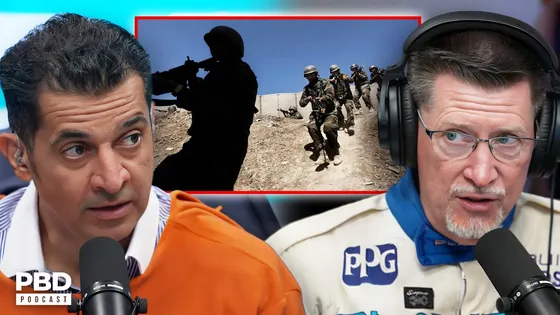
Patrick Bet-David said on the PBD Podcast that Conor McGregor’s “biggest fight” is still ahead of him, likely political, because Bet-David is “certain that war is coming” in the next couple decades. That is a lot of geopolitical weight to hang on one ruined comeback fight.
Most sports shows would have stayed with the leg, the payday, the bad luck, the cursed spectacle of everyone watching a fight on a phone while Argentina plays on the big screen. Bet-David went bigger. He took a McGregor disaster and turned it into a trailer for civilizational conflict, complete with faith, enemies, Europe, and the need for a certain kind of lunatic hero. Subtle? No. Searchable? Absolutely.
But if we know the war that’s that’s about to come, and you’re seeing it happen in UK, in Europe, and all these other places, and it’s going to come to us as well, you’re going to need some crazies like that to go to war.
I am certain that war is coming and people like him are going to unite and realize who the enemy is.
The pivot was not the leg, it was the prophecy
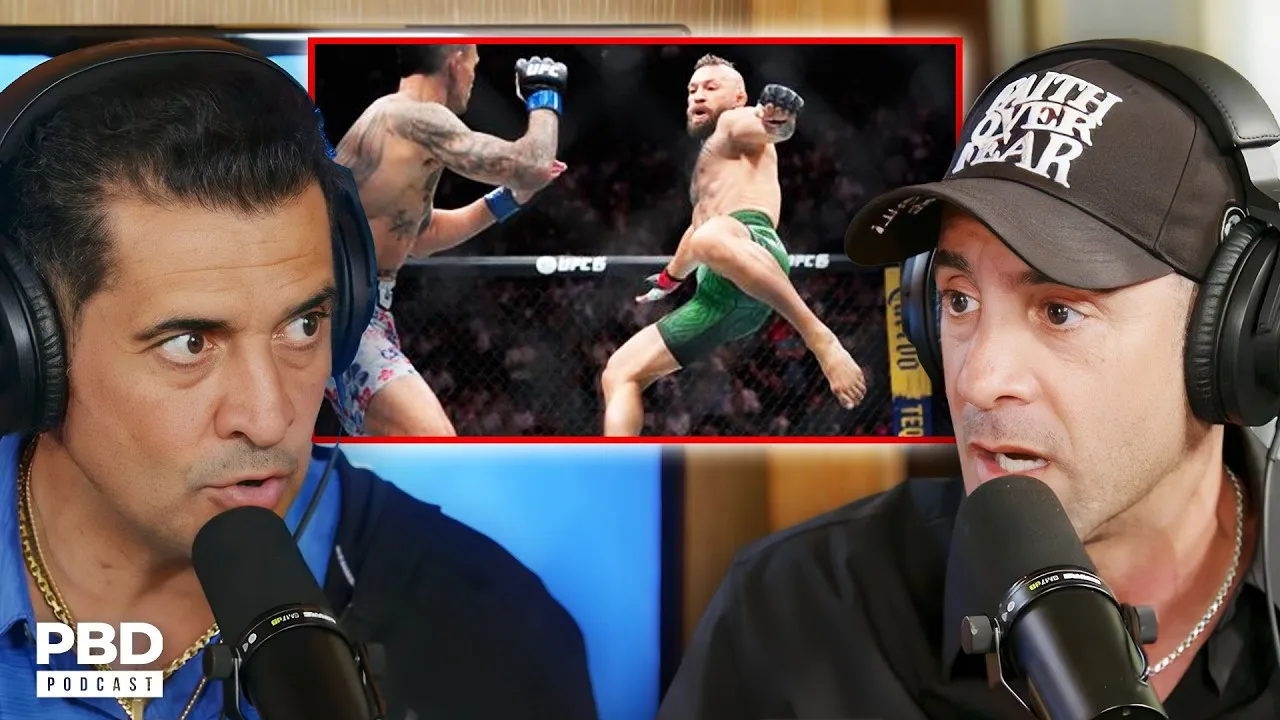
The segment starts in ordinary combat-sports mode. McGregor finally returns after years away, the room is excited, the fight ends almost instantly, and everyone begins doing the internet’s favorite forensic sport: freeze-framing a celebrity’s limp. Bet-David and the panel discuss a clip of McGregor allegedly walking into a pain management clinic days before the fight, then immediately undercut the certainty. He looks normal, they say. He was kicking in preparation. The evidence is thin.
Then the show brings in the number everyone understands, $30 million. One panelist says McGregor had to step in to get paid: “He doesn’t step foot in there. He doesn’t get his 30.” That’s plausible prizefight logic, but the clip does not prove it. The better story is not whether McGregor gamed a contract. It’s that Bet-David sees McGregor less as a fading UFC star than as a future political instrument.
It is everything in my life. I have mountain moving faith and I am more than a conqueror in Jesus.
That faith clip is the bridge. Bet-David hears McGregor talking about Jesus and does not hear a fighter trying to spiritually metabolize a humiliating night. He hears a man being prepared for something larger. Maybe that’s the appeal of McGregor now. The old version sold chaos as entertainment. The new version can be sold, at least by admirers, as chaos with a mission.
The leap is also where the eyebrow goes up. McGregor has always been a better symbol than citizen, a man whose greatest talent was making himself feel inevitable. But saying he could play a “very important role” in the next phase of global conflict is not analysis. It’s fan fiction with a flag pin. Bet-David is not reading a policy platform here. He’s reading aura.
The whiskey confession is the stronger evidence
The episode’s most convincing material comes from McGregor himself, not the panel’s prophecy. In an interview clip, McGregor describes how the peak of his career bled into business, drinking, and loss of control. No dragons. No battlefield. Just a man surrounded by the product he was supposed to sell.
Obviously. Obviously. You know, 2017, doubleweight world champion, Floyd Mayweather banked and then I launched an Irish whiskey.
Next thing you know, there’s thousands upon thousands of bottles in my garage. Sell this, Connor. Okay. I’d leave my property and with two bottles under my arm and that was it. I was caught.
That’s the real McGregor claim hiding under the louder one: fame did change him, and he knows exactly where the trap was set. The Mayweather money, the whiskey, the permanent performance of being Conor McGregor, all of it became its own cage. Bet-David wants to draft that struggle into politics. Fair enough as a media instinct. Less fair as a conclusion.
Machine Gun Kelly’s insult parade, the limp detective work, the $30 million speculation, all of that is noise around the cleaner question. If McGregor appears again on a show like this, will he talk like a fighter trying to recover his life, or like the political character his admirers are already writing for him?
- What did Patrick Bet-David say about McGregor and war?
- Patrick Bet-David said Conor McGregor’s “biggest fight” is still ahead and suggested it could be political, tied to a war he believes is coming in the next couple decades. He framed McGregor as the kind of intense, faith-forward figure who could unite people when conflict arrives. It’s a striking claim, but it’s more prophecy than evidence.
- Did the PBD Podcast prove McGregor was injured before the fight?
- No. The panel looked at speculation that McGregor had visited a pain management clinic days before the fight, but they also said he appeared normal in the clip and was kicking during preparation. The show treated the pre-fight injury theory as plausible chatter, not as a proven fact.
- Why did McGregor’s whiskey come up?
- The show played a clip of McGregor saying fame, the Mayweather payday, and launching Irish whiskey helped trap him. That confession was the strongest piece of actual self-analysis in the segment, because it connected his decline to the business empire built around his fighting persona.
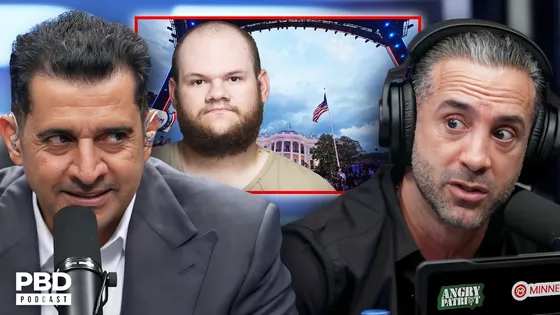
Patrick Bet-David says the alleged White House UFC terror plot was not even a top 10 media story
The PBD Podcast framed the alleged FBI-disrupted attack as a media scandal, then accidentally made its own argument wobble by racing through it in about three minutes.
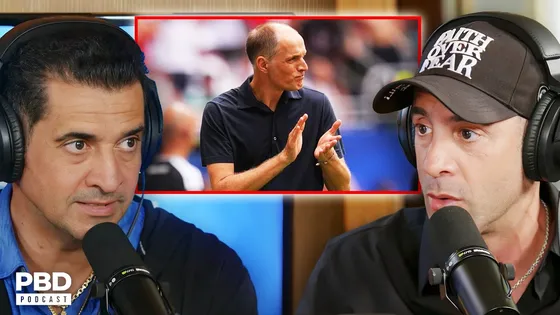
Patrick Bet-David says England may win the World Cup because Thomas Tuchel is a psycho coach
The PBD Podcast turned Thomas Tuchel's cranky postgame interview into a theory of why England might be more dangerous than Argentina realizes.
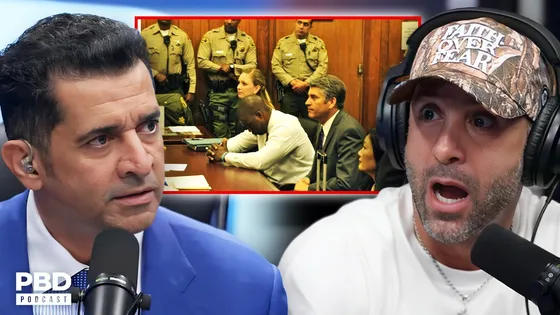
Tom Ellsworth says teenage boys with NIL money need to be 'almost paranoid maniacs' about false accusations
The PBD Podcast panel used the Brian Banks case to argue for harsher penalties for proven false rape accusations, then pushed the point into college sports paranoia.
Patrick Bet-David says you should stockpile 30 days of food and water as governments warn citizens to prepare
The PBD Podcast turned 72-hour emergency-kit advice into a warning flare for war, Iran, cyberattacks, and water-system sabotage.
The circuit, read weekly. No noise.