Patrick Bet-David says Tucker Carlson is going to run for president after rejecting the Republican Party
PBD reads Carlson's Republican breakup less as a purity stand than a 2028 audition, and his own panel doesn't buy the martyr act.
Listen on YouTube
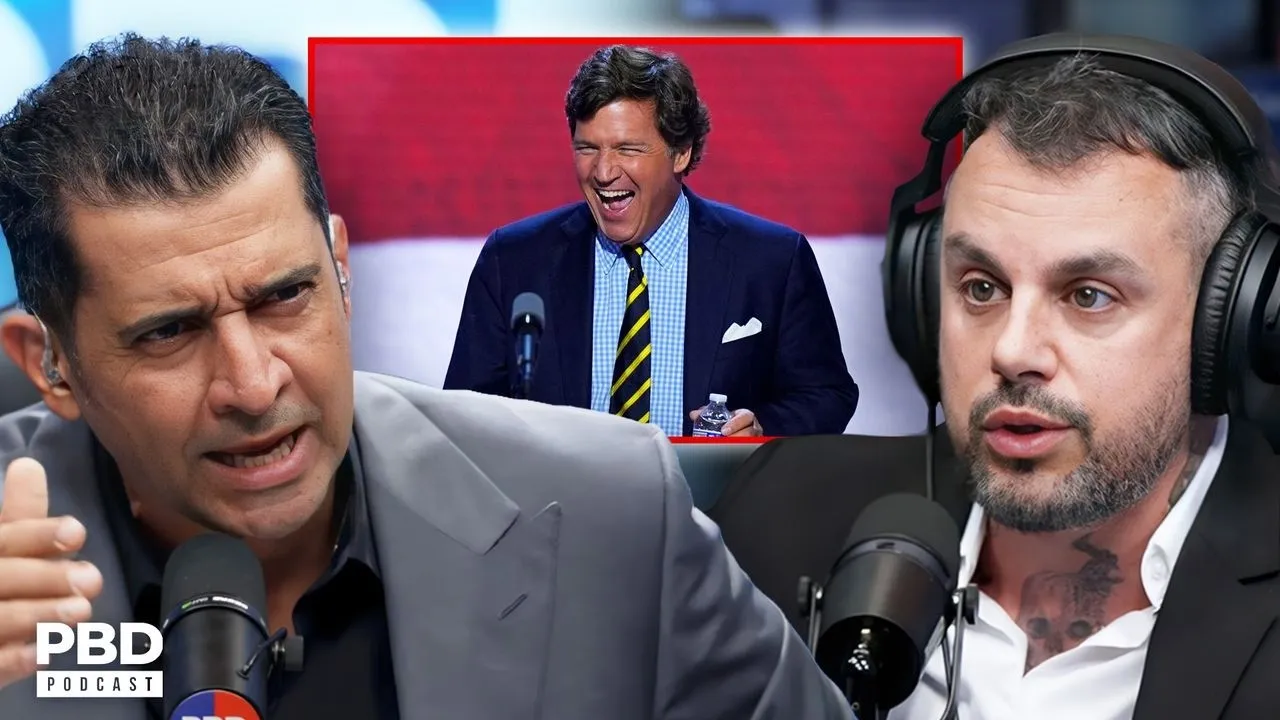 WATCH NOW↓
 Tucker Carlson’s Republican divorce papers came with a presidential footnote. On PBD Podcast, Patrick Bet-David said he has been predicting since 2022 that Tucker Carlson will run for president, and he treated Carlson’s new “I’m out” speech as something bigger than a protest vote.
That is the useful claim here. Carlson saying he won’t support Republicans is loud, sure, but Carlson being loud is not exactly a dog bites man situation. PBD’s read is sharper: the former Fox News star isn’t just breaking with a party over Israel, Iran, or foreign policy. He may be clearing space for himself.
There’s no chance I would support the Republican Party. Not going to support the Democratic Party. I don’t know what I’m going to do.
The breakup speech sounded a little too polished
Carlson’s clip is pure post-Fox Carlson: wounded nationalist, moral disgust, zero interest in sounding like a committee-approved Republican. He says the GOP is not “loyal to the United States” and accuses it of putting “the interest of a foreign country” above American citizens. Everyone in the room understands what foreign country is being discussed. Nobody has to squint.
The panel’s skepticism comes from the next move. Carlson then praises J.D. Vance, saying he’ll support “the best person” and that he likes Vance enormously. So which is it, a clean break with the Republican Party or a conditional friendship bracelet for the Republican most associated with Carlson’s wing of the movement? That contradiction is exactly where PBD sees politics, not just principle.
I said Tucker’s going to run for president since 2022 and I said he’s going to want to get into it.
This is a theory with smoke, not paperwork. Carlson has not announced a campaign in this transcript. PBD has no secret memo to wave around. But the read is not silly. Carlson has a massive audience, a grievance-based political style, and enough distance from the Republican establishment to sell himself as both conservative and betrayed by conservatives. That is basically the starter kit for modern primary politics.
The panel’s real accusation is that Carlson keeps moving the target
The nastiest criticism on the panel isn’t that Carlson changed his mind. Changing your mind about Iraq, Iran, or party loyalty can be honorable. The accusation is that Carlson’s stated principles keep bending toward one fixation. A panelist says if Carlson framed his objection as “Iraq War regret applied to Iran,” that would be morally defensible. But, the panel argues, he keeps landing on Israel.
So, this guy has no integrity. He shifts his opinion on anything based on whatever narrative he’s trying to push.
That line is brutal, and it shows how quickly the conservative-media civil war has become personal. Carlson used to be the guy people on the right bragged about being interviewed by. In this clip, one panelist says Carlson gave him a Fox Patriot Award in 2022. Now the same orbit is talking about propaganda, Nick Fuentes, Qatar, Sharia law, and whether Carlson is running a long con on the Republican base. Subtle, it is not.
when he said when he said he has voted Republican his entire life, I think he’s a registered Democrat from 2006 to 2022.
The registered-Democrat point is less devastating than the panel wants it to be. Bet-David reads the explanation too: Carlson has said Washington, D.C. local elections made Democratic primaries the only meaningful game in town, so registration was tactical. Fine. But it does puncture the neat autobiographical packaging of “I’ve voted Republican my entire life.” In politics, the packaging is half the product.
PBD’s best instinct is to ask for motives. Money? A media business? A future campaign? A personal inheritance of worldview from his father? He doesn’t pretend to know. He does say the most politically explosive version out loud: Carlson may be positioning himself for a presidential run while the Republican coalition tears itself into Daily Wire people, America First people, Israel hawks, anti-war populists, and dudes on prediction markets refreshing odds like it’s fantasy football.
If PBD is right, Carlson’s “I’m out” isn’t an exit. It’s an opening bid. The next question is whether Carlson wants to be the kingmaker who scares Republicans into changing, or the candidate who discovers that podcast charisma and presidential campaigning are two very different contact sports.
- Did Tucker Carlson really say he won't support Republicans anymore?
- Yes. The clip played on PBD has Carlson saying there is “no chance” he would support the Republican Party, while also saying he won't support Democrats and doesn't know what he'll do next. His stated reason is that he believes the party is putting a foreign country's interests above Americans.
- Why does Patrick Bet-David think Tucker Carlson may run for president?
- Bet-David says he has been predicting a Carlson presidential run since 2022. He frames Carlson's break with the GOP, his shifting alliances with figures like Elon Musk and Donald Trump, and his appeal to anti-establishment conservatives as pieces of a possible political lane.
- What was the contradiction the panel pointed out about Tucker Carlson voting Republican?
- Carlson says in the clip that he has voted Republican his entire life, but the panel points to reports that he was registered as a Democrat in Washington, D.C. from 2006 to 2022. Bet-David reads out Carlson's explanation, that he registered that way to vote in meaningful local Democratic primaries, which complicates the clean “lifelong Republican” line without proving he was ideologically Democratic.
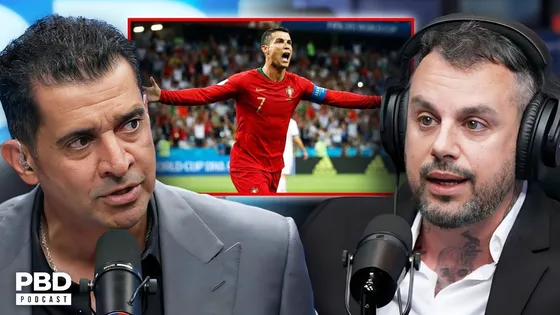
Patrick Bet-David says Lionel Messi’s perfection is why he’ll never be loved like Diego Maradona
The PBD argument is not that Messi lacks greatness, it is that greatness is a colder currency than myth.
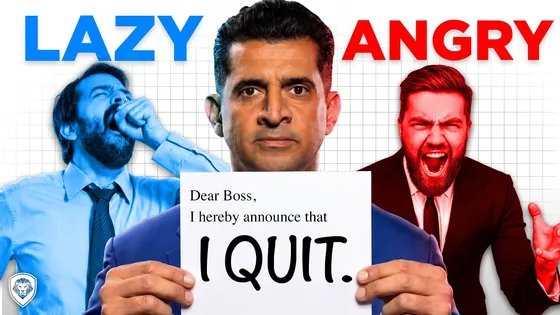
Patrick Bet-David says your micromanaging boss may be right not to trust you
The PBD Podcast host argues that bad bosses are real, but the employee who runs from every hard manager may be the actual workplace problem.
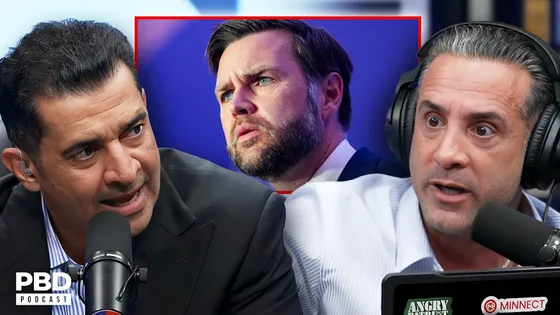
Patrick Bet-David says foreign leaders snubbed JD Vance because they think Marco Rubio will be president next
The PBD Podcast turned a few awkward diplomatic clips into a 2028 power read, and the read says JD Vance has a respect problem.
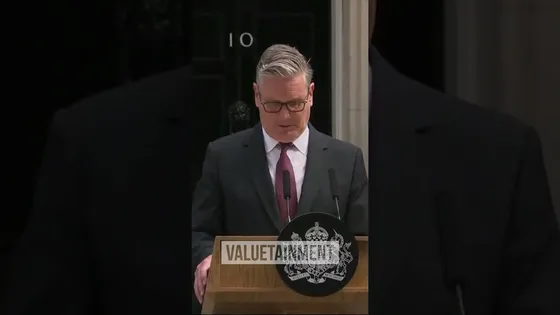
Patrick Bet-David says the UK has had seven prime ministers in 10 years
The PBD Podcast framed a tearful Labour resignation as proof that Britain has turned Downing Street into a revolving door, but the number depends on counting the successor too.
The circuit, read weekly. No noise.