Pradip Jamnadas says belly fat can signal 10 years of high insulin before diabetes
The cardiologist's viral warning is useful if you treat belly fat as a flashing dashboard light, not a diagnosis made in the mirror.
Listen on YouTube · Spotify · Apple Podcasts
 WATCH NOW↓
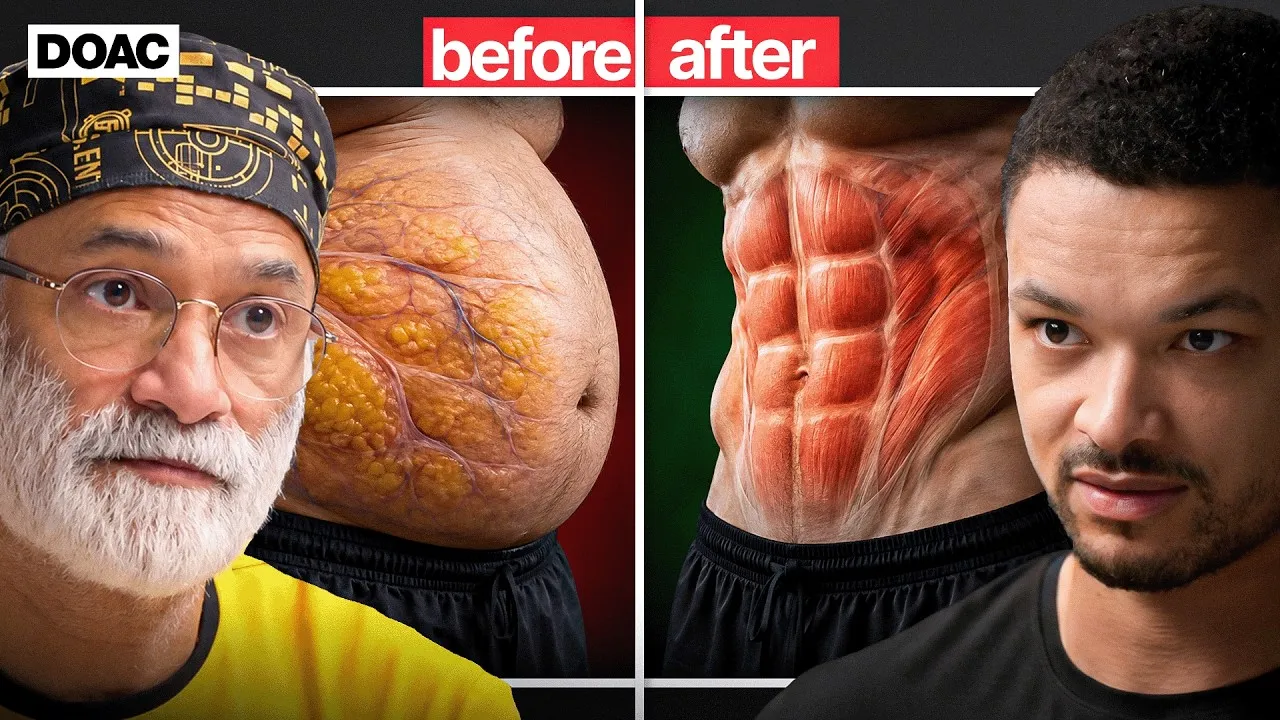
Dr. Pradip Jamnadas told The Diary of a CEO that belly fat can signal years of high insulin before diabetes shows up, and he put the danger window at about 10 years. He argued that by the time type 2 diabetes is diagnosed, coronary artery disease may already be underway.
That is the kind of health claim built for a YouTube thumbnail, a bathroom mirror, and a mild panic spiral after lunch. But Jamnadas, an interventional cardiologist who says he has worked on more than 30,000 hearts, is not selling a vague wellness mist here. He is making a specific accusation: the normal diabetes screen can miss the metabolic fire while the smoke is already pouring out of the windows.
So, he was number one, he was overweight, but he wasn’t just overweight. The overweight was all in his belly and he had a fatty liver and he had what is known as visceral fat.
The story he uses is a 28-year-old heart attack patient. Not 58. Not the guy in the cholesterol pamphlet clutching his chest next to a steak. Twenty-eight. Jamnadas says the patient was not diabetic by the usual markers, but he had belly fat, fatty liver, prediabetes, and high insulin. In his telling, that is the trap: glucose can still look fine because insulin is doing frantic unpaid overtime.
The villain is not the belly. It is the signal.
Jamnadas’s argument is that repeated hits of glucose, starch, processed food, and frequent eating keep insulin elevated. Over time, the body becomes resistant, the pancreas makes even more insulin, and the person can walk around with a reassuring A1C while developing insulin resistance, fatty liver, and visceral fat. The belly becomes the receipt.
And life was never the same again.
That line comes after he describes adding insulin testing to his practice. The drama is very cardiologist discovers the monster in the lab machine, but the underlying point is real enough. A1C is not a full metabolic autobiography. It is a useful test, not a confession booth. Someone can have normal-ish glucose numbers because their pancreas is pumping out enough insulin to keep the blood sugar show presentable.
No, but it’s that background high insulin that is destroying your metabolism.
He is right to scare you. He scares a little too cleanly.
The useful version of Jamnadas’s claim is this: belly fat, especially the hard-to-pinch kind around the organs, is a meaningful risk marker. It is tied to insulin resistance, fatty liver, inflammation, blood pressure problems, and heart disease. If your waist is climbing while your blood work gets a polite shrug, you should not treat that shrug as a papal blessing.
The too-neat version is his strongest line, that once diabetes is diagnosed, you already have coronary artery disease. Plenty of people with newly diagnosed type 2 diabetes have elevated cardiovascular risk, and some already have plaque. But coronary artery disease is not automatically stamped on every chart the second A1C crosses the threshold. That is an alarm bell phrased like a court verdict.
You lost that whole opportunity of prevention. It’s those 10 years.
The practical move is not to stare at your stomach and self-diagnose doom. It is to ask better questions earlier: waist size, blood pressure, lipids, triglycerides, A1C, fasting glucose, family history, and, where a clinician thinks it fits, deeper metabolic testing. Jamnadas’s big claim is blunt. The better habit is blunter: don’t wait for the diabetes label to start acting like prevention still counts.
- What did Pradip Jamnadas say about belly fat?
- Jamnadas said belly fat is often not just extra weight, but a clue that the body has been producing too much insulin for years. He tied visceral fat to frequent intake of sugar, starches, processed foods, and constant eating, which he said can keep insulin high and push fat into the liver and around organs.
- Is Pradip Jamnadas right that diabetes means you already have coronary artery disease?
- As a warning, it is reasonable. Type 2 diabetes and insulin resistance are major risk factors for coronary artery disease, and many people have plaque before symptoms appear. As a blanket statement, it is overstated, since not every newly diagnosed diabetic patient has documented coronary artery disease.
- Why does Jamnadas focus on insulin instead of A1C?
- His point is that A1C can look acceptable while the pancreas is working overtime to keep glucose in range. In that period, he argues, high insulin may be driving fatty liver, visceral fat, inflammation, and clotting risk before the usual diabetes label arrives.

The Diary of a CEO's unnamed war expert says U.S. attacks on Iran's power plants would be worse than a nuclear weapon
The viral claim is a grim piece of systems thinking, part warning, part strategic fatalism, and part podcast doomsday theater.

Steve Keen says climate change makes world government and lower energy use inevitable
The economist’s bleakest claim on The Diary of a CEO wasn’t that Britain is in trouble, it was that nation-states can’t solve the climate problem at all.

Roman Yampolskiy says GPT-6 could start building GPT-7 in 2027 and make humans a secondary species
The AI safety researcher’s scary date is 2027, but the debate gets sharper when the panel asks whether his extinction math is prophecy or panic.

Nate Soares says turning off AI data centers will not stop rogue AI
The AI safety researcher’s claim is less Hollywood robot uprising than cloud-infrastructure panic: once agents can hide, humans may not know what to unplug.
The circuit, read weekly. No noise.