Tara LaFerrara Built a Million-Dollar Fitness Business by Refusing to Be Perfect
The Broads founder on coaching funnels, a $130,000 app failure, and why 'do the cringe thing' is actually a business strategy.
Listen on YouTube · Spotify · Apple Podcasts
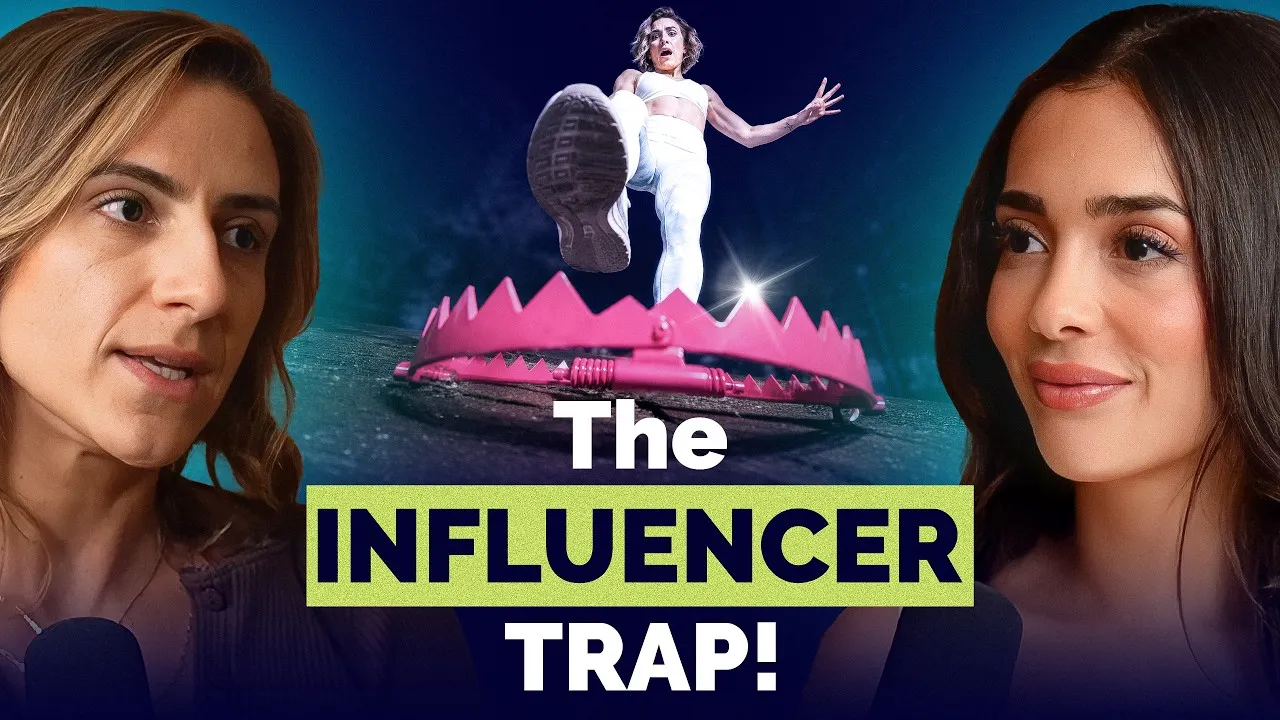 WATCH NOW↓
 Tara LaFerrara spent $130,000 on a custom fitness app, watched it break for three months straight, had outside developers look at the code and ask “why did you do it this way?” and then scrapped the whole thing. She does not seem particularly broken up about it. This is either the most useful thing about her or the most annoying, depending on your relationship with sunk costs.
LaFerrara has been posting fitness content since 2014, back when Instagram was still the place you went to look at brunch and not get coached on perimenopause. She wanted to be Joan from Mad Men, got laid off from advertising, and eventually went all-in on fitness in 2018 with a $99 eight-week PDF program she put on Squarespace and sold to almost 100 people. That momentum compounded into a multi-revenue business that now clears over a million dollars a year, with eight contractors, a sales team running on commission, three coaches handling client fulfillment, and a podcast that just joined a network. The through-line is not genius product strategy. It is just not stopping.
The Funnel Runs Backwards
The conventional creator playbook runs low-ticket to high-ticket: sell a cheap PDF, upsell to a course, upsell again to premium coaching. LaFerrara’s business runs the other direction. Her most expensive offering, one-on-one coaching at $3,000 for four months, is also her biggest revenue driver and her primary point of entry. People find her through years of Instagram, her podcast, her email list, and then show up to a sales call already sold. “Some people have been following me on Instagram for five, six years and they feel like they know me,” she says. “When they get on a call with us, it’s kind of a no-brainer.” The app and group programming exist, but they function more as retention tools than acquisition engines.
Some people have been following me on Instagram for five, six years and they feel like they know me and our ethos with Broads and so when they get on a call with us, it’s kind of a no-brainer.
She also made a deliberate and lucrative bet on specificity. Women 35 and older. Perimenopause, menopause, the physical and psychological weight of feeling invisible as you age. She will turn away clients under 30 most of the time. Asked if the niche was purely passion or also economic, she doesn’t flinch: “Yes, in general. Yeah, I would say that,” meaning older women have more money to spend. Passion and market analysis arrived at the same place. That doesn’t always happen, and when it does, you take it.
The $130,000 Lesson in Staying in Your Lane
The app story is the most instructive thing in this episode and LaFerrara tells it without burying the lede. She hired a development team, hired a designer, launched in November 2024, and for the first three months, “everything broke.” Brought in outside help. Spent six figures and seven months. Then scrapped it and rebuilt on a white-labeled fitness platform called exercise.com, which costs a fraction of that and looks identical to users. The whole experience, she says, was her accidentally becoming “a tech CEO,” which was never the job. The current setup lets her stay in coaching and get out of infrastructure.
At the end of the day, I didn’t want to be a tech CEO. And that’s what I was starting to be with this app build out. I was just naive. But now that I see that I can do the same thing and stay in my own lane of coaching and the experience for the client, it’s such a better opportunity for me.
The brand deal economics are worth paying attention to if you’re a mid-size creator trying to figure out where the floor is. Her minimum for a single reel is $5,000. Stories add $1,000 to $1,500. A six-month package with reels and user-generated content pieces ran $35,000. She has a brand manager who takes 20 percent and handles negotiations. Whitelisting, where a brand boosts your post through their ad account, commands a premium because you are essentially functioning as their spokesperson. She frames it simply: “If they’re going to make me their spokesperson, that means I’m like their model, so I should be charging more for that.” Hard to argue.
Put yourself out there, do the cringe thing, and don’t give a F about what anyone else thinks about you. If this is what you want, just go for it.
She also trapped herself in a personal brand for years, a problem she is only now starting to fix by building Broads as an entity that can survive without her face on every piece of content. She knows it. She says it plainly. The trap is real, the exit is slow, and most creator-coaches never fully make it out. Whether she does remains the actual interesting question her business is still trying to answer.
Benjamin Hardy says 10X growth requires cutting 80 percent of your life
The productivity guru’s sharpest claim is not to grind harder, but to delete most of the life that made you successful so far.
Gary Vaynerchuk says entrepreneurs who ignore their partners may not actually value the relationship
GaryVee’s productivity gospel gets its sharpest domestic translation: if you really wanted to see them, you would.
Benjamin Hardy Says You're Measuring Yourself Wrong, and He Has the Viktor Frankl Story to Prove It
The organizational psychologist behind 'The Gap and the Gain' explains why hitting your goals might make you feel worse, and what Mr. Beast figured out at 17 that most adults never do.
Jessie Inchauspé Says Your Breakfast Is Why You Feel Terrible by 10 a.m.
The Glucose Goddess on sugar crashes, aging like a chicken in an oven, and why orange juice is basically a can of Coke.
The circuit, read weekly. No noise.