Dr. Chris Palmer says a ketogenic diet made a schizophrenia patient’s hallucinations and delusions go away after two months
The Harvard psychiatrist’s metabolic psychiatry pitch is fascinating, hopeful, and still not the same thing as proof that keto cures severe mental illness.
Listen on YouTube · Spotify · Apple Podcasts
 WATCH NOW↓
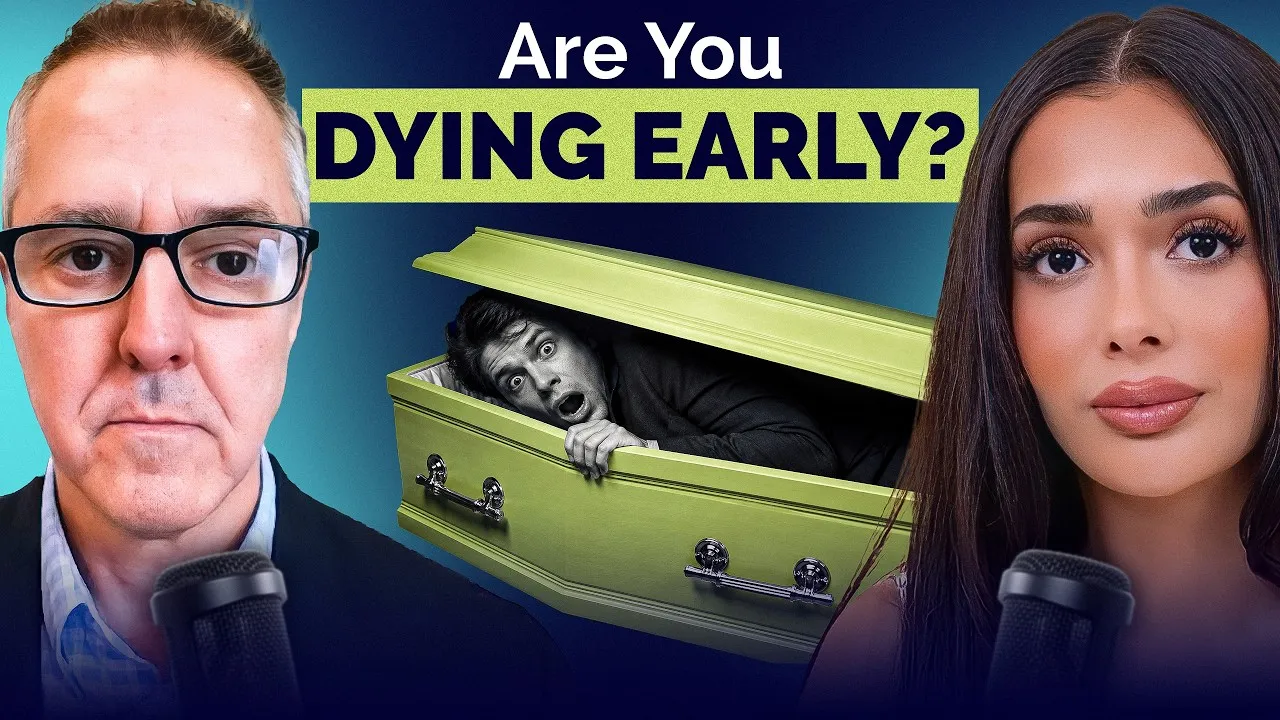
 This is the kind of podcast claim that walks into the room wearing a white coat and carrying a grenade. On Young and Profiting, Dr. Chris Palmer said a 33-year-old patient with 13 years of schizophrenia symptoms saw his hallucinations and delusions start going away after about two months on a ketogenic diet.
That is not a wellness influencer saying bone broth fixed his vibes. Palmer is a Harvard psychiatrist and the author of Brain Energy, and his whole thing is metabolic psychiatry, the idea that mental illness is not floating somewhere above the body like a haunted screensaver. It is happening in a physical organ that burns energy, depends on mitochondria, and can be affected by obesity, insulin resistance, sleep, inflammation, alcohol, marijuana, trauma, and diet.
The episode’s flashiest claim is also the one that needs the most adult supervision. Palmer described a patient he called Tom, a man with schizophrenia who had tried 17 medications and was still, in Palmer’s telling, profoundly ill. Palmer initially recommended keto for weight loss. Then the psychiatric symptoms changed.
my hallucinations are going away. My delusions are going away.
Palmer said the patient began making better eye contact, smiling more, talking more, and then, around the two-month mark, questioning delusions he had previously defended. The case clearly rattled Palmer in the productive way science sometimes does, when a clinician sees something that doesn’t fit the filing cabinet.
That man went on to lose now over 160 lbs and has kept it off to this day 10 years later.
The claim is not as crazy as it sounds. It is also not a cure.
Here is the fair version: Palmer has a real mechanism to point at. The ketogenic diet is not new, and it wasn’t invented so executives could put butter in coffee and act persecuted at brunch. It has a medical history in epilepsy, which matters because psychiatry already borrows heavily from epilepsy treatment. Mood stabilizers and anti-seizure medications live in the same medicine cabinet for a reason.
the ketogenic diet is actually a 100-year-old evidence-based treatment for epilepsy.
Palmer’s argument is that if keto can alter brain excitability, neurotransmitters, inflammation, and mitochondrial function in epilepsy, then it isn’t absurd to ask whether similar biology could affect severe psychiatric symptoms. That is a much stronger claim than the internet version, which will inevitably become, “Doctor says steak cures schizophrenia.” Please do not be that person.
A single case, even a dramatic one, is not a randomized trial. It can be a clue. It can be a flare in the sky. It can justify more research. It cannot tell you what will happen to the next patient, or whether the diet caused the improvement, or whether some combination of weight loss, medication, better sleep, metabolic changes, clinical attention, and time did the work.
Palmer’s bigger pitch is that psychiatry has been too brain-only
The rest of Palmer’s case is broader and, frankly, more convincing than any one miracle story. He says depression is not simply a serotonin deficiency, even though antidepressants can help some people. He says obesity is associated with sharply higher later risk of mental illness. He says mental illness is linked to earlier death, not mainly because of suicide, but because heart attacks and strokes arrive sooner.
His most useful move is taking the stale mind-body split and throwing it into traffic. If the brain is an organ, and organs need energy, then diet, sleep, substances, exercise, stress, and metabolic markers are not “lifestyle extras.” They are part of the psychiatric weather system. That doesn’t mean your panic attack is your fault because you ate cereal. It means the old model may have been leaving too many wires unplugged.
93% of Americans right now have at least one biomarker of poor metabolic health.
That statistic is doing a lot of heavy lifting for Palmer’s worldview, but it also explains why the worldview is catching on. If nearly everyone has some sign of metabolic trouble, and mental health problems are rising, a theory that connects the two is going to feel less like a niche academic argument and more like someone found the breaker box.
The responsible takeaway is boring. That’s a compliment.
Palmer did not tell listeners to quit medication. In fact, he said if an antidepressant has changed your life and isn’t causing side effects, keep taking it. His advice was more practical and less sexy than the keto-schizophrenia headline: check your metabolic health, improve diet, sleep more, reduce alcohol and marijuana, move your body, and get professional help if the DIY version isn’t working.
The verdict on the big claim: intriguing, not proven. Palmer’s schizophrenia case is exactly the kind of story that should make researchers uncomfortable in a useful way. It should not make patients throw away their meds and buy a brisket.
If Palmer is right, the next era of mental health treatment won’t be less medical. It’ll be more medical, in the annoying, bloodwork-and-bedtime sense. The brain is not a cloud. It’s flesh. It gets tired. It eats what you eat.
- Did Dr. Chris Palmer say keto cures schizophrenia?
- No. Palmer described one dramatic patient case, not a universal cure. His stronger and more defensible point is that metabolic interventions, including ketogenic diets, may be powerful enough to deserve serious psychiatric study, especially because keto is already an evidence-based epilepsy treatment.
- What happened to Palmer’s schizophrenia patient on keto?
- Palmer said the patient had hallucinations and delusions for 13 years, had tried 17 medications, and began improving after starting a ketogenic diet. About two months in, according to Palmer, the patient said his hallucinations and delusions were going away. Palmer also said the patient eventually lost more than 160 pounds and kept it off 10 years later.
- Why does Palmer connect keto to mental illness?
- Palmer argues that brain disorders are partly problems of energy regulation and mitochondrial function. Because keto can change brain fuel use and is used medically for epilepsy, he sees it as relevant to psychiatric symptoms too. That idea is plausible enough to take seriously, but it still needs more clinical evidence before anyone should treat it like settled medicine.

Haley Sacks says renting an apartment will make you richer than buying a house.
The financial influencer known as Mrs. Dow Jones is aggressively shorting the traditional American dream.

Mustafa Suleyman says AI agents will run an entire online business before 2030
The Microsoft AI CEO is bullish on agentic AI, but his most futuristic prediction also sounds a lot like the sales brochure for Copilot.
Benjamin Hardy says 10X growth requires cutting 80 percent of your life
The productivity guru’s sharpest claim is not to grind harder, but to delete most of the life that made you successful so far.

Ben Nemtin says 76% of people reach their deathbed regretting the life they didn't live
The Buried Life co-creator has built a whole bucket-list gospel around one scary statistic, though the number is cleaner than the research behind it.
The circuit, read weekly. No noise.