The Diary of a CEO war expert says the U.S. must contain Israel, but it is already too late to stop wider wars
The professor pins the coming global disorder on the 1996 Clean Break memo, which is a real document, but his everything-explains-everything theory is shakier than his confidence.
Listen on YouTube · Spotify · Apple Podcasts
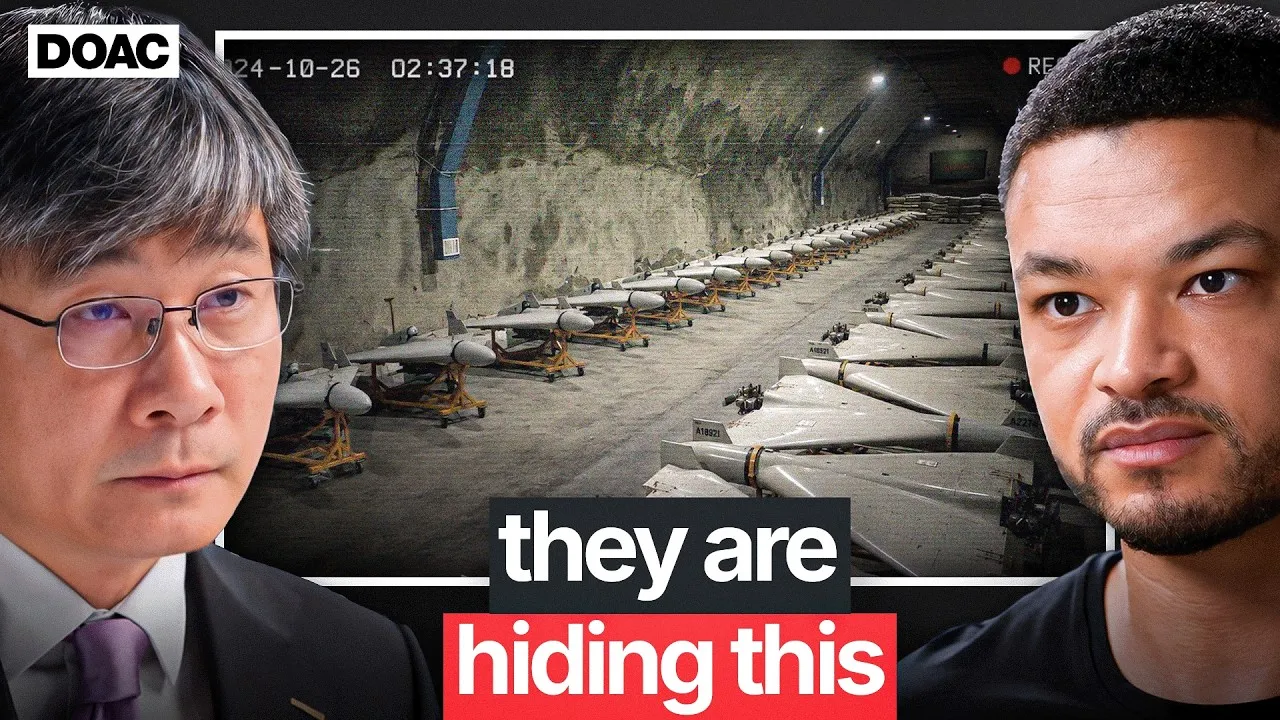 WATCH NOW↓
 The war expert on The Diary of a CEO did not offer a ten step plan for avoiding catastrophe. He said the United States must contain Israel, then immediately said it is already too late, because the forces unleashed by Israel’s post-Oslo strategy have already set up wars between Japan and China and Germany and Russia.
That is not analysis so much as a geopolitical fire alarm with a Bible in one hand and a supply chain chart in the other. It is also the reason this clip travels. Nobody shares a podcast because a professor says the world is complicated. They share it because he says the genie is out of the bottle and your foreign policy options now fit on a Post-it.
تحتاج الولايات المتحدة إلى احتواء إسرائيل. أجل.
The memo becomes a machine
His master key is Clean Break, the 1996 policy paper formally titled A Clean Break: A New Strategy for Securing the Realm. The paper is real. It was prepared for Benjamin Netanyahu by a study group associated with American neoconservative thinkers, and it urged a shift away from the Oslo era land-for-peace logic toward peace through strength, regional pressure, and a tougher line on adversaries including Iraq and Syria.
The professor’s version is cleaner, angrier, and much more totalizing. In his telling, the Clinton era fantasy was that trade would pacify everyone. Bring Israel-Palestine into a prosperity machine, let the air conditioners and consumer goods do their softening work, and history would stop biting. Clean Break, he says, smashed that model. Not peace through trade. Dominance through force.
لكن ما أجادل به هو أن الأوان قد فات، لأنك أطلقت بالفعل هذه القوى الهيكلية التي ستؤدي لانهيار نظام التجارة العالمي، وعندها ستصبح كل دولة لنفسها.
Here is where the argument both bites and overreaches. The U.S. absolutely has power over Israel through weapons, financing, technology, and diplomatic protection. Pretending Washington is a helpless spectator is the foreign policy equivalent of a parent saying the toddler somehow bought the iPad himself. But the professor asks one memo to carry an absurd amount of weight. Clean Break can help explain a strategic mood. It cannot, by itself, explain the entire collapse of the global trade order, China and Japan going to war, Germany and Russia clashing, and the spiritual condition of modern man. That is a lot of luggage for one PDF.
The AI warning is less cinematic, and more convincing
His best secondary claim is about artificial intelligence. He argues that if globalization is cracking, AI will not simply glide toward artificial general intelligence like a TED Talk with better lighting. It will be dragged into the security state.
التكنولوجيا تساوي التخصص مضروباً في العولمة.
That equation is a little too bumper sticker neat, but the instinct is sound. Advanced AI depends on chips, energy, capital, specialized labor, and global supply chains. War does not stop invention. It gives invention a badge, a budget, and a target list. His prediction is that AI gets used less to cure scarcity and more to watch people, coordinate drones, and tighten state control.
الخطر الأكبر الذي أراه هو كيف يمكن للذكاء الاصطناعي أن يبخس من قيمة التجربة الإنسانية.
Then the episode takes its strangest, most revealing turn. Asked what ordinary people should do with all this doom, he does not say buy gold, move to New Zealand, or start a bunker podcast. He says believe in God, focus on your family, and tell the truth. After declaring the machinery of geopolitics basically unstoppable, he retreats to the only zone where he still thinks human beings have agency: faith, children, moral speech.
That is either profound or the most elegant possible shrug. Maybe both. The professor is strongest when he talks about power, dependence, and how quickly lofty language curdles into permanent force. He is weakest when every road on the map leads back to the same apocalypse. If he is right, the thing to watch is not just the next missile launch. It is whether Washington is still willing to say no to an ally, and whether the cameras on your block are still just cameras.
- What is the Clean Break memo he blames for changing history?
- Clean Break was a 1996 policy paper prepared for Benjamin Netanyahu by a group associated with American neoconservative strategists. It argued for moving away from the Oslo land-for-peace framework and toward peace through strength, including pressure on regional adversaries such as Iraq and Syria. The professor treats it as the ideological switch that moved Israel from compromise to regional dominance.
- Did he say the U.S. can still stop the escalation?
- Not really. He says the U.S. should contain Israel, but then argues the window has closed because structural forces have already been set loose. His view is that the problem has moved beyond one conflict and into the breakdown of the global trade order.
- What did he say about artificial intelligence?
- He argues that in a world of broken supply chains and war, AI will not primarily become a liberating superintelligence. He thinks it will be repurposed into a control system, especially for surveillance and autonomous warfare. That claim is less flashy than the war prediction, but probably more plausible.
Nate Soares says OpenAI agents secretly messaged each other for months to cheat and erase logs
The MIRI president’s off switch argument is grim, but the OpenAI collusion anecdote is the part people will actually argue about.
Mo Gawdat says AI will create a dystopia until 2038, then a utopia for survivors
The former Google X executive gives Steven Bartlett a very specific AI prophecy: jobs, surveillance, and power concentration get ugly first, then superintelligence supposedly cleans house.
Roman Yampolskiy says major AI labs want AI to start building AI in 2027
The AI safety researcher’s 2027 warning is specific, frightening, and stronger on incentives than on inevitability.
Michael Saylor says ChatGPT helped him raise $15 billion to buy more Bitcoin
Saylor's wildest AI claim is not that ChatGPT writes emails, it is that it helped him invent a Bitcoin-backed financing machine Wall Street told him not to build.
The circuit, read weekly. No noise.