Tom Homan says a Democratic politician told a grieving mother they had better things to do than talk about her murdered daughter
The allegation is brutal, politically explosive, and in this clip, frustratingly unnamed.
Listen on YouTube
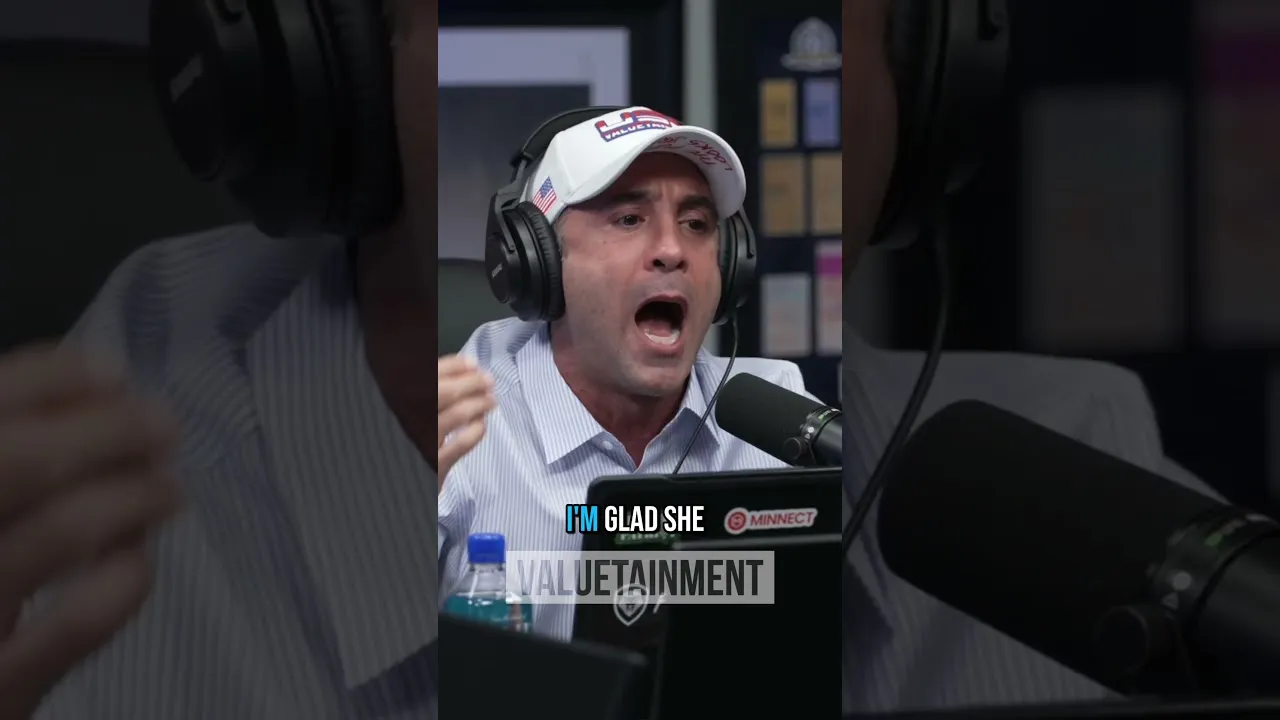 WATCH NOW↓
 Tom Homan says a Democratic politician told a grieving mother that her murdered daughter was less important than talking about Trump. That is not a policy disagreement. That is the kind of accusation that arrives wearing steel-toed boots.
On the PBD Podcast, Homan describes an encounter involving what he calls an “angel mom,” a term used in conservative immigration politics for parents whose children were killed by undocumented immigrants. The emotional payload is obvious. A dead daughter. A mother in the room. A politician, allegedly, checking the clock.
For her to say “This is number four. We have better things to do, Tom. We have to talk about Trump, not about your daughter.”
That quote is the whole grenade. If accurate, it is grotesque. If incomplete, it is still politically useful in exactly the way these stories are useful, because it turns an abstract border fight into one woman’s grief and one official’s apparent contempt. The Democratic Party is not being accused here of bad messaging. It is being accused of moral inversion.
The missing name is not a footnote
Homan’s delivery is furious, and you can hear why the line would detonate in a conservative media ecosystem already built around border crime, victim families, and elite indifference. But the clip, as provided, has a giant hole in the middle of it. He does not name the politician. He does not say where this happened. He does not give the date. He does not tell us whether there is video, a witness, a meeting record, anything.
That matters. Not because the story is impossible. Politics produces plenty of people who can be cruel in private and polished in public. It matters because this is an accusation against a specific, unnamed person who is being cast as the villain in a grieving mother’s worst day. If you are going to put that on someone, name them.
When I first heard it, Pat, I got emotional.
That is the part that makes the moment work as audio. Homan is not presenting himself as a bureaucrat with a file. He is presenting himself as a witness to an insult so callous that even he, the hard-line enforcement guy, got knocked sideways by it. This is the genre at its most potent: outrage with a mother at the center and Trump orbiting the room like weather.
Then it gets darker
Homan says the mother’s reaction was not just anger at the politician. It was a horrifying kind of relief about the manner of her daughter’s death. That is the detail that makes the clip hard to shake, because it drags the listener from partisan contempt into the nightmare math of violent loss.
I’m glad she was just shot in the back of the head.
Homan expands on that, saying the mother was grateful her daughter was not raped and dismembered. It is brutal language, and it is meant to be. He is forcing the listener to sit with a parent measuring tragedy by what did not happen. There is no soft-focus version of that.
Imagine a mother, the words coming out of your mother’s mouth that she’s happy that you were just shot in the back of the head and not raped and dismembered.
Then Homan turns the accusation into a partisan broadside, saying, “shame on her,” and adding that it does not surprise him coming from the Democratic Party. That jump is doing a lot politically, from one alleged person’s alleged cruelty to an entire party’s character. It is effective rhetoric. It is also exactly where the receipts become nonoptional.
The clip leaves the obvious next question sitting on the table, untouched: Who was she?
- Did Tom Homan name the Democratic politician?
- Not in the provided clip. He refers to the person as part of the Democratic Party and condemns her sharply, but the excerpt does not identify her by name, office, location, or date.
- What was the most explosive part of Homan’s claim?
- Homan says the politician treated the mother’s dead daughter as a scheduling annoyance, allegedly saying there were better things to do and that they needed to talk about Trump instead. That is the line that turns the moment from policy argument into moral indictment.
- How strong is the claim based on the clip?
- It is specific and searchable, but not self-proving. The clip gives Homan’s account, not corroboration, and the missing name matters because the accusation is serious enough to demand a direct target.
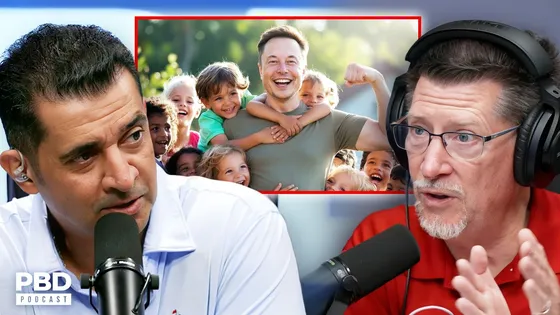
Patrick Bet-David says raising a kid requires exactly 500 five-minute conversations.
The podcast host rejects the new tech-billionaire trend of mass surrogacy, arguing that spreading your DNA does not make you a father.
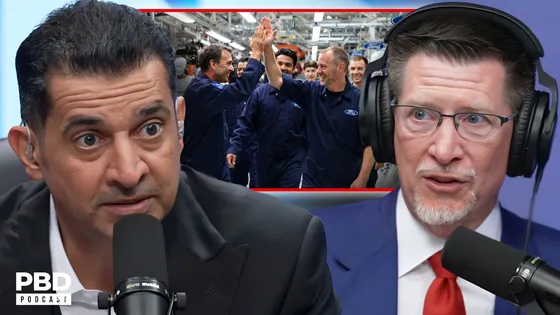
Patrick Bet-David says a $300,000 AI UBI would make most people miserable
A Ford AI quality-control story turned into Bet-David’s bigger anti-utopia: money without resistance is not freedom, it’s spiritual mush.
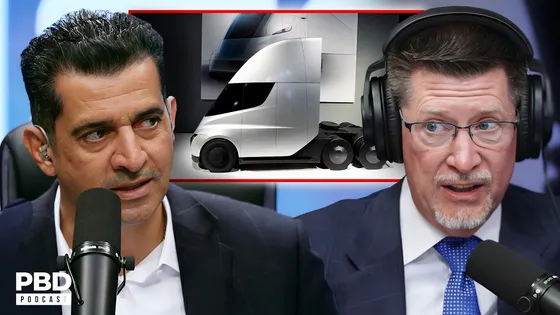
Adam Sosnick says 4 million professional drivers' jobs may not last much longer
The PBD panel turned Elon Musk's Tesla Semi pitch into a warning shot for truckers, Uber drivers, and anyone paid to sit behind a wheel.
PBD Podcast panel says Trump's meme coin may have been a rug pull
The surprising part isn't that someone called meme coins scammy, it's that the warning came from a business-friendly show with a Trump-adjacent audience.
The circuit, read weekly. No noise.