Adam Sosnick says 4 million professional drivers' jobs may not last much longer
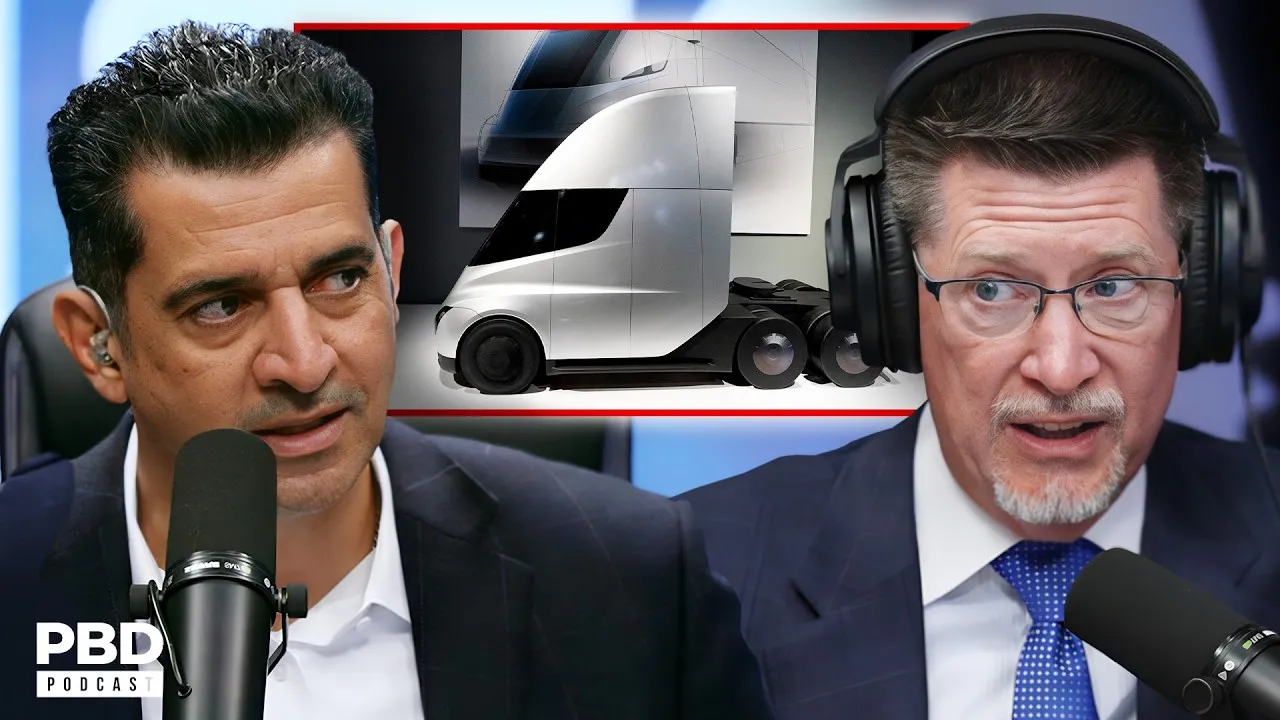
The PBD panel turned Elon Musk's Tesla Semi pitch into a warning shot for truckers, Uber drivers, and anyone paid to sit behind a wheel.
Listen on YouTube
 WATCH NOW↓
Adam Sosnick’s takeaway from Elon Musk’s Tesla Semi rollout was not that the truck looks slick. It was that roughly 4 million professional drivers should stop acting safe, because their jobs may not last much longer.
That is the real charge inside this PBD Podcast segment. Yes, Elon Musk is there by video, selling the electric vehicles dream in full carnival-barker engineer mode, 500 miles loaded, mega-charging, cheaper energy per mile, fun to drive. But Adam Sosnick hears something else underneath the sales pitch: not a truck launch, a labor-market warning.
এটি অনেকটা ট্রাকের আকারে একটি স্পোর্টস কারের মতো।
That line is classic Musk. Make the machine sound inevitable, then make it sound fun. A semi truck as a sports car is absurd in the way only Musk product language can be absurd, but it also reframes freight as consumer tech. Not a diesel workhorse. A gadget with torque.
The spreadsheet is the sales pitch
Patrick Bet-David’s panel does not treat the Semi as a green halo product. They treat it as a cost knife. The important audience is not a guy yelling in the live chat that nobody wants EVs. It is Walmart, DHL, PepsiCo, and the fleet CFO staring at diesel prices like the numbers personally insulted his mother.
ডিজেল জ্বালানির খরচ প্রতি মাইলে প্রায় ৮০ সেন্ট, যেখানে বিদ্যুতের খরচ প্রতি মাইলে ২০ থেকে ৩০ সেন্ট।
That is why the anti-EV reflex runs out of road here. If a truck can do the route, charge at the depot, and save meaningful fuel money, nobody in the C-suite needs to feel spiritually moved by a battery. They just need the math to behave.
Tom Ellsworth adds the ugly middle layer, the one that never fits inside the launch event. Big fleets can build charging infrastructure. Smaller trucking companies cannot casually drop chargers everywhere and call it innovation. He also describes an unnamed Chicago trucking business whose EBITDA got hammered by fuel costs, a reminder that diesel inflation is not an abstraction when your trucks are financed and the bank knows where they sleep.
Sosnick hears a layoff siren
Then Sosnick takes the logic from fleet economics to human economics. He brings up talking to an Uber driver and gives the advice nobody wants from the back seat of a rideshare.
তোমার এখনই একটা নতুন চাকরি খোঁজা উচিত, ভাই।
Subtle, no. Useful, maybe. Sosnick is bundling several threats into one ominous package: autonomous taxis, autonomous trucking, and the Tesla Semi’s promised self-driving features. That makes the prediction more dramatic than the current reality. A truck that can assist a driver is not the same thing as a national fleet of robot rigs hauling freight through snow, construction zones, weigh stations, bad GPS, and lawyers.
But the warning is not empty theater. Driving has always looked safer than other jobs because it is physical, local, and everywhere. The PBD segment argues that those qualities may be exactly why the job category is such a fat target for autonomous vehicles. If you move people or freight for a living, software does not need to replace every mile to make your bargaining power worse. It only needs to replace the profitable miles first.
The fair verdict: Sosnick’s timeline is hazy and his tone is pure alarm bell, but the career advice is less crazy than it sounds. Do not assume the steering wheel is a pension plan.
আমার মনে হয়, প্রায় ৪০ লক্ষ পেশাদার চালক আছেন। ২০ লক্ষ বড় ট্রাক চালান এবং ২০ লক্ষ অন্যান্য ধরনের যানবাহন চালান। আপনার চাকরি হয়তো আর বেশিদিন টিকবে না।
- What did Adam Sosnick say about professional drivers?
- Adam Sosnick said roughly 4 million professional drivers, including 2 million big-rig drivers and 2 million other vehicle drivers, may not have jobs much longer. His warning was tied to Tesla’s Semi, self-driving features, and driverless ride-hail cars such as Waymo.
- Is Tesla Semi really a threat to truck drivers right now?
- The threat is more immediate for trucking economics than for every driver’s job. The panel points to lower electricity costs, large fleet orders, and charging at depots, but it also admits that 500 miles is not diesel-truck range and small trucking firms may struggle to afford charging infrastructure.
- Why did the PBD panel say trucking could consolidate?
- Tom Ellsworth argued that big fleet operators can build charging networks while smaller trucking companies cannot. If electric trucks become cheaper to run, small firms may need partners, buyers, or mergers just to keep up.
Adam Sosnick says the Lindsay Clancy case is the new prenup
The PBD panel turned the Clancy mistrial into a brutal dating question, and the answer they want is not subtle.

Adam Sosnick says a couple is suing a surrogate for $600,000 because their son with a cleft lip is alive
The PBD panel framed an Ontario surrogacy lawsuit as the nightmare version of designer-baby logic, but the legal story is messier than the moral one.
Patrick Bet-David says the Pepsi jet lawsuit guy finally got 7 million Frontier miles
Frontier turned John Leonard's impossible Harrier jet prize into a Super Bowl bit, and the PBD crew correctly clocks the real winner, the airline's marketing department.
Patrick Bet-David says England may win the World Cup because Thomas Tuchel is a psycho coach
The PBD Podcast turned Thomas Tuchel's cranky postgame interview into a theory of why England might be more dangerous than Argentina realizes.
The circuit, read weekly. No noise.