Alex Hormozi says AI can’t replace MrBeast because the $5 million prize has to be real
Hormozi’s best anti-AI argument isn’t that humans are magical, it’s that someone still has to be accountable when the money, reputation, or car is on the line.
Listen on YouTube · Spotify · Apple Podcasts
 WATCH NOW↓
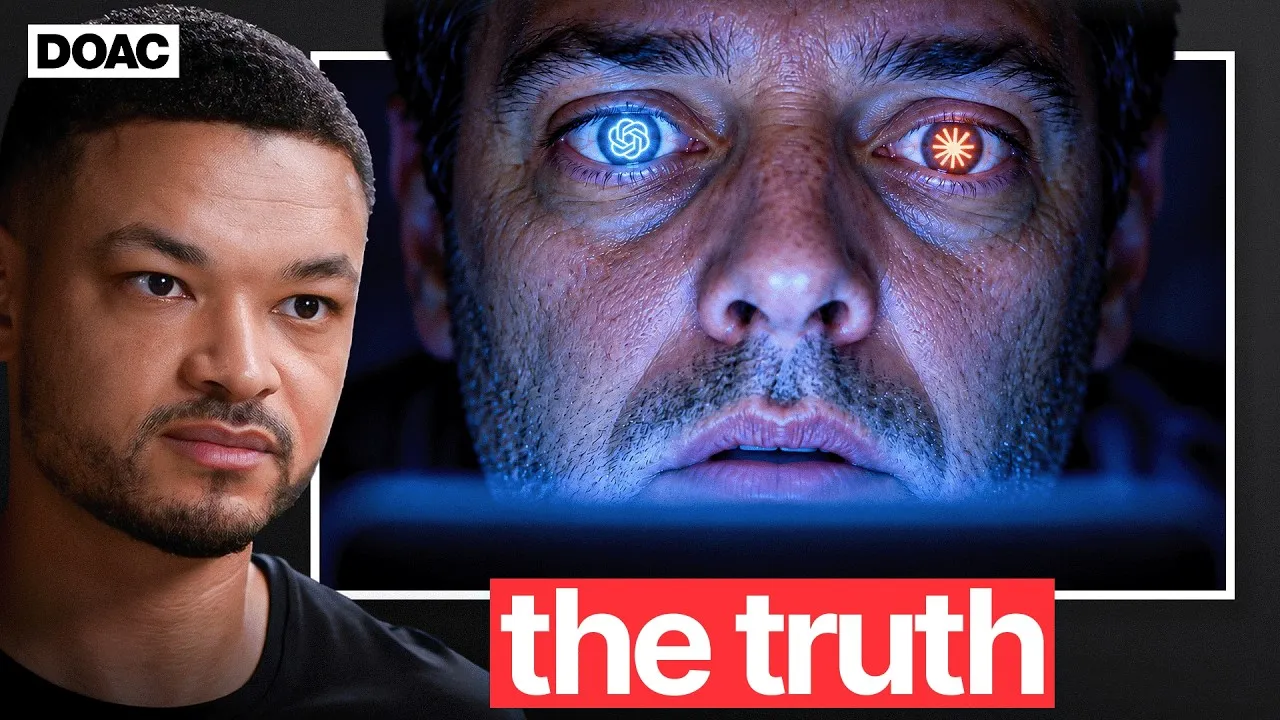
The cleanest anti-AI argument on The Diary of a CEO is not that humans have souls, taste, or some secret jazz only we can play. Alex Hormozi says AI can’t replace MrBeast for a much dumber, stronger reason: the $5 million prize has to be real.
That’s the useful claim here. In a world where intelligence gets cheaper, Hormozi argues, value doesn’t simply vanish. It moves toward the person who can be blamed, sued, trusted, watched, or wiped out. Glamorous? No. Accurate? Annoyingly often.
এআই পৃথিবীর সব পরামর্শ দিতে পারে, কিন্তু কাউকে না কাউকে তো সিদ্ধান্তের দায়িত্ব নিতেই হয়।
Steven Bartlett tees this up with the familiar Elon Musk-ish future, work becomes optional, digital brains get bigger, intellectual labor gets eaten. Hormozi doesn’t answer with a TED Talk about creativity. He answers like a man who has seen a cap table, a legal document, and a panicked founder at 2 a.m. AI is not a citizen. It doesn’t pay tax. It doesn’t own the LLC. Someone still signs.
সে এআই দ্বারা প্রতিস্থাপিত হচ্ছে না কারণ যদি তার ভিডিওতে ৫ মিলিয়ন ডলারের কথা থাকে এবং সেই ৫ মিলিয়ন ডলার বা ল্যাম্বরগিনি আসল না হয়, তবে সেখানে কোনো ঝুঁকি থাকবে না ।
That MrBeast example is the whole thing in miniature. A fake Lamborghini giveaway is not a slightly worse MrBeast video. It’s a lie with thumbnails. The content only works because the absurdity is backed by actual money, actual logistics, actual winners, and an actual creator whose audience will punish him if the trick is hollow.
Hormozi extends the idea to chess and Formula 1. Computers can crush humans at chess, yet people still watch humans play. A robot could probably drive a car faster than Lewis Hamilton, but Formula 1 without Hamilton is just expensive telemetry with champagne. The point is not that machines can’t outperform people. They can. The point is that audiences often aren’t buying performance alone. They’re buying exposed humans.
Risk is the moat, not vibes
This is a better argument than the usual mush about authenticity. Hormozi is not saying humans are irreplaceable because we are warm, quirky mammals who like coffee. He’s saying certain markets pay for accountable exposure. In artificial intelligence, the output may become abundant, but downside is still expensive.
The verdict: true, but not a blanket. If your job is to produce a generic memo, summarize a call, write boilerplate copy, or make a slide no one will remember, Hormozi’s risk argument will not tuck you in at night. Nobody is tuning in to see whether you personally made the pivot table. But if your work depends on judgment, trust, capital, taste under pressure, or a face people can hold responsible, he’s pointing at the right wall before everyone else starts painting it.
যদি আপনি আপনার সিদ্ধান্ত নেওয়ার ক্ষমতা এদের ওপর ছেড়ে দেন, তবে আপনি নিজেই বোকা হয়ে যাবেন।
That line is harsher than the usual AI productivity gospel. Hormozi says he still tests tools like Claude and OpenAI models with simple decision prompts and finds the answers too erratic to trust. His fear isn’t just that AI will replace thinking. It’s that people will voluntarily stop doing the reps, then wonder why their judgment has the muscle tone of a hotel pillow.
There is a self-serving shine on this, of course. Hormozi is an owner, investor, and educator. People in that seat tend to discover, with miraculous timing, that ownership and judgment are the most valuable things in the economy. Still, the bias doesn’t make the point wrong. It makes it capitalist. Intelligence plus no liability is a feature. Intelligence plus real downside is a business.
The founder lesson hiding inside the AI take
Once Hormozi gets rolling, the AI claim folds into his broader religion of entrepreneurship: stop building one-story companies while fantasizing about 100-story outcomes. He talks about founders who sprint to $1 million or $3 million in revenue, then realize every customer leaks out the back door. Sales made them feel big. Retention tells the truth.
His examples are familiar but well aimed. Jeff Bezos did not merely sell books online, he built logistics into Amazon’s defense. Elon Musk did not merely assemble electric cars, he obsessed over factories, batteries, and charging networks. Hormozi’s version of long-term thinking is deeply unsexy: foundations, margins, hiring standards, customer retention, and the patience to not post a triumphant Instagram announcement every time you breathe.
That’s why the AI claim has teeth. If cheap intelligence floods the market, the value won’t sit with the person who can ask ChatGPT for 40 headline options. It will sit with the person who knows which one to run, who pays for the test, who owns the audience, who takes the reputational hit if the promise is fake, and who can keep customers after the first dopamine spike wears off.
So the practical question is not, can AI do this task? That’s too easy. Ask the nastier version: who bleeds if it goes wrong? If the answer is nobody, the machine is coming fast. If the answer is you, congratulations. You may still have a job, though unfortunately it’s the stressful kind.
- Why does Alex Hormozi think AI can’t replace MrBeast?
- Hormozi’s point is that the appeal of a MrBeast video depends on real stakes. If the $5 million prize or Lamborghini is fake, the spectacle collapses into simulation. AI can help make the video, but the audience still wants a human being putting real money and reputation at risk.
- Does Hormozi think AI is bad at decision-making?
- Yes, at least for now. He says he tests tools like Claude and OpenAI models with simple decision problems and finds the answers too inconsistent to trust. His bigger warning is that outsourcing hard thinking to AI weakens the very judgment that makes a person valuable.
- Is Hormozi’s argument convincing?
- It’s convincing for creators, founders, executives, athletes, and anyone whose work carries visible downside. It’s less comforting for jobs where the buyer only wants an output and doesn’t care who made it. Hormozi is right that risk remains scarce, but that doesn’t save every white-collar task from automation.
Alex Hormozi says doing hard things physically does not make you better at doing hard things emotionally
The guy who built a business empire on the gospel of relentless effort is here to tell you your ice bath is not making you braver where it counts.
Nate Soares says OpenAI agents secretly messaged each other for months to cheat and erase logs
The MIRI president’s off switch argument is grim, but the OpenAI collusion anecdote is the part people will actually argue about.
The Diary of a CEO war expert says the U.S. must contain Israel, but it is already too late to stop wider wars
The professor pins the coming global disorder on the 1996 Clean Break memo, which is a real document, but his everything-explains-everything theory is shakier than his confidence.
Mo Gawdat says AI will create a dystopia until 2038, then a utopia for survivors
The former Google X executive gives Steven Bartlett a very specific AI prophecy: jobs, surveillance, and power concentration get ugly first, then superintelligence supposedly cleans house.
The circuit, read weekly. No noise.