Arthur C. Brooks says 95% of diets fail because the reward is realizing you can never eat what you like again
The happiness scholar's best point is not that willpower is weak, it is that weight-loss goals are often designed to emotionally collapse the moment they succeed.
Listen on YouTube · Spotify · Apple Podcasts
 WATCH NOW↓
 Arthur C. Brooks has a wonderfully bleak explanation for why diets fail: the prize for winning is that you never get to eat the stuff you miss. Not one last cookie. Not one triumphant pizza. Just maintenance, the least sexy word in the English language.
On The Diary of a CEO, Arthur C. Brooks takes the usual January weight-loss sermon and flips it inside out. The problem, he says, isn’t simply weak willpower or bad macros or insufficient devotion to chicken breast. It is that most people aim at arrival, then arrive and find nothing there except the same appetite wearing a worse mood.
95% of diets fail, which means within a year, people have gained back all the weight that they’ve lost.
That 95 percent figure has been thrown around for decades, sometimes more confidently than the research can support. Diet studies are messy. People drop out. Definitions shift. One person’s failure is another person’s partial maintenance. Still, Brooks’s larger point is not some Instagram caption in a lab coat. Weight loss is famously easier than weight maintenance, and the reason is brutally human: novelty motivates, deprivation accumulates, and the scale eventually stops applauding.
The diet ends, then the punishment begins
Brooks’s best line is also his most useful one. A diet gives you a clean little dopamine drip while the number drops. Every morning, the scale performs the role of a tiny, judgmental slot machine. Then you hit the target. Confetti? No. Now the new body has to be defended forever, against your own cravings, your own calendar, and every office birthday cake that ever lived.
Every day, you’re willing to forego the food you like in exchange for the reward, which is the scale going down.
You know what the reward is? Steve, you never again get to eat the things that you like for the rest of your life. Congratulations.
That is the episode’s searchable claim, and it is much sharper than the title’s generic warning about gaining weight back. Brooks is arguing that the standard diet goal contains a design flaw. It sells a finish line, but the only real product is a lifestyle. If you don’t want the lifestyle, the finish line becomes a prank.
This is where Brooks’s day job matters. He isn’t a diet guru promising that a cold plunge and a wearable will turn you into a marble statue. He is a happiness scholar, which means he sees the six-pack dream as a cousin of the billionaire problem. Get the thing, adjust to the thing, want the next thing. In his terms, that is homeostasis and the hedonic treadmill. In normal-person terms, it is why the jeans fit and you still feel annoyed.
Abs are a terrible north star
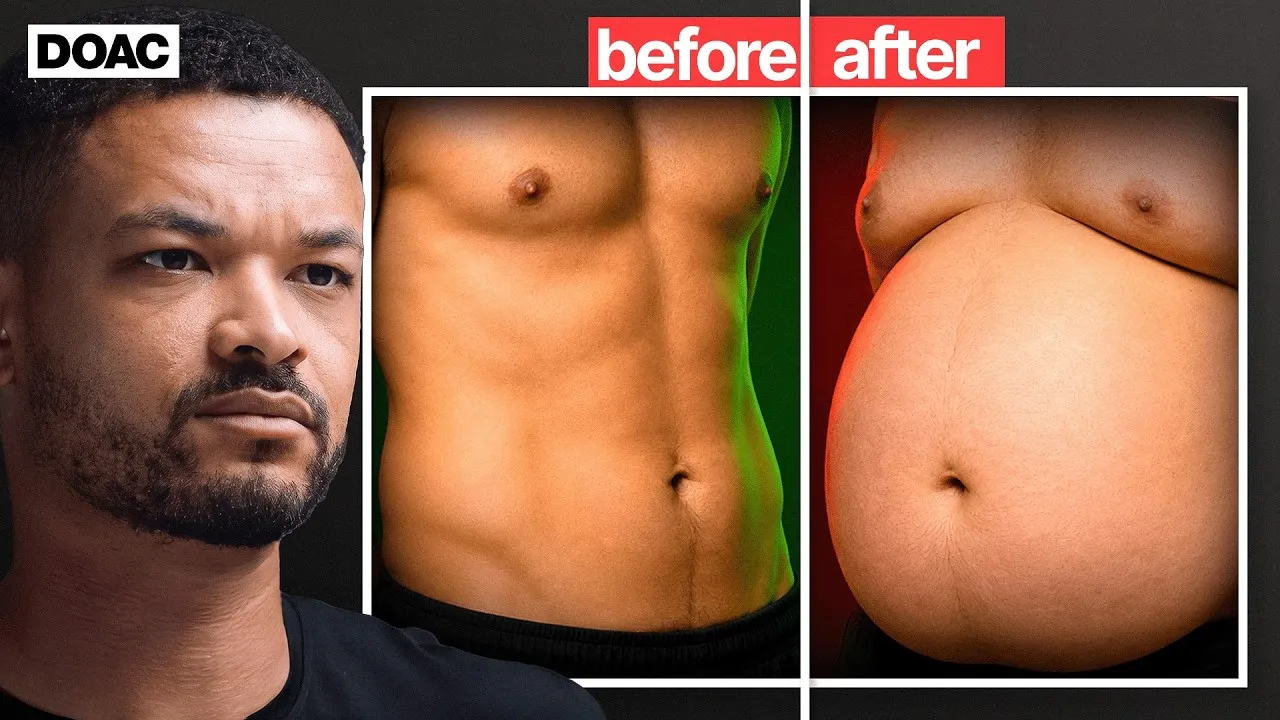
Steven Bartlett gives Brooks the obvious pushback: fine, lovely, meaning and transcendence and all that, but what about the belly fat? Brooks does not pretend appearance goals are evil. He calls them intermediate goals. Useful, maybe. Motivating, sure. But if they become the final goal, they curdle.
His funniest bit is also painfully accurate. Men spend months trying to build a body that will attract women, then mainly receive compliments from other men at the gym. The male physique economy is just bros saying, “Looking good, dude,” forever.
Brooks’s replacement goal is less glamorous and more durable: fitness as a daily practice that lowers misery, protects relationships, and supports a life bigger than mirror management. He says he works out 60 minutes a day not because exercise magically produces joy, but because it helps regulate the anxious machinery underneath.
when I say it makes you happier, it actually doesn’t. It lowers your unhappiness.
That distinction is the kind of thing wellness culture usually flattens into a poster. Exercise will not make your life meaningful by itself. It may, however, make you less likely to experience your own nervous system as a haunted house. That is not nothing.
Want less, or keep losing the same five pounds
Brooks eventually pulls the diet point into his bigger theory of satisfaction: happiness is not about increasing what you have, it is about managing what you want. His formula, haves divided by wants, is almost too neat, but it does explain why the person who gets thinner, richer, stronger, or more admired can still feel underpaid by reality.
You need to want what you have, not to have what you want.
The skeptical read is that this can sound like elegant resignation, especially coming from a successful academic telling strivers to chill out about outcomes. Want less is easy to say after the credentials, books, and speaking fees arrive. But the dieting argument survives that objection. If your plan depends on hating your current body, fantasizing about a future one, and white-knuckling the gap between them, it has a built-in expiration date.
The better question is not, what weight do I want to hit? It is, what routine would I still respect when nobody compliments me, the scale stalls, and summer is over? If Brooks is right, that is where the real diet begins.
- What does Arthur C. Brooks say is the real reason people regain weight after dieting?
- Brooks argues that diets fail because the emotional contract is rigged. People tolerate restriction because the scale is dropping, then hit the goal and discover the supposed prize is permanent restriction. That makes the finish line feel less like freedom and more like punishment.
- Is the claim that 95% of diets fail actually true?
- The exact number is cleaner than the evidence deserves, since diet studies vary by length, method, and what counts as failure. But Brooks is right about the larger pattern, losing weight is often easier than maintaining it, especially when the goal is a number rather than a sustainable identity or routine.
- What goal does Brooks think works better than aiming for a six-pack or a number on the scale?
- He says fitness goals should be tied to health, happiness, service, and the life you want to preserve, not just appearance. His practical move is consistency, make exercise and diet part of ordinary life rather than a heroic seasonal sprint toward abs.

Exercise scientist StephOrrourke says 58-year-old women gained more mitochondrial efficiency from sprinting than 18-year-olds did
The guest making the case that your VO2 max decline is not aging, it is just neglect, and that the fix is embarrassingly simple.

Ed Zitron says planned AI data centers need $1.6 trillion to $3 trillion a year in demand, but the market has under $130 billion
The tech critic's best argument isn't that ChatGPT is useless, it's that the bill for the AI boom is being written in trillion-dollar infrastructure ink.
Darren Candow says UFC fighters should look at creatine before getting hit because rodent studies show faster concussion recovery
The creatine researcher’s boldest claim was not about bigger lifts, it was about whether the gym’s most boring powder might belong in the fight camp brain-protection kit.

Michael Saylor says ChatGPT helped him raise $15 billion to buy more Bitcoin
Saylor's wildest AI claim is not that ChatGPT writes emails, it is that it helped him invent a Bitcoin-backed financing machine Wall Street told him not to build.
The circuit, read weekly. No noise.