Darren Candow says UFC fighters should look at creatine before getting hit because rodent studies show faster concussion recovery
The creatine researcher’s boldest claim was not about bigger lifts, it was about whether the gym’s most boring powder might belong in the fight camp brain-protection kit.
Listen on YouTube · Spotify · Apple Podcasts
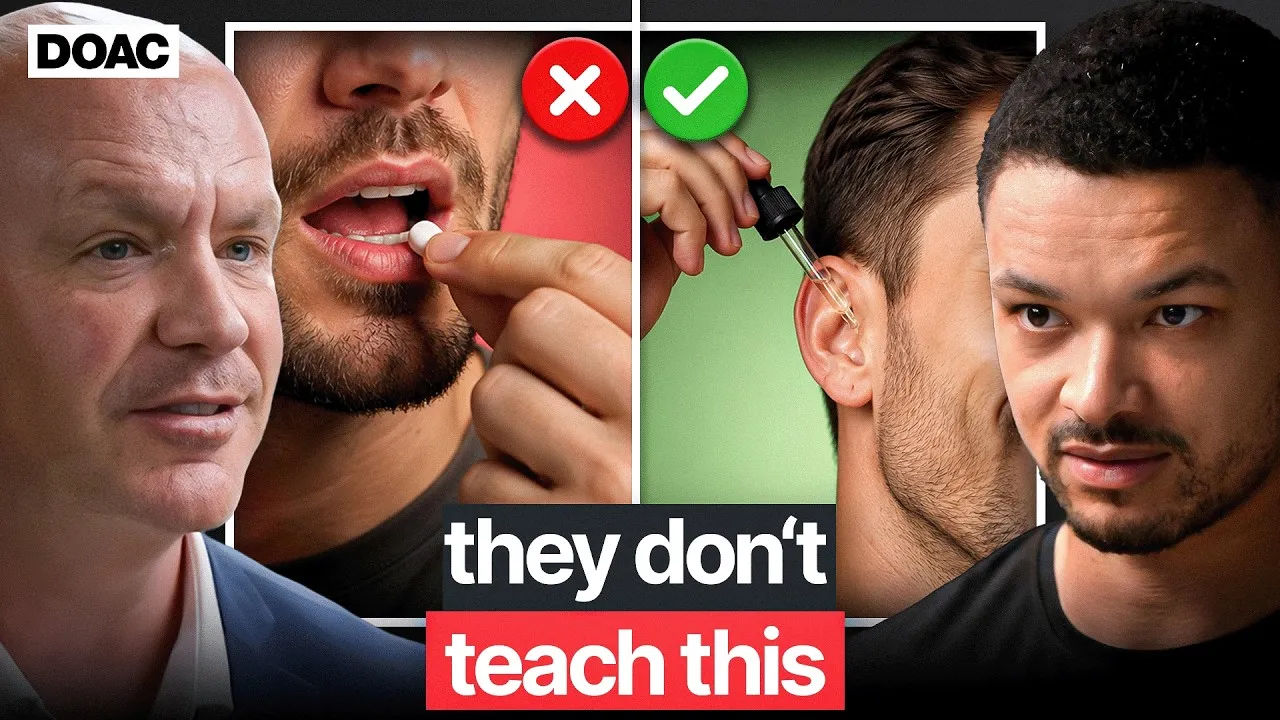 WATCH NOW↓
 Darren Candow thinks creatine’s next act is not bigger biceps, it’s collision-sport brain insurance: UFC fighters, boxers, and anyone likely to take head trauma should look at taking it before they get hit. His evidence is not a human CTE cure, it’s rodent work showing faster concussion recovery, which is exactly why the claim is intriguing and not ready for victory-lap podcast bro science.
On The Diary of a CEO, Darren Candow was there to sell the case for creatine, the supplement so unglamorous it feels like it should come with a shaker bottle and a tax form. The episode title promises the usual stack for men, vitamin D, magnesium, omega-3s, probiotics, protein, the whole kitchen-counter pharmacy. But Candow’s most interesting pitch was stranger: creatine as a possible pre-hit supplement for the brain.
What about concussion? you know, can an uh the UFC fighter take creatine before they get hit? Could that decrease CTE or concussion or brain trauma later on in life?
The gym powder wants a brain job
This is the podcast-health-industrial complex at its most revealing. A familiar supplement gets bored of being familiar, puts on a lab coat, and applies for a new position in concussion. The difference is that Candow is not merely a wellness guest free-associating over a branded mug. He is a creatine researcher, and he’s careful enough to separate the sexy possibility from the actual evidence.
there’s evidence in in Rodents that if you take creatine before head trauma, it really speeds up concussion recovery.
That sentence is doing the heavy lifting. Rodents are not UFC bantamweights. A faster recovery signal in animals is not proof that a fighter can scoop creatine, eat a right hand, and dodge long-term damage. But the hypothesis is not ridiculous. Creatine is tied to cellular energy availability, and the brain under trauma is an energy crisis wearing a helmet. If you were designing a study for combat sports, football, hockey, or military training, this is exactly the sort of cheap, plausible, low-drama intervention you would want to test properly.
Candow’s claim also cuts against the dumbest version of supplement culture, where every powder either cures aging or is useless. He does not say creatine is magic. He says it may be one tool. The boringness is part of the appeal. Creatine is inexpensive, well-studied for muscle, and already sitting in half the cabinets of people who voluntarily pay for punishment under fluorescent gym lighting.
Then he swerves into honesty
The part that makes Candow more credible is that he keeps admitting what he does not know. Asked for the best dose, he basically refuses to play supplement-influencer Santa Claus. Three to five grams may saturate skeletal muscle over time, but the brain is a different problem. Stress, sleep deprivation, body size, and baseline stores could change the equation.
if you were to say, “What’s the best dose, Darren, to take?” I say, “I have no clue.” Every creatine researcher said, “I don’t know.”
That matters because the internet has already discovered the most dangerous phrase in human history: if some is good, more is better. Candow discusses a German sleep-deprivation study where a one-time large creatine dose helped cognition after 21 hours without sleep. Fine. Interesting. But he does not want listeners turning that into a daily mega-dose ritual because they saw a clip between deadlift videos.
I would not uh uh recommend taking a mega dose for consistently over time.
That is the grown-up version of the creatine conversation. Not just gains, not just hair-loss panic, not just a bro in a tank top saying the word mitochondria like he personally owns it. Candow is making a broader longevity argument: preserve muscle, preserve function, maybe preserve cognition, and keep enough physical capacity that old age does not turn into an administrative error.
Still, the concussion claim is the one that deserves the red circle. If future human trials back it up, creatine stops being merely the safe, boring supplement your gym friend keeps recommending and becomes something closer to standard kit for people whose jobs involve getting hit. If they do not, it remains a smart hypothesis with a podcast-friendly glow.
Anybody involved in head trauma, I think you should definitely look at creatine as something to be taking just in case you get hit.
- Did Darren Candow say creatine prevents CTE?
- No. Candow framed the idea as an exciting research direction, not a proven shield against CTE. His claim is that rodent evidence suggests creatine taken before head trauma can speed concussion recovery, which makes it worth studying in fighters and other collision-sport athletes.
- How much creatine did Candow say people should take for brain benefits?
- He did not give a clean brain-health dose, and that was the point. Candow said the best dosing protocol is still unknown, especially for the brain. He also warned against turning short-term high-dose sleep-deprivation studies into a daily 20 or 30 gram habit.
- What supplements does Darren Candow take every day?
- Candow said his daily routine includes probiotics, magnesium, vitamin D, protein, omega-3 fatty acids, creatine, and a multivitamin. He sometimes takes iron because he does not eat much red meat, and he is watching NAD research but called it controversial.

Darren Candow says elevated kidney markers from creatine are false positives 99 out of 100 times
The creatine researcher says the supplement’s scariest reputation is mostly a lab-test misunderstanding, not kidney damage.
Creatine researcher Stuart Phillips says adding 5 grams of creatine to antidepressants doubled remission rates in women with major depression over 8 weeks
The muscle supplement has a surprisingly strong case for your brain, but one number from a Utah depression trial is the one worth arguing about.
Brian Greene says by the time we see an AI intelligence explosion, it may be too late to stop it
The physicist is not buying every 2029 superintelligence prophecy, but he thinks the math of exponential growth is exactly what makes AI risk so nasty.

Rena Malik says people who have sex once a week live 49 percent longer than people who have sex once a year
The urologist brings a big longevity stat to The Diary of a CEO, then quietly admits the boring but crucial part, sex is probably a marker of health as much as a cause of it.
The circuit, read weekly. No noise.