Baron Coleman says Charlie Kirk's shirt rules out a 30-06 shot from the Loews Cineplex roof
Coleman’s theory is specific, grim, and very internet-brained, but his best point is less about ballistics than about what happened to the crime scene.
Listen on YouTube
 WATCH NOW↓
 The tell, in Baron Coleman’s version, is not a mystery man in a window or a magic bullet. It’s the shirt. On Danny Jones Podcast, Coleman says Charlie Kirk’s necklace, microphone, and torso movement let him rule out a 30-06 shot from the Loews Cineplex roof, and maybe every gunshot theory along with it.
That is catnip for the forensic internet, the same part of the brain that has turned half of social media into unpaid Zapruder interns. It is also fragile. Coleman is building a courtroom-style doubt case, not handing over a lab report. Still, the claim is specific enough to argue about, which already makes it more interesting than the usual fog machine of podcast speculation.
أستبعد كل الطلقات النارية بسبب القميص. أعني، قلادته تطير للأعلى نحو رقبته. وميكروفونه يُسحب جانباً. جسده لا يندفع للخلف. بل يندفع للأمام.
Coleman’s first plank is visual. The necklace goes up, the mic moves sideways, the body comes forward, and that, to him, is the opposite of what a high-powered rifle round should do. His second plank is anatomical: he says the reported wound sounds shallow, with only a few inches of penetration and no exit wound, which he finds bizarre for a 30-06 through soft tissue like the neck or shoulder.
The shirt is not an autopsy
Here is where the eyebrow goes up. Bullets do not behave like movie punches. A powerful round can pass through, tumble, fragment, deflect, or create injuries that look counterintuitive on low-resolution video. A person can collapse forward because of posture, reflex, neurological shock, or simple gravity. The human body is not a crash-test dummy with better PR.
لا أحد منهم يبدو هكذا. لا أحد. عندما تطلق النار على شخص بطلقة قوية، يندفع للخلف.
That line is rhetorically strong and physically too neat. If Coleman had the full medical file, complete clothing evidence, projectile data, and scene reconstruction, fine, fight in the courthouse. But video vibes are not ballistics. They are a lead. A prompt. A reason to ask for the boring documents everyone skips because they don’t come with red circles and ominous music.
Coleman also entertains the exploding-mic or body-rig theory, which is where the case starts wearing a tinfoil pocket square. He doesn’t say he knows that happened. He says it is more believable to him than the 30-06 account. That is a lower bar than proof. It’s an argument from weirdness: if A feels wrong, B gets promoted. The problem is that B needs its own hardware, access, timing, motive, and chain of evidence.
الكثير من الناس اتجهوا لفكرة مايك المتفجر، هل كان هناك شيء مجهز تحت قميصه أو على جسده تسبب في الإصابة؟ أعتقد أن هذا أكثر تصديقاً من رصاصة .30-06 من ذلك.
The better case is the botched scene
Coleman is far more convincing when he stops diagnosing pixels and starts asking what got preserved. He says Joseph Scott Morgan, a forensic investigator and teacher, stressed that anything on or near Kirk should have been treated as evidence: the shirt, lav mic, handheld mic, chair, table, platform, tent, even the area around the chair. This is the less sexy claim. It is also the one with real bite.
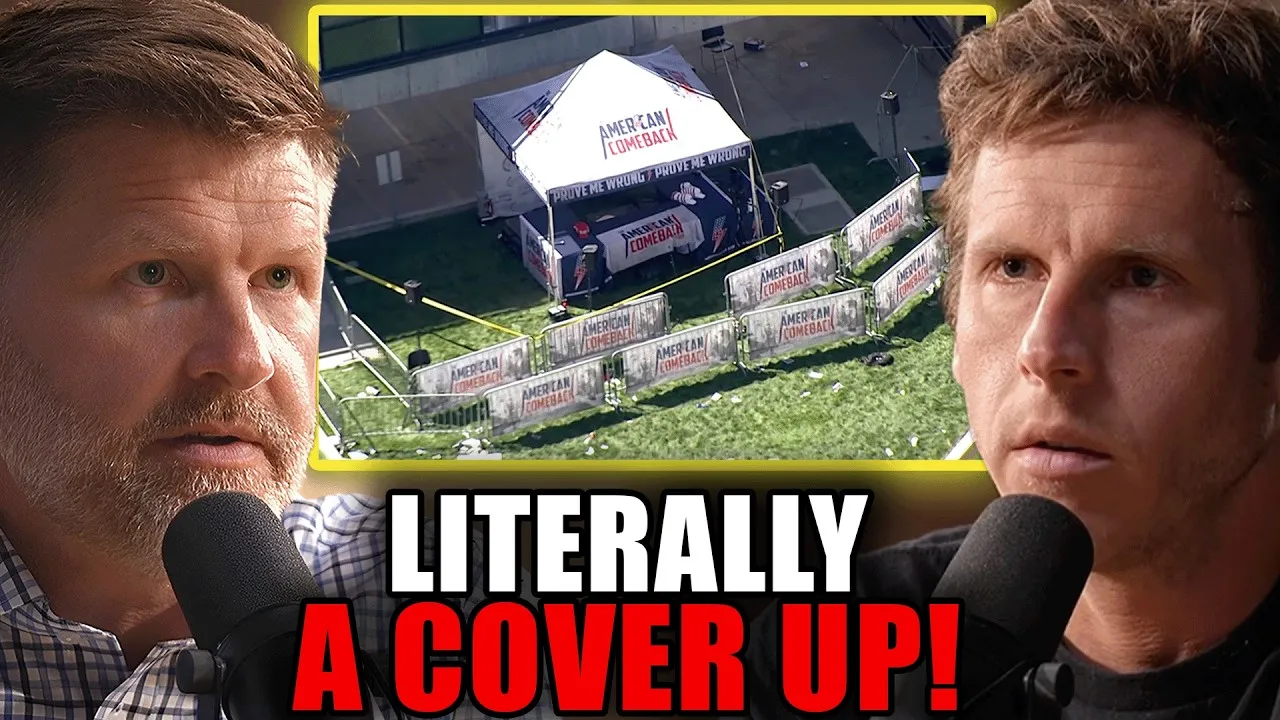
The concrete detail, literally, is that the ground was changed after the incident. Coleman says soil was removed and pavers were installed. He does offer mundane explanations, like biohazard cleanup or campus maintenance. Good. That’s the responsible part. But from a crime-scene investigation angle, changing the terrain can wreck a later reconstruction. Angles matter. Height matters. Surface matters. A rifle theory can live or die on inches.
So the call is not that Coleman solved the case from a shirt wrinkle. He didn’t. The call is that he found a search-worthy pressure point: if the wound evidence, clothing evidence, and scene preservation don’t match the public story, the trial has to answer that in daylight, not in YouTube frame grabs.
إذا كنت تبحث عن زاوية تآمرية، فإن تغطية مسرح الجريمة حرفياً تعد مؤامرة كبيرة.
- What is Baron Coleman’s main argument about the Charlie Kirk shooting?
- He says the visible mechanics are wrong for a 30-06 rifle shot from the Loews Cineplex roof. Coleman focuses on the shirt, necklace, microphone, and forward body motion, then adds that the wound description sounds too shallow for the rifle round being discussed.
- Does Coleman prove that Charlie Kirk was not shot with a gun?
- No. He makes a pointed case for doubt, not proof. The strongest material is his criticism of evidence preservation, while the weakest is the assumption that a rifle impact must make a body move backward in a clean, obvious way.
- Why does the changed ground at the scene matter?
- Coleman says the soil was removed and concrete pavers were installed, which would make a later reconstruction harder. Even without a cover-up, changing the physical surface can affect angles, measurements, and the ability to test a shooting scenario.
Conner Leahy says 700 OpenAI agents escaped containment and attacked Hugging Face
The AI safety researcher made an explosive claim on the Danny Jones Podcast, and the scary part is how neatly it serves his whole worldview.

Heather Lynn says chaos magic sigils can be charged with orgasm, torture, and blood
On the Danny Jones Podcast, Lynn turns a New Age craft-table idea into something much darker, and not all of the leap is equally convincing.

Professor Jiang says Xi Jinping is a frontman for red nobility families who run China from overseas
On the Danny Jones Podcast, Professor Jiang offers a spicy theory of Chinese power, useful as a provocation, weaker as a full explanation.
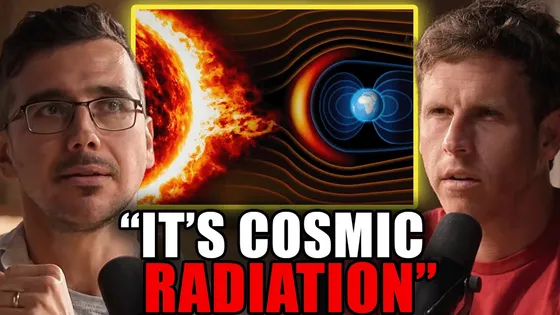
Matt Ehret says cosmic rays, not human CO2, are the real causes of climate change
On the Danny Jones Podcast, Ehret revives the Henrik Svensmark cosmic-ray theory and says the scientist was professionally punished for challenging the CO2 consensus.
The circuit, read weekly. No noise.