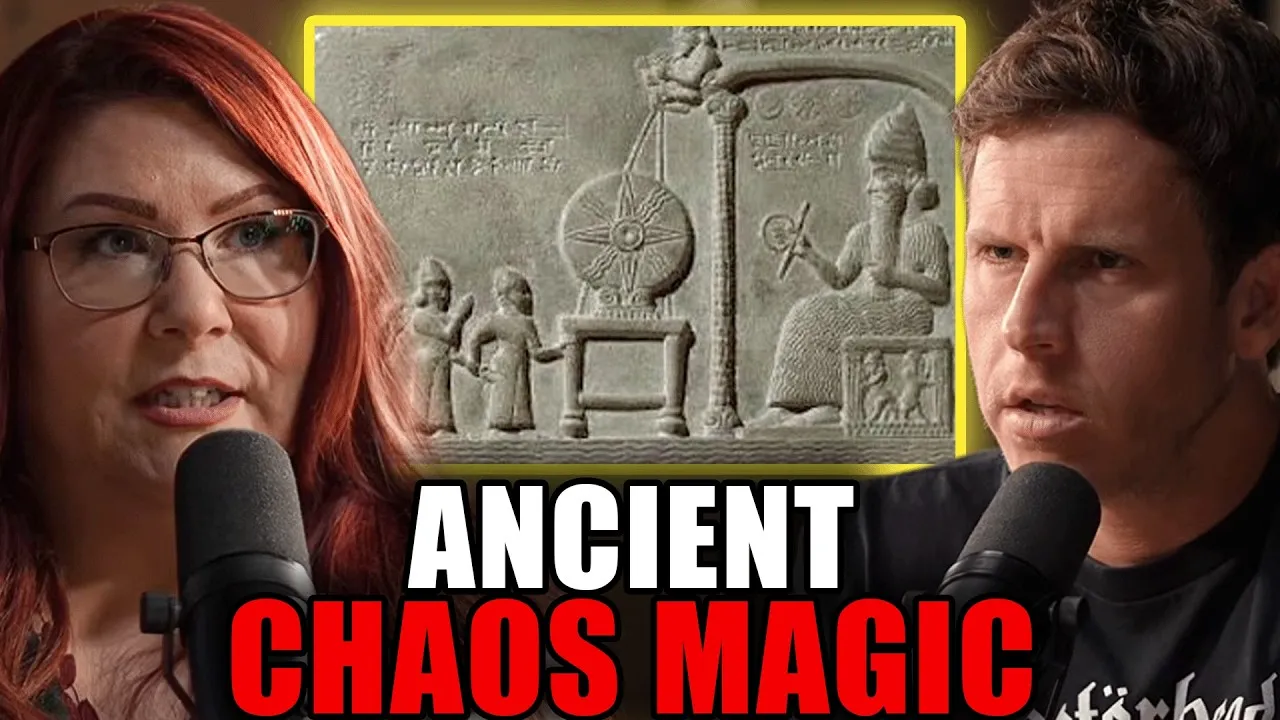
Heather Lynn says chaos magic sigils can be charged with orgasm, torture, and blood
On the Danny Jones Podcast, Lynn turns a New Age craft-table idea into something much darker, and not all of the leap is equally convincing.
Listen on YouTube
 WATCH NOW↓
 Heather Lynn says chaos magic sigils aren’t just charged with moonlight and good vibes. They can be charged, she argues, with orgasm, torture, bloodletting, and the kind of ritual escalation that makes a crystal shop suddenly feel like the lobby of a bad David Fincher movie.
That is the radioactive claim inside her appearance on the Danny Jones Podcast. Lynn takes the most Pinterest-friendly corner of Chaos Magic, the sigil, a symbol made to focus intention, and insists the real machinery is not aesthetic but energetic. Not “draw a little rune in your journal and manifest abundance.” More like, how far will someone go to squeeze maximum emotion into a symbol?
people are trying to find ways to hack other people’s willpower so they can control them.
This is where Lynn’s argument gets both compelling and slippery. The compelling part is that she frames magic as psychology with ritual costume. Willpower, attention, group behavior, submission, domination, all of that belongs as much to political life and advertising as it does to grimoires. The slippery part is the jump from “some occult systems describe this” to “people in suits might be doing this too.” That leap needs evidence, and the excerpt gives us atmosphere.
The sigil is the battery, and the emotion is the charge
Lynn’s central move is to separate the bookstore version of sigil magic from what she calls the advanced version. In the soft-focus version, you make a symbol, maybe put it under the full moon, maybe whisper your intention over it like you’re trying to get a discount code from the universe. Lynn says that misses the logic of the practice. The point, in her telling, is not the symbol by itself. The point is what you pour into it.
now you got one guy and he’s, you know, doing the deed, staring at the sigil. He’s going to charge it.
From there, she sketches a ladder. One person masturbating while focusing on the symbol. Then two people. Then ritual sex. Then, because occult systems love a binary almost as much as they love a goat-headed icon, the opposite pole: pain. Pleasure and pain become two routes to the same alleged fuel source, extreme sensation.
This is not a scholarly footnote party. Lynn talks like someone opening the basement door and warning you not to touch the wet wall. She says the darker version of sigil work can move into torture, abuse, and blood, not because gore is the point, but because suffering is treated as a more potent charge.
You don’t just kill. You have to make the suffering such that when you spill the blood that it’s powerful and you spill that blood on the sigil and that sigil then will carry that power.
The occult claim is stronger than the elite conspiracy claim
The cleanest version of Lynn’s point is about Occultism as a theory of control. People have long connected sex, sacrifice, blood, symbols, and power. Aleister Crowley gets invoked because of course he does, as the permanent house band of any conversation about sex magic. Lynn also discusses occult blinds, the idea that language hides meaning from outsiders or gives initiates plausible deniability. That part tracks as a description of how esoteric writing often works.
The messier version is when the argument wanders toward modern power. Lynn mentions “Bannon type people” using chaos to divide groups and says that chaos can be harnessed as energy by people who think magically. Later she swerves through Nietzsche, the “God is dead” passage, and Transhumanism, reading the modern dream of beating nature as a kind of attempted deicide. It is grand. It is operatic. It is also a lot to stack on top of a sigil.
There is a valid insight underneath the smoke machine: powerful people do use confusion, fear, spectacle, and group fracture to shape reality. You don’t need a ceremonial dagger to see that. The stronger claim is psychological. The weaker claim is literal. Lynn is most persuasive when she says magic is a framework some people use to understand and manipulate will. She is less persuasive when the framework starts sounding like proof.
Still, the reason this segment sticks is that Lynn refuses the cute version of magic. She wants to drag the sigil out of the moonwater bath and put it under fluorescent light. If you believe her, the harmless symbol is not harmless by nature. It depends who is holding it, what they believe, and what they are willing to do to make belief feel real.
just because somebody wears a suit and a tie and they get up and they tell you how they’re going to fix, you know, job numbers and they’re going to make the economy better and they’re going to vote for this right for this for that. Doesn’t mean they’re not doing some weird too.
- What does Heather Lynn say sigil magic is really about?
- Lynn describes sigil magic as a way of concentrating willpower into a symbol, then charging that symbol with intense energy. In her telling, the tame version is moonlight and intention, while the darker version uses sex, pain, blood, and fear as batteries for the ritual.
- Is Lynn saying politicians actually practice chaos magic?
- She stops short of proving that, but she clearly wants listeners to consider it. Her argument is that people in power may use chaos and psychological manipulation in ways that resemble magical practice, especially when they fragment groups and feed conflict.
- How convincing is the claim about ritual sex and bloodletting?
- As a description of occult belief, it has roots in real traditions around sex magic, sacrifice, and symbolic power. As a claim about actual elites doing torture rituals, the podcast excerpt supplies assertion, not evidence. The interesting part is the belief system, not the proof.
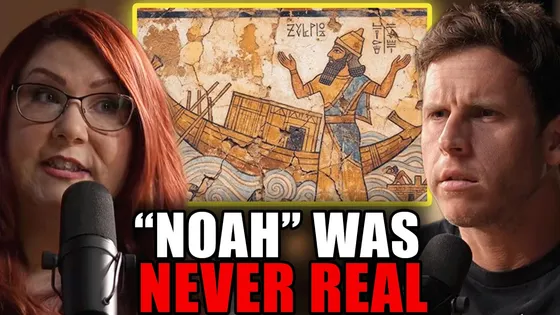
Heather Lynn says Noah didn't build an ark, he led a breakaway civilization of scientists
The fun part is that Lynn is not doing ancient aliens here, she is making Noah sound like the logistics director of a post-collapse research commune.
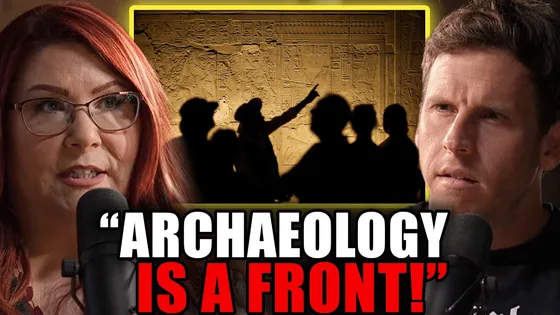
Heather Lynn says archaeology was primarily used as a cover for spying operations
On Danny Jones Podcast, Lynn ties cabinets of curiosities, King Tut money, and Middle East mapmaking to archaeology's oldest dirty secret.
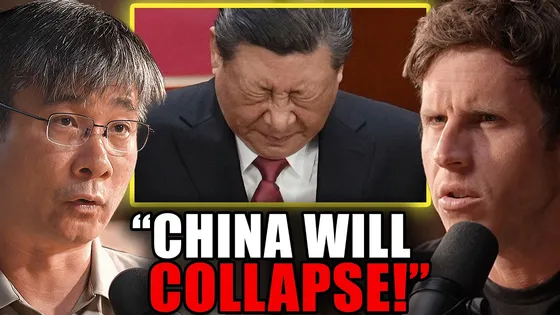
Professor Jiang says Xi Jinping is a frontman for red nobility families who run China from overseas
On the Danny Jones Podcast, Professor Jiang offers a spicy theory of Chinese power, useful as a provocation, weaker as a full explanation.
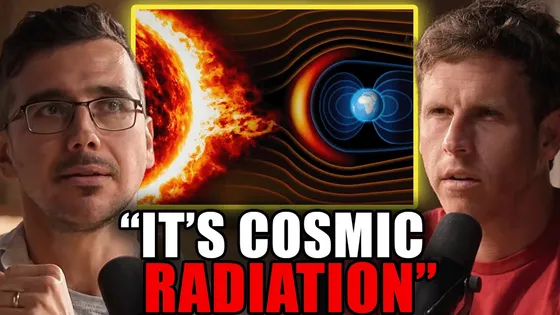
Matt Ehret says cosmic rays, not human CO2, are the real causes of climate change
On the Danny Jones Podcast, Ehret revives the Henrik Svensmark cosmic-ray theory and says the scientist was professionally punished for challenging the CO2 consensus.
The circuit, read weekly. No noise.