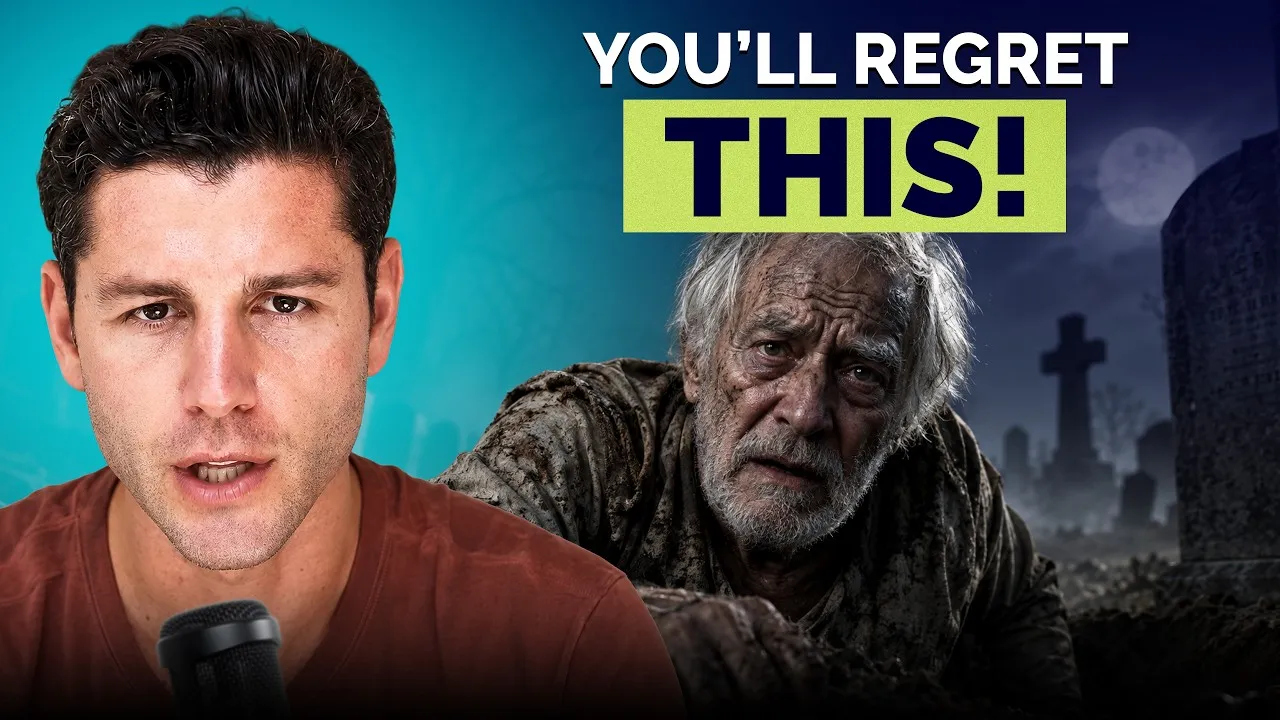
Ben Nemtin says 76% of people reach their deathbed regretting the life they didn't live
The Buried Life co-creator has built a whole bucket-list gospel around one scary statistic, though the number is cleaner than the research behind it.
Listen on YouTube · Spotify · Apple Podcasts
 WATCH NOW↓
 Ben Nemtin has found the motivational-speaker equivalent of a haunted house: a number with a coffin at the end of it. On Young and Profiting, the Ben Nemtin pitch is that 76% of people reach the end of life regretting the things they didn’t do, not the things they did.
That is the kind of statistic that makes a bucket list feel less like a Pinterest board and more like a legal summons. Nemtin, co-creator of MTV’s The Buried Life, has been dining out on the before-you-die question for years, but here he puts a sharper edge on it. Don’t make a list because skydiving looks good on Instagram. Make one because apparently the alternative is becoming a 90-year-old with a cane, a hard drive full of unused dreams, and no refund window.
why are 76% of the people on the planet reaching their deathbed and regretting the things they didn’t do not the things they did.
The number is scary. The evidence is messier.
Nemtin later pins the stat to Cornell, saying the top regret is that people wish they had lived their ideal life instead of the life other people expected from them. That tracks with well-known Cornell work on regret, which found that people are often more haunted by failures to become their ideal selves than by failures to meet obligations. But Nemtin also folds in the famous ‘top five regrets of the dying,’ a list popularized by palliative-care nurse Bronnie Ware, where the first regret is not having the courage to live a life true to oneself.
So the verdict is: emotionally true, statistically slippery. The 76% claim is not a magic X-ray of the planet’s deathbeds. It is a motivational compression algorithm. Nemtin takes regret research, hospice wisdom, and his own bucket-list brand, then squeezes them into one number you can remember while avoiding your actual life.
In a world where 76% of the population, their biggest regret on their deathbed is I wish I would have lived for me, not what others expected of me or what I thought I should do.
Still, the slightly wobbly sourcing doesn’t kill the point. It makes the point more human. Most of us don’t need a peer-reviewed footnote to know that fear has eaten at least one perfectly good year of our lives. Nemtin’s useful move is connecting deathbed regrets to small acts of accountability, not grand reinvention. Write down the thing. Tell someone. Let people help. His line, ‘when you give someone a chance to be a hero, they usually take it,’ is corny in the exact way that sometimes turns out to be correct.
This is less hustle gospel than anti-hustle gospel
The sneaky thing about this episode is that it airs on a show called Young and Profiting, but Nemtin’s deathbed math keeps dunking on profit as the final score. He doesn’t say money is bad. He says money is almost never the thing people mention when their life is down to the credits.
thinking about your death and it sounds weird but if you think about what’s important in your life you look at the top five regrets of the dying they don’t have much to do with money
That matters because Nemtin isn’t selling soft-focus YOLO. He talks openly about depression, sleep, therapy, and the fact that the smiling guy with the bucket-list career still gets low. The bucket list, in his telling, is not an escape from mental health. It is part of the maintenance plan. Purpose as medicine, basically, but with more stories about sneaking onto red carpets and playing basketball with Barack Obama.
Some of those stories are ridiculous enough to make the philosophy feel less like a TED Talk and more like a heist movie staffed by Canadian camp counselors. Nemtin and his friends got Obama on a basketball court after official rejection. They tried to streak a field, failed to get away, and counted jail as a separate list item. They helped a man named Brent deliver pizzas to a homeless shelter, then somehow talked a used-car salesman into selling them a truck for their entire budget, $480 Canadian.
The adventures are fun. The sharper claim is less fun, which is why it sticks. If Nemtin is even half right, the danger is not failure. Failure at least means there was an attempt. The danger is becoming someone who spent decades being reasonable, available, employable, and quietly absent from his own life.
Well, the only thing you can count on is that will be you. Best case scenario. You might die in a week.
- What does Ben Nemtin say most people regret before they die?
- Nemtin says the big regret is not the mess people made, but the life they never tried to build. His version is blunt: people regret living for expectations, fear, and the daily grind instead of their own ideal self.
- Is Ben Nemtin's 76% deathbed regret statistic solid?
- It is useful, memorable, and a little too tidy. Nemtin cites Cornell, and Cornell regret research does support the idea that people are haunted more by failures of the ideal self than failures of duty. But the way he frames it as a deathbed percentage blends academic regret research with the popular palliative-care language of the top five regrets of the dying.
- What does Nemtin want listeners to actually do with that fear?
- He wants them to write the list down, share it, and create accountability before life buries the thing again. His argument is not just 'dream bigger.' It is that private dreams stay private partly because nobody else has been given the chance to help.
Lewis Howes says he called his podcast The School of Greatness because his ego needed to die
On Young and Profiting, Howes makes the rare personal-branding confession that the brand was partly built to keep himself from becoming the whole point.
Dave Asprey says about 50,000 entrepreneurs and many politicians are on modafinil
The biohacking evangelist framed the narcolepsy drug as a cognitive edge for founders, then casually suggested asking ChatGPT how to get a prescription.
Gary Vaynerchuk says entrepreneurs who ignore their partners may not actually value the relationship
GaryVee’s productivity gospel gets its sharpest domestic translation: if you really wanted to see them, you would.

Ryan Hawk says the Beatles were afraid to play their own music and started by copying others verbatim
On Young and Profiting, Hawk turns the Beatles into a permission slip for early-career imitation, with one giant warning label attached.
The circuit, read weekly. No noise.