Cenk Uygur says Israel blocks an Iran peace deal every time Trump moves toward peace
On The Diary of a CEO, Uygur argued that Trump has a deal available with Iran, but Benjamin Netanyahu keeps pushing him back toward war.
Listen on YouTube · Spotify · Apple Podcasts
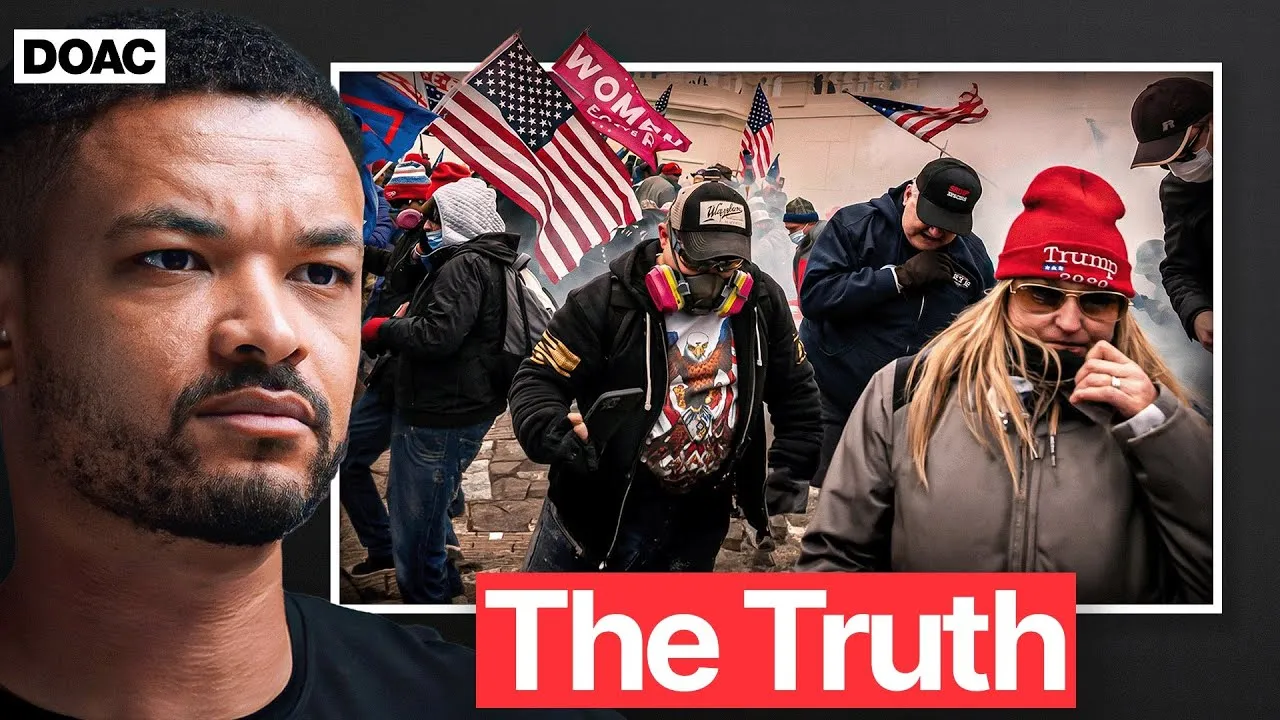 WATCH NOW↓
 Cenk Uygur’s claim on The Diary of a CEO was not subtle: the United States could make a peace deal with Iran, but Israel keeps killing it. Not Iran. Not Trump’s dealmaking cosplay. Israel.
This is the kind of podcast claim that arrives wearing steel toed boots. Uygur, the founder of The Young Turks, argued that the bones of a deal are already sitting on the table: reopen the Strait of Hormuz, lift the blockade, hand over highly enriched uranium, allow international monitors, and keep enrichment at energy levels instead of weapons levels. In his version, that part is almost boring. The hard part is getting past Benjamin Netanyahu.
Open up the straight of Hormuz. We lift a blockade. Iran says uh we’ll find the highlyenriched uranium and hand it over. We won’t have a weapons program and we’ll have international monitors for the uranium that we enrich to just energy levels, not weapons levels. Boom. Done. Easy.
“Boom. Done. Easy” is doing exactly what Uygur does for a living: turning the policy memo into a bar fight. It’s punchy, it’s useful television, and it’s also too clean. Iran’s nuclear program, sanctions, proxies, domestic politics, and the Strait of Hormuz are not a five item grocery list. But Uygur’s point is narrower and more provocative than “peace is hard.” He says peace is being blocked by a specific actor with a specific agenda.
Uygur’s real target is Netanyahu, not Tehran
When Steven Bartlett pressed him on how he knew Israel was the obstacle, Uygur pointed to reporting about Netanyahu and the head of Mossad urging Trump to attack, then claimed a repeated pattern: Trump floats peace, Netanyahu gets involved, Trump comes back with harder demands. It’s a neat theory of the case, maybe too neat, but it is at least a theory. Most cable news panels just throw the words “regional stability” into a blender and call it insight.
after every call with Netanyahu, Trump goes from saying we’re going to have peace to saying we’re not going to have peace and we’re have these new impossible standards. It’s happened about half a dozen times so far. It’s super clear that Israel is driving the bus.
The verdict: plausible as an argument about influence, overconfident as a claim of certainty. Israel plainly has its own security goals in Iran, and Netanyahu has long favored maximum pressure on Tehran. The United States also has its own politics, its own hawks, its own military machinery, and a president who does not require outside assistance to contradict himself by lunch. Uygur wants one villain. Foreign policy usually has a whole group chat.
Then he went further. Uygur argued that the same logic explains why politicians from both parties opposed the deal: money from pro Israel lobbying. That’s the moment where the claim becomes both more searchable and more flammable.
this weekend, we had both Republicans and Democrats go out and say we shouldn’t do the peace deal. You want to know what the one connective tissue? Every one of those politicians had over a million dollars given to them by the Israeli lobby.
That line needs receipts. The transcript gives no list of politicians, no campaign finance table, no definition of “Israeli lobby,” and no distinction between direct donations, PAC spending, bundled contributions, or outside support. Uygur may have those details elsewhere, but here the line functions like a grenade with the pin already gone. It makes his broader critique of money in politics feel urgent, and also makes it easier for critics to dismiss the whole thing as overreach.
Kevin O’Leary brought a shopping mall to a war argument
Kevin O’Leary, bless him, answered the Middle East crisis like a man mentally pricing retail square footage. His counter was not moral grandeur. It was markets. If the region stabilized, he said, Iran alone is a giant consumer base, and the surrounding countries represent a massive opportunity for people who make things and sell things.
If there was a path to peace in the Middle East, it’s one of the largest consumer markets on earth. Just Iran itself has 100 million people. They buy stuff.
This is where the episode gets weirdly revealing. Uygur sees a captured American state being dragged into war by Israel. O’Leary sees a market that could be incredible if everyone would stop blowing up the customers. Neither is exactly wrong. One is structural rage. The other is capitalism in a golf shirt.
Uygur’s claim deserves attention because it refuses the safe Washington fog. He is not saying peace failed because “the region is complicated.” He is saying an Iran deal exists, and Netanyahu keeps making Trump walk away from it. That’s a claim you can argue with. You should.
- What did Cenk Uygur say is stopping an Iran peace deal?
- Uygur said the deal itself is not the hard part. In his telling, Iran would reopen the Strait of Hormuz, the United States would lift a blockade, Iran would hand over highly enriched uranium, and monitors would oversee civilian level enrichment. He blamed Israel for preventing that agreement, arguing that Netanyahu wants a more permanent destruction of Iran’s capacity.
- Why does Uygur think Trump keeps moving away from peace?
- Uygur argued that Trump repeatedly sounds open to peace, then changes position after speaking with Benjamin Netanyahu. He treated that pattern as evidence that Israel, not American interests, is steering the policy. The claim is forceful, but his proof is mostly a political reading of events rather than a documentable smoking gun.
- How did Kevin O'Leary respond to the Middle East argument?
- O'Leary sounded less ideological and more commercial. He argued that peace in the Middle East would unlock a huge consumer market, including Iran, Egypt, Jordan, Saudi Arabia, and the Gulf. His optimism was classic O'Leary, peace as a growth market with less death and more customers.
Cenk Uygur says Israel gave America a list of seven countries to attack after 9/11
The Young Turks host turns a Diary of a CEO Iran debate into a blunt accusation about U.S. foreign policy, while Kevin O'Leary argues the real issue is stopping Iran from getting a bomb.
Kevin O'Leary says he never saw Steve Jobs happy or laughing, and that Jobs thought being nice was noise
The Shark Tank investor turns a money episode into a bleak little sermon on Steve Jobs, genius, cruelty, and the Apple ghost that still sits in the room.
The Diary of a CEO's unnamed war expert says a US strike on Iran's power plants would be worse than a nuclear weapon
The claim is less prophecy than pressure-test, but it reveals how quickly grand strategy can start sounding like a hostage note.
Kevin O'Leary says Steve Jobs told him entrepreneurs should do only three signal tasks a day
O'Leary's Steve Jobs story is clean, brutal, useful, and then the PBD Podcast accidentally stress-tests it with a merch pitch.
The circuit, read weekly. No noise.