Cenk Uygur says Israel gave America a list of seven countries to attack after 9/11
The Young Turks host turns a Diary of a CEO Iran debate into a blunt accusation about U.S. foreign policy, while Kevin O'Leary argues the real issue is stopping Iran from getting a bomb.
Listen on YouTube · Spotify · Apple Podcasts
 WATCH NOW↓
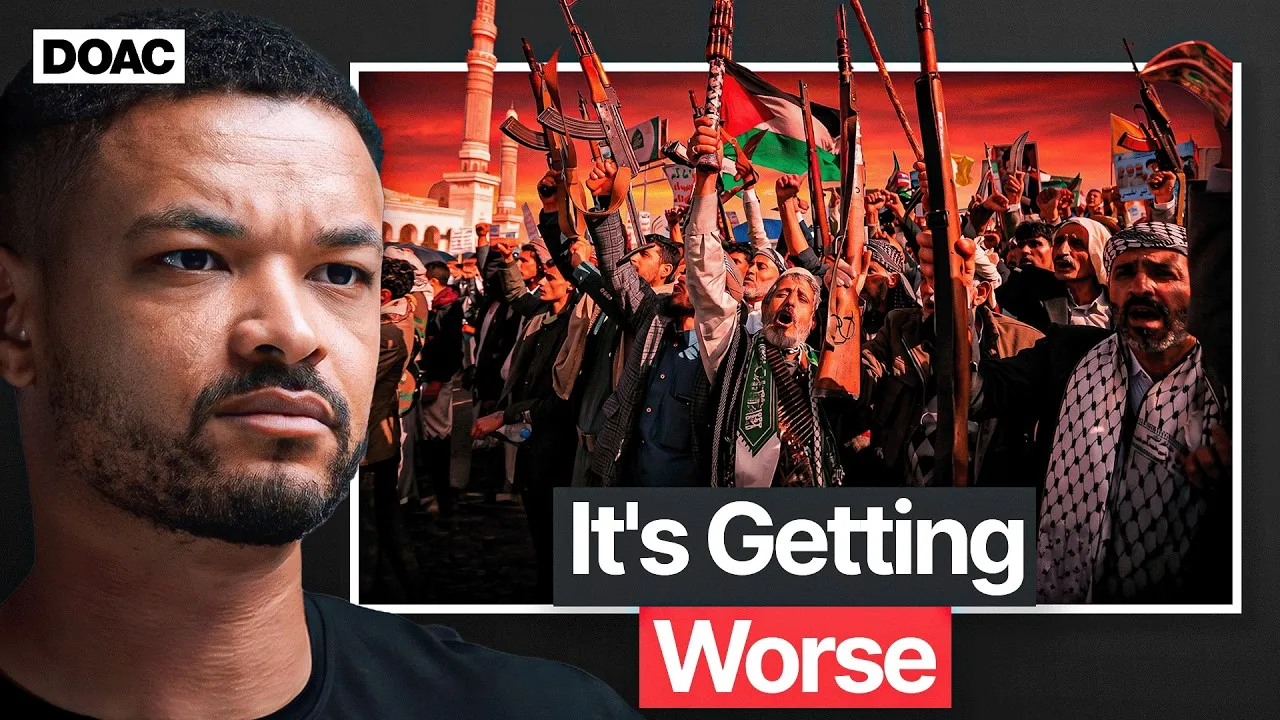
 Cenk Uygur says Israel gave America a list of seven countries to attack after 9/11, and that Iran was the last name on it. That is not a spice-level-four podcast opinion. That is a geopolitical hand grenade tossed onto the table while Steven Bartlett is still trying to figure out what, exactly, is happening with ceasefires, oil prices, and Donald Trump’s approval numbers.
The line arrives inside a tense Iran debate on The Diary of a CEO, where Uygur and Kevin O’Leary basically bring two different maps to the same fire. O’Leary sees a brutal Iranian regime that must be kept away from nuclear weapons and the Strait of Hormuz. Uygur sees a familiar American mistake, another Middle East war sold as necessity while, in his telling, serving someone else’s project.
they literally gave us a list after 9/11 of seven countries they wanted us to attack on their behalf. We have attacked all seven. Iran was the last one on that list.
That is the clip. That is the Reddit fight. It is also where a reader should put one eyebrow in the locked and upright position. Uygur’s claim resembles the long-circulating Wesley Clark story, in which Clark said he was told after 9/11 about a Pentagon memo naming countries including Iraq, Syria, Lebanon, Libya, Somalia, Sudan, and Iran. But Uygur makes the sharper accusation, that Israel gave the list to the United States. In this appearance, he doesn’t prove that leap. He asserts it, then builds the entire argument on top of it like a man pouring concrete during an earthquake.
Uygur’s argument is simple, and very combustible
Uygur’s version of the war is not that America got dragged into a messy regional crisis by accident. It is that American power has been rented out. He argues that lobbying money, campaign donations, and the political taboo against criticizing Israel have made U.S. policy functionally captive to Israeli interests. His phrase for the current conflict is about as subtle as a brick through a Situation Room window.
100% Israeli interest, 0% American interest. Let’s get out of there. Let’s stop fighting Israel’s wars for them and come back home.
There is a real argument buried inside the flamethrower. The U.S. does give Israel extraordinary military and diplomatic support. The Israeli government under Benjamin Netanyahu has pursued a far more aggressive regional posture since October 7. And American politicians often speak about Israeli security as if it were identical to American security, which is convenient until gas prices, shipping lanes, and U.S. troops enter the chat.
But Uygur also collapses a lot into one giant certainty. Lobbying influence is real. U.S. deference to Israel is real. The claim that Israel handed America a post-9/11 attack list, and that this list explains two decades of war, needs more than podcast velocity. The trouble with grand unified theories of foreign policy is that they can explain everything, including the parts they haven’t actually proven.
Kevin O’Leary brings the investor’s war room
O’Leary’s counter is colder, more market-brained, and much more comfortable with force. He describes Iran’s leadership as a small ruling militia brutalizing a much larger population, and his focus is not Israel’s ambitions but Iran’s uranium, missiles, and ability to squeeze global energy through the Strait of Hormuz.
they can’t have 90 pounds of rich uranium. and they’re not going to get it and they’re going to keep getting bombed until they give it up.
This is classic O’Leary: grim, transactional, weirdly cheerful about the machinery of pressure. He thinks the conflict can end if Iran is isolated, its nuclear path is blocked, and the Strait of Hormuz is policed by regional powers with too much money and too much at stake to let shipping routes become a hostage note. If Uygur is warning about empire by proxy, O’Leary is asking what the insurance premium is on the oil tanker.
The disagreement is not really over whether Iran’s regime is nasty. Uygur grants that. The fight is over whether bombing Iran solves the problem or feeds a larger Israeli regional strategy. And on that question, Uygur goes apocalyptic.
Disaster. A positive disaster. So, there’s no way we’re going to get to peace because Israel says their line in the sand is they’re going to keep attacking Lebanon.
The most publishable part of this episode is also the part that needs the most scrutiny. Uygur is persuasive when he says American and Israeli interests are not automatically the same. He is on thinner ice when he turns that critique into a clean origin story for every post-9/11 war. The difference matters. One is analysis. The other is a claim that deserves receipts.
If Uygur is right, the listener’s stake is brutal and simple: your gas prices, your taxes, and maybe your family members in uniform are attached to a war plan you never voted on.
- What exactly did Cenk Uygur claim about Israel and the post-9/11 wars?
- He said Israel gave the United States a list of seven countries it wanted America to attack after 9/11, and that the U.S. has attacked all seven, with Iran as the final target. His larger point was that American military action in the Middle East has been driven by Israeli security goals rather than U.S. interests.
- Is Cenk Uygur's seven-country-list claim proven here?
- No. Uygur states it forcefully, but the clip does not provide evidence for the specific claim that Israel supplied the list. The closest public reference point is the well-known Wesley Clark story about a Pentagon memo listing countries for possible military action after 9/11, but Uygur adds a much stronger allegation about Israel's role.
- How did Kevin O'Leary push back on Cenk Uygur's view of the Iran war?
- O'Leary framed Iran's leadership as the core problem and argued that the regime cannot be allowed to obtain nuclear weapons or control the Strait of Hormuz. Where Uygur sees an Israeli-driven war, O'Leary sees a dangerous regime being pressured into a deal.

Cenk Uygur says Israel blocks an Iran peace deal every time Trump moves toward peace
On The Diary of a CEO, Uygur argued that Trump has a deal available with Iran, but Benjamin Netanyahu keeps pushing him back toward war.

Kevin O'Leary says he never saw Steve Jobs happy or laughing, and that Jobs thought being nice was noise
The Shark Tank investor turns a money episode into a bleak little sermon on Steve Jobs, genius, cruelty, and the Apple ghost that still sits in the room.
The Diary of a CEO's unnamed war expert says a US strike on Iran's power plants would be worse than a nuclear weapon
The claim is less prophecy than pressure-test, but it reveals how quickly grand strategy can start sounding like a hostage note.
Kevin O'Leary says Steve Jobs told him entrepreneurs should do only three signal tasks a day
O'Leary's Steve Jobs story is clean, brutal, useful, and then the PBD Podcast accidentally stress-tests it with a merch pitch.
The circuit, read weekly. No noise.