Chanler Bledsoe says the Kennedy curse was really unchecked selfishness by men treated as royalty
The Pop Apologists host used Ryan Murphy’s JFK Jr. drama to argue that Camelot nostalgia keeps laundering Kennedy damage into fate.
Listen on YouTube · Spotify · Apple Podcasts
 WATCH NOW↓
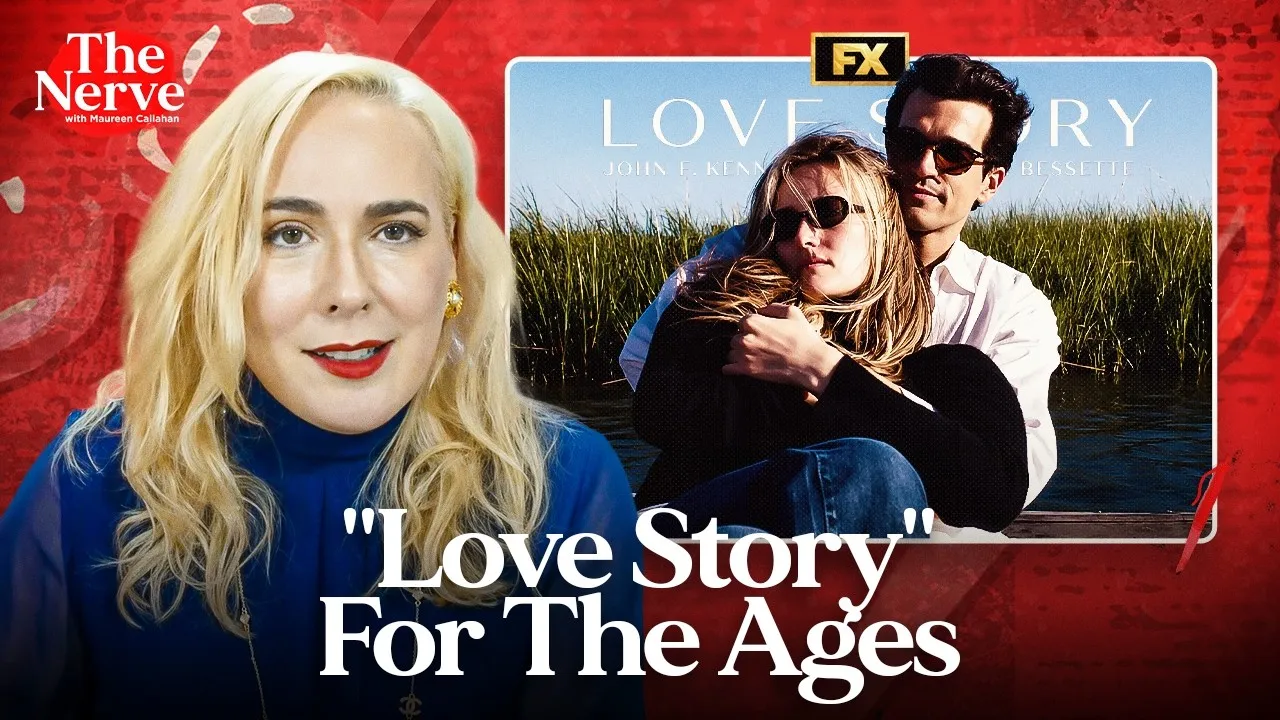
Chanler Bledsoe said on The Megyn Kelly Show that the Kennedy “curse” is the wrong frame for stories like Mary Jo Kopechne, Pamela Kelley, Carolyn Bessette Kennedy, and Lauren Bessette. Bledsoe argued that what gets sold as tragic fluke was actually “a pattern of unchecked passion and selfishness” by men treated as American royalty.
That’s the useful grenade inside an otherwise familiar pop culture chat about Ryan Murphy, JFK Jr., and the eternal American weakness for a handsome man in a wrinkled oxford. On The Megyn Kelly Show, Chanler Bledsoe and Lauren Atkinson were there to talk about why Murphy’s Kennedy romance has become a cross-generational fixation. They ended up putting a boot through the glass case labeled Camelot.
The Kennedy curse is very good branding
The “curse” story is tidy. Too tidy. It turns choice into weather. It makes car crashes, plane crashes, affairs, coverups, and dead women feel like thunderclouds that just happened to gather over Hyannis Port. Bledsoe’s correction is blunt: stop filing human damage under spooky family folklore.
It was a pattern of unchecked passion and selfishness that was just allowed for these men because they were treated as royalty.
As a line of cultural criticism, she’s right. The Kennedy machine has always depended on aesthetic overflow: sailboats, hair, grief, Catholic guilt, Jackie’s sunglasses, John-John saluting, a mythology so photogenic that accountability keeps arriving underdressed. The family’s tragedies are real. The trick is that the tragedy frame often swallows the people who were harmed by Kennedy men, especially women without the last name.
Kelly pushed that point through Mary Jo Kopechne, Martha Moxley, and Pamela Kelley, women the Pop Apologists said they didn’t really learn about in school. That matters because the Kennedy story is one of the few American dynastic tales that still gets taught, sold, and streamed as romance. The women outside the dynasty tend to arrive as footnotes, if they arrive at all.
you kind of feel lied to by the history books when you actually discover what was what was going on.
Ryan Murphy’s JFK Jr. problem
The argument got sharper because it was tied to Ryan Murphy, whose entire superpower is making American rot look expensive. The JFK Jr. and Carolyn Bessette Kennedy story has everything Murphy likes: beauty, death, fame, clothes, tabloid heat, a marriage that looked like a Calvin Klein ad being hunted by wolves.
Bledsoe understood the appeal. The Kennedys are “the closest thing we have to American royalty,” she said, and the show gives viewers 1990s New York, pre-social-media mystery, and the ancient fantasy of meeting someone at a party instead of on an app designed by a casino. Fair. Nostalgia is a hell of a drug, and this one comes with blonde highlights.
Atkinson was not buying the character work.
In terms of the show, I hated it personally because I felt like it was completely unrealistic.
Her specific complaint was that the show made JFK Jr. seem weak, too whipped around by Carolyn, when Atkinson thinks the real dynamic was probably the reverse: women orbiting him, not him trembling in orbit around one woman. That’s not a tiny quibble. It changes the moral weather of the story. A helpless romantic doomed by fate is one thing. A reckless prince with a pilot’s license is another.
I knew that he was an extremely careless person and that he was, you know, a daredevil.
The verdict here is not that every Kennedy tragedy can be flattened into one villainous family trait. That would be its own lazy myth, just with worse lighting. But Bledsoe’s point is the necessary antidote to celebrity culture at its most narcotic: glamour has a way of turning women’s pain into atmosphere. The plane goes down to smooth jazz. The sister in the back seat closes her eyes. The handsome man remains the story.
If Murphy’s show sends younger viewers Googling Carolyn Bessette’s hair, fine. The more useful search is the one Kelly and the Pop Apologists kept circling: who gets remembered as doomed, and who gets remembered as damage?
- What did Chanler Bledsoe say about the Kennedy curse?
- Chanler Bledsoe argued that calling Kennedy tragedies a “curse” softens what actually happened. Her point was that women around powerful Kennedy men were harmed, erased, or turned into plot devices while the men were protected by glamour, money, and mythology. She called it “a pattern of unchecked passion and selfishness.”
- Did Pop Apologists like Ryan Murphy’s JFK Jr. show?
- Chanler Bledsoe seemed to understand why it caught on: the Kennedys, 1990s New York, doomed romance, and celebrity mystery are basically a binge-watch starter kit. Lauren Atkinson was much harsher, saying she hated the show because it made John F. Kennedy Jr. seem unrealistically weak and too controlled by Carolyn Bessette Kennedy.
- Why did Mary Jo Kopechne come up in a discussion of Ryan Murphy’s show?
- Megyn Kelly and the Pop Apologists used the show’s romanticized Kennedy atmosphere as a way into the women who get pushed out of the family legend. Mary Jo Kopechne, Martha Moxley, and Pamela Kelley were named as examples of women whose suffering complicates the Camelot story.
Chandler Bledsoe says Karlie Kloss wore gold to Taylor Swift’s wedding to tease Gaylors
The Pop Apologists co-host thinks Kloss knew exactly what she was doing, but that does not mean she thinks the Taylor-Karlie lore is true.
Maureen Callahan says Jack Schlossberg’s Caroline Kennedy campaign video proves the Kennedy brand is tarnished
The jab is brutal, and a little too pleased with itself, but the central point is sharp: dynastic glamour can look desperate when the heir starts losing.
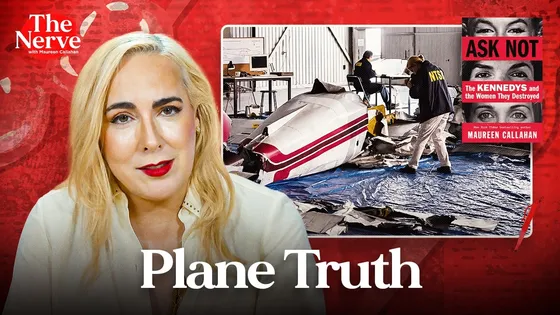
Maureen Callahan says JFK Jr.'s plane crash was a murder-suicide mission
Callahan makes the hardest possible case against the Kennedy myth, but her evidence proves recklessness more cleanly than intent.
Maureen Callahan says Taylor Swift asked Steven Spielberg to film her dancing with Travis Kelce
The host treats the Spielberg phone handoff as the perfect little fossil of modern celebrity, famous people making even other famous people part of the content machine.
The circuit, read weekly. No noise.