Don Lincoln
Senior scientist at Fermilab and science communicator who has written extensively on Einstein and particle physics.
Circuit updated October 11, 2026
Don Lincoln's throughline across both appearances is a kind of confident humility, the posture of a working scientist who has spent decades not finding what he's looking for and has made peace with that being the job. He keeps returning to the idea that absence of evidence is itself evidence, whether that's a galaxy stripped of dark matter or a theory about time that nobody can fully formalize, and he frames uncertainty not as failure but as the frontier staying honest. The most interesting tension is that on the dark matter episode he's almost combative in defending the field against 'religious' skeptics, yet on the time episode he cheerfully admits we don't understand something as basic as what time actually is, two very different emotional registers for the same epistemic condition. On dark matter he's defensive; on time he's delighted. That asymmetry matters because it reveals where the real professional stakes are: he can afford to shrug at the mystery of time, but thirty years of null results in your own lab will apparently make a man a little territorial. Lincoln is worth reading as a cultural figure right now because he's one of the few communicators willing to say 'we have no idea' without using it as a marketing move, and that's rarer than it sounds.
- Don Lincoln says the Higgs field turned on 10^-12 seconds after the Big Bang and gave particles mass
“The ones that interact with the field get mass and the ones that don't interact with the field don't have mass.”
- Don Lincoln says Fermilab was two or three years from discovering the Higgs boson before CERN got there
“if we had had another two years or maybe three years of running the Fermilab accelerator, Fermilab would have discovered or ruled out or in this case turning out discovered the Higgs Boson because it's a real thing. We would have found it without a question” 3:39
- Don Lincoln says Maxwell's equations turned magnets and sparks into the internet
“you have electricity side equals a magnetism side. Electricity equals magnetism. And that is a staggering concept.” 5:05
- Don Lincoln says galaxies with no dark matter are strong evidence dark matter is real
“The bullet cluster is strong evidence that dark matter is a real thing.” 18:28
- Don Lincoln says the speed of light comes out of Maxwell's equations for electricity and magnetism
“And if you do the math, you find out that the speed at which these waves move is the speed of light.” 0:34
- Don Lincoln says we exist because the early universe had one extra matter particle per billion antimatter particles
“somehow in the early universe, something made a very very tiny asymmetry.” 1:41
- Don Lincoln says quantum field theory predicts dark energy 10^120 times too large
“And if you add that all up, then you get a number, and that number is the rather embarrassing 10 to the 120th power times, that's a one with 120 zeros after it, bigger than the measurement of dark energy.” 1:29
- Don Lincoln Wants You to Understand Why Time Is Weirder Than You Think
“We don't really understand what time is, which is weird. You think that that'd be something we'd understand very well, but we really don't.” 0:41
- Don Lincoln Has Spent 30 Years Looking for Dark Matter and Has Absolutely No Idea What It Is
“The bullet cluster is strong evidence that dark matter is a real thing.” 5:05
-
“a black hole you can't see it's perfect it's a perfect candidate for dark matter. And if there's enough of them out there, remember there's five times the number of stars, which means there's a whole lot of freaking black holes out there. We should have seen them and we didn't.”
Don Lincoln · Lex Fridman Podcast -
“There are people who are really really religiously hating dark matter largely because we've looked so hard for so many years and the experiments in today's world are a million times more sensitive than when I was a starting student and they still haven't seen anything.”
Don Lincoln · Lex Fridman Podcast -
“if we had had another two years or maybe three years of running the Fermilab accelerator, Fermilab would have discovered or ruled out or in this case turning out discovered the Higgs Boson because it's a real thing. We would have found it without a question”
Don Lincoln · Lex Fridman Podcast -
“dark matter is likely a real thing. Now that's great. I've taken you all the way to dark matter. So now you're going to ask me. You're going to say, 'Don, what is dark matter?' I'm going to I don't know, but I know what it isn't.”
Don Lincoln · Lex Fridman Podcast -
“Don, he's brilliant, he's going to find something at the LHC tomorrow, he's going to solve all this problem. Now, we've solved it, it's much better. It's only different by 10 to the 60 power. Which is still pretty bleeding big.”
Don Lincoln · Lex Fridman Podcast -
“And if you add that all up, then you get a number, and that number is the rather embarrassing 10 to the 120th power times, that's a one with 120 zeros after it, bigger than the measurement of dark energy.”
Don Lincoln · Lex Fridman Podcast
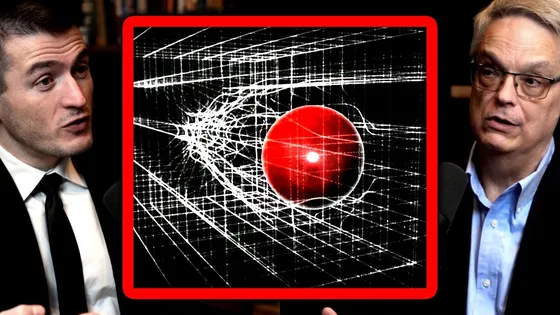
Don Lincoln says the Higgs field turned on 10^-12 seconds after the Big Bang and gave particles mass
The Fermilab physicist gives the cleanest possible version of a very weird idea: mass, at least for elementary particles, arrived when the early universe cooled enough for the Higgs field to switch on.
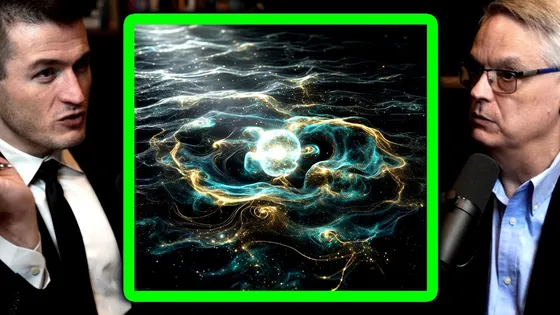
Don Lincoln says Fermilab was two or three years from discovering the Higgs boson before CERN got there
The Fermilab physicist frames the Higgs discovery as a near miss, not a clean victory lap for CERN, and he has the machine numbers to make that sting.
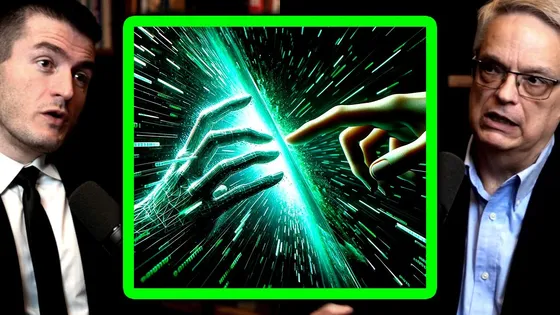
Don Lincoln says Maxwell's equations turned magnets and sparks into the internet
On the Lex Fridman Podcast, the Fermilab physicist makes the case that the weirdest, least practical physics is often the stuff that later rewires civilization.
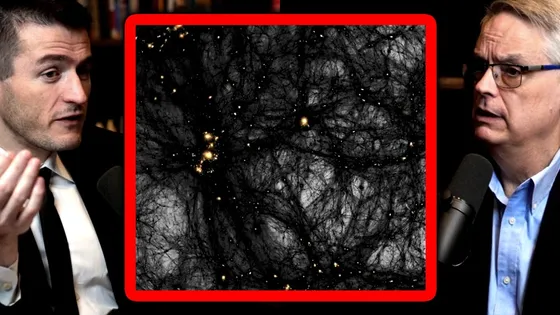
Don Lincoln says galaxies with no dark matter are strong evidence dark matter is real
The physicist’s best pro dark matter argument is wonderfully backward: the missing stuff looks more real when you can find places where it’s missing.
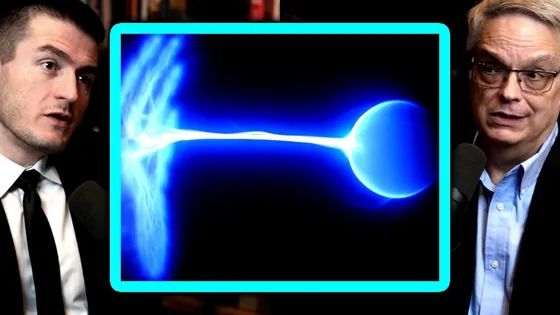
Don Lincoln says the speed of light comes out of Maxwell's equations for electricity and magnetism
The Fermilab physicist makes the old physics story feel properly weird again, then uses it to defend basic research from the eternal question, what good is this?
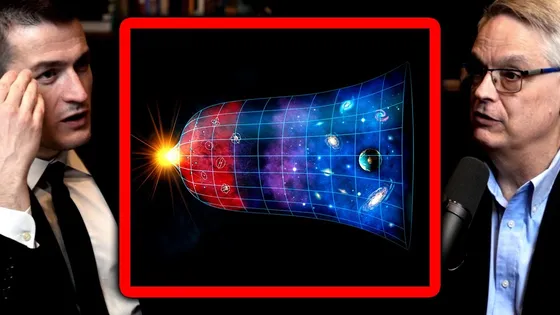
Don Lincoln says we exist because the early universe had one extra matter particle per billion antimatter particles
The Fermilab physicist framed existence as the leftover scrap from a cosmic matter-antimatter wipeout, then admitted nobody knows what caused the imbalance.
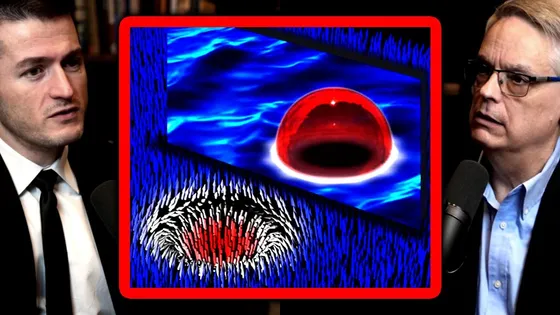
Don Lincoln says quantum field theory predicts dark energy 10^120 times too large
The Fermilab physicist puts a number on the vacuum catastrophe, and the number is so stupidly large it makes ordinary scientific failure look dainty.
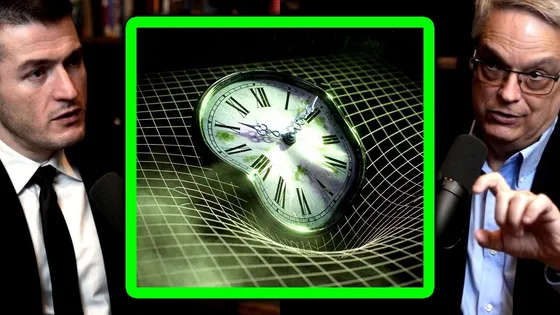
Don Lincoln Wants You to Understand Why Time Is Weirder Than You Think
A Fermilab physicist walks Lex Fridman through the history of spacetime, and the most interesting part is what nobody actually understands.
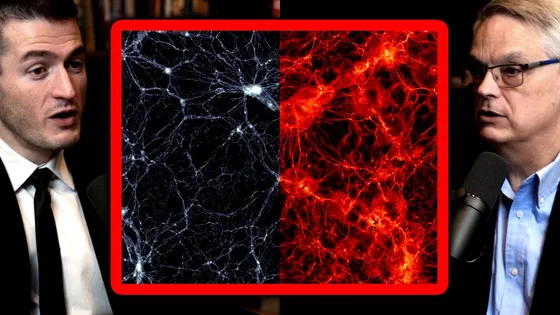
Don Lincoln Has Spent 30 Years Looking for Dark Matter and Has Absolutely No Idea What It Is
The Fermilab physicist makes a compelling case for something he cannot find, cannot name, and cannot stop thinking about.