Don Lincoln says the speed of light comes out of Maxwell's equations for electricity and magnetism
The Fermilab physicist makes the old physics story feel properly weird again, then uses it to defend basic research from the eternal question, what good is this?
Listen on YouTube · Spotify · Apple Podcasts
 WATCH NOW↓
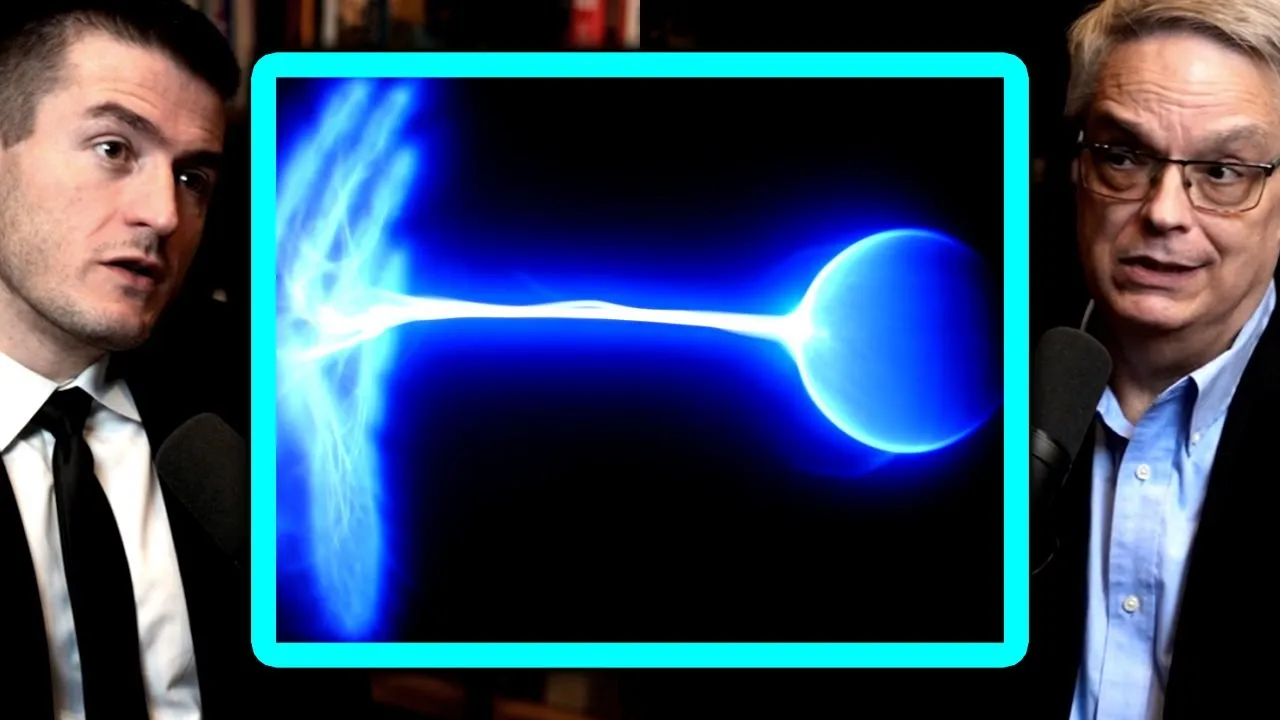
 The magic trick Don Lincoln is selling is not metaphorical: do the calculus on Maxwell’s equations and the speed of light pops out of electricity and magnetism. That is the specific shock here, not that physics is beautiful, but that light, the thing poets keep stealing, shows up as a number in the machinery of magnets and sparks.
Lincoln, a Fermilab physicist who has spent a lot of time explaining big physics without turning it into scented-candle wonder, gives the Lex Fridman Podcast a tidy version of one of science history’s great plot twists. Electricity and magnetism were not separate parlor tricks. Put them together correctly, through Maxwell’s equations, and they describe waves. Then comes the punchline: those waves move at the speed of light.
And if you do the math, you find out that the speed at which these waves move is the speed of light.
That claim is not inflated podcast awe. It is the good stuff. James Clerk Maxwell’s 19th-century equations unified electricity and magnetism, and the wave speed that comes out of them matched the known speed of light. The universe had left a receipt. Light was not just light. It was electromagnetism in motion.
The physics flex is real
Lincoln’s best move is that he does not leave the claim floating in the museum. He immediately drags it into your phone, your computer, your ability to hear a podcast at all. The romance of Maxwell’s equations is nice. The fact that your entire day is built on electric fields being bossed around by human beings is less poetic and more damning.
Well, that very fundamental digging into the laws of nature has spin-offs. And it has spin-offs. One of the big spin-offs is our entire technological society.
This is where Lincoln climbs onto what he openly calls a soapbox, and honestly, fair. The easiest cheap shot in the world is to ask why anyone should care about magnets, sparks, quarks, or whatever expensive machine is currently making a congressional budget analyst sweat. Lincoln’s answer is that nobody in the 1860s could have looked at early electromagnetic theory and predicted Wi-Fi, laptops, server farms, and the particular modern miracle of a physicist explaining Maxwell while you do dishes.
without being able to govern electricity, we’d still be farmers and shoemakers in cities, but we certainly would not have everything that we do.
That line is a little grand. Humanity had mills, steam engines, railroads, medicine, printing presses, and a thousand other ways to avoid total peasant cosplay. But Lincoln is not really making a literal jobs forecast for an electricity-free Earth. He is arguing that basic science has a terrible habit of looking useless before it becomes infrastructure.
Then he makes the nuclear power pivot
The sneakier claim is the sequel: today’s seemingly abstract particle physics may be sitting where old electromagnetism once sat. Lincoln admits he cannot tell you exactly what studying the inside of quarks will buy us. Good. That’s the honest answer, and the only answer that doesn’t sound like a grant proposal wearing a lab coat.
And the type of science I do now, people often ask, well, what good is knowing about how the inside of atoms work, how the inside of quarks work. And I don’t know the answer to that.
Then he points to the nucleus. A century ago, understanding protons and neutrons looked remote from ordinary life. Now that knowledge sits behind nuclear weapons, cancer treatments, and nuclear power, though Lincoln sticks here to energy. His case is not that every weird physics question becomes a power plant. It is that you do not get to know in advance which weird question becomes the future.
The clean verdict: Lincoln’s Maxwell claim is true, and his defense of basic research is persuasive precisely because he lets one uncertainty remain. He knows what electricity gave us. He does not pretend to know what quarks will give us. If he did, the whole thing would sound like TED Talk confetti.
this digging into deep fundamental, not understood, mysterious things can 100 or 200 years later transform the world.
- What is Don Lincoln saying about the speed of light?
- He says the speed of light appears when you combine the laws of electricity and magnetism in Maxwell's equations. In plain English, the math says electric and magnetic fields can travel as waves, and those waves move at light speed.
- Is the Maxwell's equations claim actually true?
- Yes. Historically, this was one of the great reveals in physics: light could be understood as an electromagnetic wave. Lincoln's version is compressed for a podcast, but the core claim is solid.
- Why does Lincoln bring up farmers and shoemakers?
- He is making the case that basic research looks useless right up until it becomes civilization's wiring. His line is theatrical, but the broader point is fair: the study of electricity and magnetism eventually helped build the technological world.
Don Lincoln says Maxwell's equations turned magnets and sparks into the internet
On the Lex Fridman Podcast, the Fermilab physicist makes the case that the weirdest, least practical physics is often the stuff that later rewires civilization.
Don Lincoln Wants You to Understand Why Time Is Weirder Than You Think
A Fermilab physicist walks Lex Fridman through the history of spacetime, and the most interesting part is what nobody actually understands.
Don Lincoln Has Spent 30 Years Looking for Dark Matter and Has Absolutely No Idea What It Is
The Fermilab physicist makes a compelling case for something he cannot find, cannot name, and cannot stop thinking about.
Don Lincoln says Fermilab was two or three years from discovering the Higgs boson before CERN got there
The Fermilab physicist frames the Higgs discovery as a near miss, not a clean victory lap for CERN, and he has the machine numbers to make that sting.
The circuit, read weekly. No noise.