Don Lincoln says Maxwell's equations turned magnets and sparks into the internet
On the Lex Fridman Podcast, the Fermilab physicist makes the case that the weirdest, least practical physics is often the stuff that later rewires civilization.
Listen on YouTube · Spotify · Apple Podcasts
 WATCH NOW↓
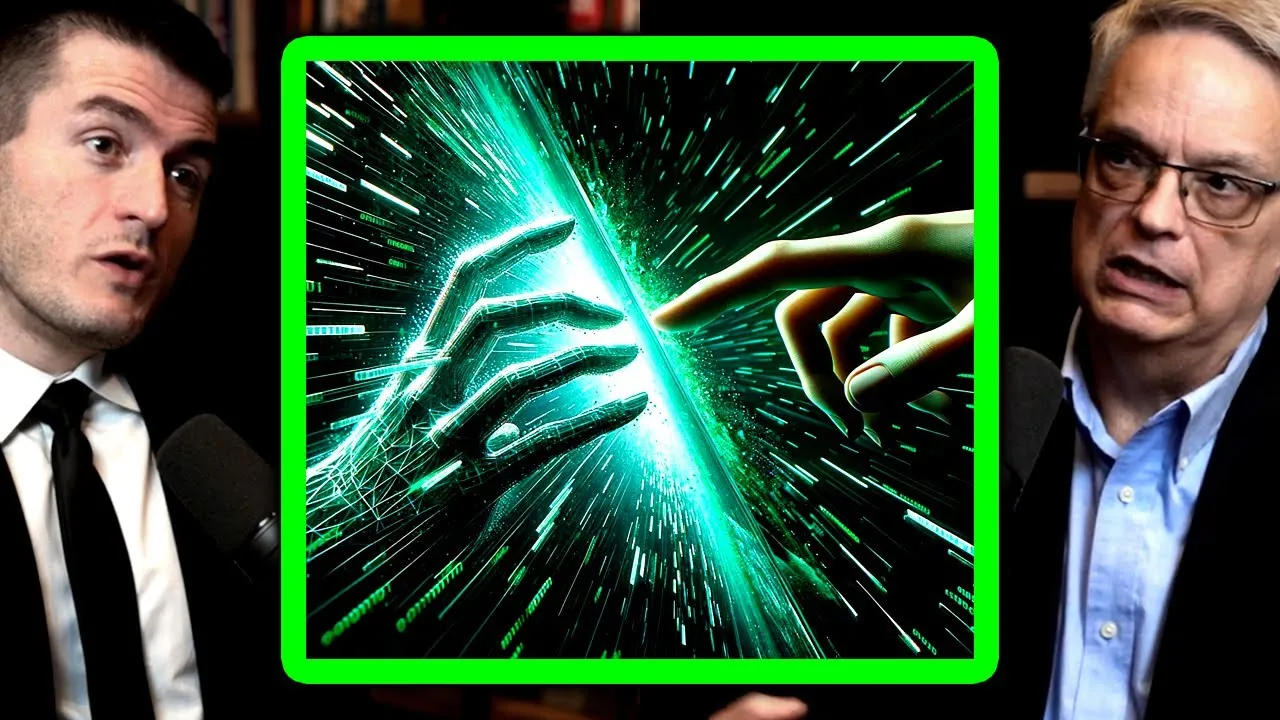
 Don Lincoln has a wonderfully rude answer to anyone asking what good abstract physics is: without Maxwell’s equations, you might not be reading this on a screen. On the Lex Fridman Podcast, Lincoln argues that the 19th-century unification of electricity and magnetism is exactly the kind of allegedly useless science that later becomes the plumbing of civilization.
This is the best version of the basic-research sales pitch because it doesn’t pretend quarks are secretly a startup deck. Lincoln isn’t saying James Clerk Maxwell built the internet in a frock coat. He’s saying that when scientists learned that sparks, magnets, and light were not separate little magic tricks but one system, they made the modern world thinkable. Annoyingly for the grant-skeptic at the dinner table, he’s basically right.
you have electricity side equals a magnetism side. Electricity equals magnetism. And that is a staggering concept.
The refrigerator magnet to Wi-Fi pipeline
Lincoln frames physics as a history of things that looked unrelated until some killjoy genius took away the mystery. Isaac Newton sees falling sandwiches and the Moon as the same problem. Maxwell sees the lightning bolt and the magnet holding your kid’s art to the fridge as the same problem. The search for a theory of everything, in Lincoln’s telling, is not a mystical urge to write God’s final equation. It’s a very long institutional habit: find two boxes, prove there was only one box.
The refrigerator magnet detail is doing real work here. A podcast about unification could easily float off into chalk dust. Lincoln keeps dragging it back to household objects, which is exactly where electromagnetism gets strange. The thing that keeps a postcard stuck to an appliance and the thing that lets Lex Fridman beam a physicist into your earbuds are not cousins. They are the same family business.
being able to to tame electromagnetism is why people can hear you when you do your podcast
That double “to” is in the transcript, and frankly it helps. It sounds like Lincoln is so eager to get to the punchline that grammar briefly gets vaporized. His punchline is not modest.
Without being able to govern electricity, we’d still be farmers and shoemakers in cities, but we certainly would not have everything that we do.
A very elegant defense of expensive curiosity
This is also, unavoidably, a physicist defending physics. Lincoln works in particle physics, the field that forever has to explain why smashing tiny things into tinier things is not just taxpayer-funded marble racing. So yes, the argument serves his side. But self-interest doesn’t make it false. The history he points to is brutal for anyone demanding an immediate product roadmap from fundamental science.
this digging into deep, fundamental, not understood, mysterious things can 100 or 200 years later transform the world.
The key number there is not “transform.” It’s “100 or 200 years.” That is both the romance and the dodge. Basic research asks society to fund questions whose best applications may arrive after everyone in the room is dead. Convenient. Also how electricity, nuclear power, quantum mechanics, GPS, semiconductors, and a depressing amount of military technology tend to happen.
Lincoln and Fridman briefly touch the obvious danger: once nature hands humans a deeper control knob, humans immediately ask whether it can power a city, move a spaceship, or flatten one another. Lincoln’s answer is the old Prometheus clause. Science finds the power. Society decides whether to cook dinner or burn the neighborhood down.
Fire can burn down your house or it can cook your steak.
That may be too tidy, but it is the correct tidy. If Maxwell’s equations really are somewhere in the ancestry of your phone, then the next baffling theory with no obvious use may not be a luxury. It may be the future wearing a fake mustache.
- Is Don Lincoln saying Maxwell invented the internet?
- No. His claim is bigger and less silly than that. Lincoln is saying Maxwell's 19th-century unification of electricity and magnetism created the conceptual machinery that later made electronic communication, computers, and the internet possible.
- Why does Lincoln connect electromagnetism to a theory of everything?
- He treats physics as a long series of unifications. Newton merged earthly falling with heavenly orbits, Maxwell merged electricity with magnetism, and particle physicists now want the same kind of deeper link among the remaining fundamental forces.
- Does Lincoln think basic physics has to be useful right away?
- Absolutely not. His defense is that nobody looking at magnets and sparks in the 1800s could see Wi-Fi coming, just as nobody studying nuclei at first had nuclear power in hand. The payoff can be delayed by a century, which is convenient for physicists asking for patience, but historically not wrong.
Don Lincoln says the speed of light comes out of Maxwell's equations for electricity and magnetism
The Fermilab physicist makes the old physics story feel properly weird again, then uses it to defend basic research from the eternal question, what good is this?
Don Lincoln says galaxies with no dark matter are strong evidence dark matter is real
The physicist’s best pro dark matter argument is wonderfully backward: the missing stuff looks more real when you can find places where it’s missing.
Don Lincoln says we exist because the early universe had one extra matter particle per billion antimatter particles
The Fermilab physicist framed existence as the leftover scrap from a cosmic matter-antimatter wipeout, then admitted nobody knows what caused the imbalance.
Don Lincoln says quantum field theory predicts dark energy 10^120 times too large
The Fermilab physicist puts a number on the vacuum catastrophe, and the number is so stupidly large it makes ordinary scientific failure look dainty.
The circuit, read weekly. No noise.