Dr. Boyce Watkins says economics is warfare and you need backup platforms before anyone tries to cancel you
The finance PhD turns cancellation into a systems problem, not a feelings problem.
Listen on YouTube
 WATCH NOW↓
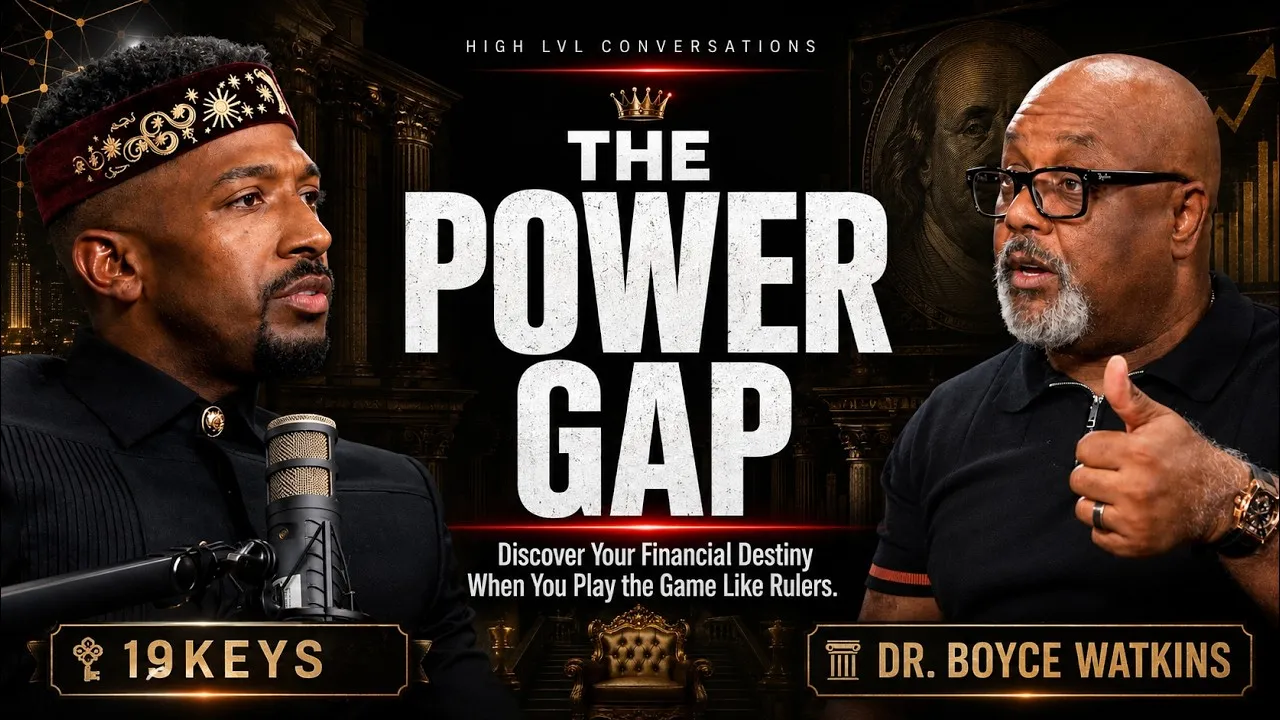
Dr. Boyce Watkins said on Earn Your Leisure that economics is warfare, and that anyone building power should prepare for unfair attacks by owning backup platforms before the attack comes. He said he protected The Black Business School with multiple YouTube channels and roughly 20 Facebook pages because a single platform can be knocked out.
This is Watkins at his most Watkins: part finance professor, part movement elder, part guy at the cookout warning you that the potato salad is a trap. The claim is grand, yes. But it gets less cartoonish when he stops talking like Sun Tzu with a brokerage account and starts describing the actual creator business problem: if YouTube, Facebook, Instagram, or a speaking bureau can delete your access, then you don’t own your audience. You’re renting it from a landlord with mood swings.
Dr. Boyce Watkins framed his whole career as a lesson in economic self-defense. He told 19 Keys that when he first tried to build independent Black financial education, he expected institutional pressure. Not vague hater energy. Specific pressure. TV bookings, book deals, speaking opportunities, social pages, the points where a public thinker gets turned into a business.
as soon as a black man says something out of line, they take something from him, right? If you got a TV show, they’re going to take your show. Radio, uh or you got a book deal, they’ll take your book deal. if you sign with the speakers bureau, they’ll cut you off from the speakers bureau.
The interesting part is not that Watkins thinks systems punish dissent. A lot of podcast guests think that. Half of modern media is a man in a fitted cap explaining that the matrix fears his newsletter. The interesting part is that Watkins’s answer is boring in the best way. Not martyrdom. Not a Notes app statement. Redundancy.
we can’t have one YouTube channel because if you have one channel, then they could knock that channel down. So, we created like 10.
That is the episode’s sharpest claim because it turns financial literacy into logistics. Watkins is not just telling people to save money, buy index funds, or build businesses. He is saying power has architecture. If your politics, your brand, your school, your family office, or your media company can be stopped by one lost login, then it wasn’t power yet. It was a page.
The war metaphor is corny until the receipts show up
Watkins says he learned the hard way. He describes losing a Facebook page with 600,000 followers, then later an Instagram account with half a million followers. Those numbers are impossible to verify from the transcript alone, and the platform-censorship story always deserves a raised eyebrow because every banned man believes he was banned for telling the truth, not for violating terms nobody read. Still, the business lesson doesn’t depend on him being the hero of every anecdote.
Creators really do build homes on rented land. The algorithm changes, the account gets flagged, the password gets phished, the payment processor freezes funds, and suddenly the empire is a folding table. Watkins’s verdict is simple: if the system can remove one node and kill you, the system owns you.
economics is warfare. People are not going to fight fair with you, right?
That sentence sounds like a hoodie brand until you place it next to the rest of the conversation, which is really about Black economics and control. Watkins and 19 Keys keep circling the same idea: don’t confuse visibility with ownership. Don’t confuse celebrity with infrastructure. Don’t confuse being invited into someone else’s system with having one of your own.
Watkins is persuasive here because his answer is operational. He is not asking listeners to become paranoid. He is asking them to become harder to delete. Ten channels. Twenty pages. Multiple revenue streams. A school that doesn’t disappear because one company says no. In creator speak, it is audience ownership. In Watkins speak, it is warfare.
The claim is true, but also convenient
The skeptical read is obvious: calling economics warfare lets every critic become an enemy combatant. It can flatten real accountability into battle damage. If someone questions your product, your credentials, or your business model, the war frame makes it very easy to say, of course they attacked me, I’m dangerous.
But Watkins also makes room for a harder version of self-critique. Earlier, he tells 19 Keys that some criticism is false, but some of it is accurate, and that a leader has to know the difference. That matters. Without that distinction, “economics is warfare” becomes a permission slip for ego. With it, the line becomes a strategy: fix what is weak, then make sure the whole thing can’t be wiped out in one shot.
I prepared for you before you got here, right?
If Watkins is right, the takeaway is not to post harder. It is to build dull, unsexy backup systems before you need them. Own the list. Own the customer relationship. Own the payment path. Own enough doors that no single door closing becomes the end of the story.
- What did Boyce Watkins say about economics as warfare?
- Dr. Boyce Watkins said economics is warfare because people with power will not fight fair when they feel that power being threatened. His practical example was media survival, not battlefield cosplay: he said The Black Business School built multiple YouTube channels and Facebook pages so one ban or takedown would not end the operation.
- Why did Boyce Watkins say he created so many platforms?
- Watkins said a single YouTube channel, Facebook page, or media route is too easy to destroy. His answer was redundancy. If one channel was taken down, another could keep the audience, message, and business moving.
- Was Boyce Watkins exaggerating about cancellation?
- His war language is overheated, but the underlying business advice is solid. Platforms do remove accounts, creators do lose access overnight, and depending on one algorithm is a fragile plan. The self-serving part is that the claim also flatters Watkins as someone powerful enough to be targeted.
Rashad Bilal says one Micron call made him more money than Investfest
The Earn Your Leisure cofounder framed Investfest as a community-first loss leader, not a cash grab, during a pointed public address to critics.
Ish says if he had LeBron James money, his friends would fly first class with him
A Savannah James travel clip turned into a messy, useful argument about generosity, entitlement, and whether rich friendship quietly becomes payroll.
Skilla Baby says getting shot made him evil, and the most gangster thing he could do was heal
The Detroit rapper gives the rare anti-revenge answer that doesn't sound like a Hallmark card.
Troy Millings says Nvidia is acting as the 'central bank' of AI
The GPU giant is essentially buying its own customers and funding its own competitors to make sure the AI bubble never pops.
The circuit, read weekly. No noise.