Benjamin Hardy says 10X growth requires cutting 80 percent of your life
The productivity guru’s sharpest claim is not to grind harder, but to delete most of the life that made you successful so far.
Listen on YouTube · Spotify · Apple Podcasts
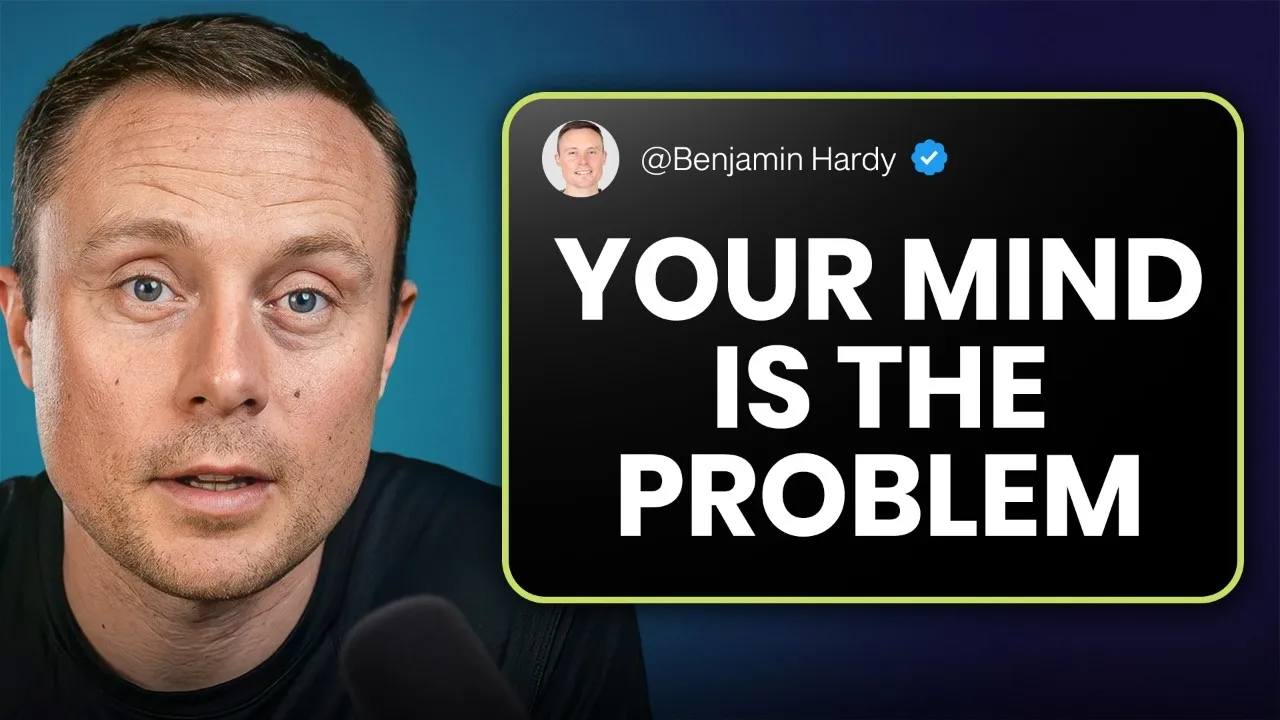 WATCH NOW↓
 The most expensive item in Benjamin Hardy’s productivity diet is not a planner. It is the trash bag. On Young and Profiting, Hardy says 10X growth does not come from working 10 times harder, it comes from cutting 80 percent of your current life, including the tasks, projects, habits, and cozy little security blankets that got you here.
Whereas with 2x, you can keep 80% of your life. With 10x you have to get rid of 80% of your life. And 80% means that it got you here, but it won’t get you there. Only the best 20% can stay.
That is the line worth arguing about. Not because it is perfectly scientific, please do not hand your marriage a pie chart, but because it punctures the dumbest version of entrepreneur culture. The common 10X fantasy, the Grant Cardone flavored one, is more calls, more content, more sweat, more screaming into a ring light. Hardy’s version is colder and more useful. If your goal is genuinely different, your old system is mostly junk.
The anti-hustle hustle
Hardy is selling a book, so yes, the slogan comes pre-polished. He co-wrote 10X Is Easier Than 2X with Dan Sullivan, and the phrase is built to make a founder feel both indicted and chosen. Still, the idea has teeth. A 2X goal lets you keep your meetings, your inbox rituals, your vague networking coffees, your identity as the person who is always busy. A 10X goal asks a meaner question: would any of this survive if the outcome actually mattered?
you don’t actually get better through habits. Um, and if you actually study the research on deliberate practice, deliberate practice is the opposite of habits.
That swipe at habits is the episode’s funniest little grenade, because the self-improvement shelf has spent the last decade telling everyone to become a Roomba with a morning routine. Hardy’s point is sharper: habits automate what you already know. Deliberate practice makes you bad on purpose, in public or near-public, with coaching, strain, and feedback. If the goal is mastery, autopilot is not a virtue. It is a very tidy coffin.
The useful part is the calendar test. Hardy says he recently had a big 90-day goal around finishing a new book, then looked at his schedule and realized the math was fake. So he cut almost everything. This is where the advice stops being inspirational fog and becomes a knife.
I actually had probably 25 really great podcasts scheduled and other other things and we just said literally we can’t do we can only do like three or four of them.
Delete with caution
Here is the caveat Hardy glides past a little too easily: subtraction is easier when you own the calendar. A consultant with a book deal can cancel 21 podcast hits and call it alignment. A nurse, a teacher, or a junior marketer cannot always remove 80 percent of the job without also removing 100 percent of the paycheck. The principle travels better than the prescription. For most people, the real move is not blowing up life overnight. It is identifying the two or three activities that actually change the outcome, then protecting them like an organ transplant.
Hardy also keeps returning to a related idea from his earlier book Who Not How: the right person may matter more than the right tactic. He says a company trying to go from hundreds of millions to billions, or a solo operator trying to hit a first big milestone, often needs one key person who changes the ceiling. That sounds dangerously close to founder fairy dust, but it is also a clean rebuke to the lonely genius myth. Growth is not just grind. It is selection. What goal, which work, whose help.
The verdict is not that Hardy has found a law of nature. He has found a bracing question for entrepreneurship: if your future goal is real, why does your calendar still look like it belongs to your past self? That question is annoying because it is usually answerable in about 90 seconds.
Okay, throw away your smart goals. Whatever your goals are, they’re not smart. Go for an impossible goal.
- What does Benjamin Hardy mean by 10X being easier than 2X?
- Hardy argues that doubling your results usually means doing more of the same, which keeps most of your old habits, meetings, tasks, and identity intact. A 10X goal is so large that it forces subtraction. In his model, the impossible size of the goal becomes a filter that tells you what to stop doing.
- Does Hardy really say to cut 80 percent of your life?
- Yes, though he means it as a business and identity filter, not a cartoonish command to abandon all obligations. He says the 80 percent is whatever got you here but cannot get you to the next level, including work, projects, relationships, old stories, and secure but stale commitments.
- Is Hardy’s advice practical for normal workers?
- Partly. The calendar audit is useful for anyone, but the full version assumes a lot of freedom, support, and risk tolerance. A founder can cancel 20 podcast appearances and call it strategy. An employee with rent due may need to translate the idea into smaller cuts.

Benjamin Hardy Says You're Measuring Yourself Wrong, and He Has the Viktor Frankl Story to Prove It
The organizational psychologist behind 'The Gap and the Gain' explains why hitting your goals might make you feel worse, and what Mr. Beast figured out at 17 that most adults never do.

Gary Vaynerchuk says entrepreneurs who ignore their partners may not actually value the relationship
GaryVee’s productivity gospel gets its sharpest domestic translation: if you really wanted to see them, you would.

Tara LaFerrara Built a Million-Dollar Fitness Business by Refusing to Be Perfect
The Broads founder on coaching funnels, a $130,000 app failure, and why 'do the cringe thing' is actually a business strategy.

Ben Nemtin says 76% of people reach their deathbed regretting the life they didn't live
The Buried Life co-creator has built a whole bucket-list gospel around one scary statistic, though the number is cleaner than the research behind it.
The circuit, read weekly. No noise.