Dr. David Unwin says 93 percent of his prediabetes patients normalized blood sugar on low carb
The British GP makes a strong case for treating fatty liver and prediabetes earlier, but his blockbuster number comes from practice data, not a universal guarantee.
Listen on YouTube · Spotify · Apple Podcasts
 WATCH NOW↓
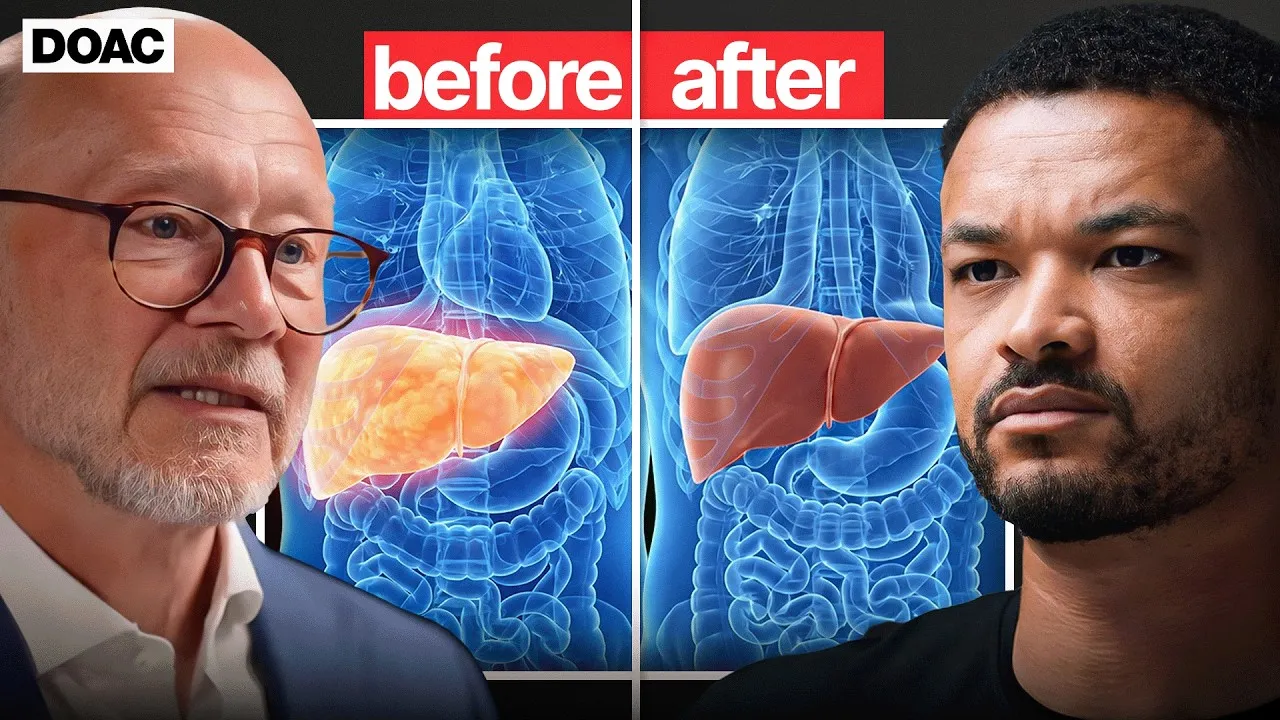
 Dr. David Unwin says 93 percent of the prediabetes patients in his north of Liverpool practice got completely normal blood sugar after going low carb. That is the number that jumps out of his appearance on The Diary of a CEO, not because it sounds neat, but because it sounds almost illegally neat.
Unwin is not selling vibes in a linen shirt. He’s a British GP who says he spent 25 years watching metabolic health get worse while he did what the guidelines told him to do. His picture of modern primary care is grim: young patients with poorly controlled diabetes, fatty livers before anyone feels sick, and a food culture that has turned the dad bod into a punchline while the pancreas quietly files for divorce.
I can tell you that the people with pre-diabetes in my practice north of Liverpool, 93% of them will get a completely normal blood sugar if they go low carb. 93% resolution and that will last for years because I’ve checked.
That’s the claim. Here’s the catch, and it’s an important one: this is practice data, not a randomized trial dropped from Mount Sinai on stone tablets. It comes from motivated patients in one GP practice, under the care of a doctor who has built a professional identity around low-carbohydrate diets. So no, 93 percent is not a law of nature. But it is a sharp rebuke to the lazy fatalism around type 2 diabetes, the shrug that says diagnosis first, drugs forever, lifestyle sermon somewhere in the pamphlet pile.
The liver is the crime scene
Unwin’s best move is making fatty liver feel less like a lab-result footnote and more like the prequel. He says excess glucose gets pushed out of the bloodstream by insulin and stored as fat when you don’t need it for energy. Belly fat is the visible receipt. Fatty liver is the hidden one.
This bit’s called the long silent scream from the liver.
The phrase is melodramatic, sure. It also works. His point is that fatty liver disease can build for years before someone officially crosses the line into diabetes. By then, in his telling, the odds have already started to slide. He says early prediabetes patients in his practice had a 93 percent chance of normalizing blood sugar on low carb, early type 2 patients had a 73 percent chance, and after several more years the chance fell to about 50 percent.
This is where Unwin’s argument is strongest. Not that everyone must treat bread like plutonium. Not that metformin is some pharmaceutical Bond villain. The better claim is that timing matters. If fatty liver and rising blood sugar are upstream problems, waiting for full diabetes before getting serious is like waiting for smoke alarms to become interior decor.
The patient who made him change his mind
The episode’s origin story has the satisfying shape of a sitcom humiliation. Unwin says a patient stopped taking metformin, came in angry, and told him she had fixed her blood glucose by learning online what he had not told her in 10 years.
did you ever once tell me that bread was sugar or breakfast cereals were sugar? I had to learn online uh that bread is sugar, that rice is sugar, that breakfast cereals are sugar.
Nutrition people will fight that sentence with knives. Bread is not literally table sugar. Rice is not a gummy bear in a tuxedo. But Unwin’s useful point is metabolic, not poetic: many starch-heavy foods break down into glucose, and for people already struggling with insulin resistance, the body may not care that the carb arrived wearing a wholesome cereal-box halo.
The more quietly explosive part is his description of the incentives around metformin. He does not present it as a conspiracy, and he’s careful to say the evidence supported the drug. Still, the system he describes rewarded the old model more clearly than the remission model.
So is it fair to say that you were somewhat incentivized to give people metformin? >> Yes, that would be true.
That’s why Unwin’s 93 percent figure is worth arguing over. If it’s inflated by selection, enthusiasm, or the special sauce of a very committed GP, fine, argue that. But if even a chunk of it translates elsewhere, the practical stake is obvious: don’t wait until the liver has screamed for a decade. Ask for the blood test. Ask what your HbA1c means. Ask what your liver enzymes are doing. And if you’re already on medication, don’t freelance your way off it because a podcast made you feel brave. Bring the biscuit drawer to your doctor and make them look at the whole crime scene.
- Did David Unwin say low carb cures prediabetes?
- Unwin said that in his practice, 93 percent of patients with prediabetes who went low carb got completely normal blood sugar, and that the result lasted for years in his follow-up. That’s a remission claim, not a magic cure claim. It’s also his clinical data, so it should be treated as a serious signal rather than a promise every patient will get the same result.
- Why does he connect fatty liver to type 2 diabetes?
- His argument is that excess carbohydrate can be converted into fat, including in the liver, and that fatty liver then interferes with insulin’s normal job. That sets up insulin resistance, higher insulin production, and eventually trouble controlling blood glucose. He frames fatty liver as an early warning system, not just an incidental scan finding.
- Did Unwin really say doctors are incentivized to prescribe metformin?
- Yes. He said part of his payment was connected to whether patients with type 2 diabetes were taking metformin, while also stressing that the medical evidence at the time supported using the drug. The interesting point isn’t that metformin is bad. It’s that the system rewarded guideline adherence more clearly than dietary remission.

The Doctor Who Blamed His Patients for 25 Years Finally Turned the Mirror on Himself
Dr. David Unwin's sugar teaspoon test will ruin your breakfast cereal forever.

Martin Picard says Alzheimer's isn't caused by amyloid plaques, it's an energy disorder
The mitochondrial scientist makes a clean break from the story most people learned about dementia, though his replacement theory needs more humility than the podcast gives it.

Christopher Kerr says nearly 90 percent of dying patients see dead loved ones before death
The hospice doctor’s claim is stronger as end-of-life research than as proof of an afterlife, but it is specific, startling, and harder to dismiss than a campfire story.

Alex Hormozi says AI can’t replace MrBeast because the $5 million prize has to be real
Hormozi’s best anti-AI argument isn’t that humans are magical, it’s that someone still has to be accountable when the money, reputation, or car is on the line.
The circuit, read weekly. No noise.