Dr. Will Cole says millennials can have senior citizen cells in their 20s, 30s, and 40s
The functional medicine doctor’s claim is scary, sticky, and partly grounded in real biology, but the phrase “senior citizen cells” is more alarm bell than diagnosis.
Listen on YouTube
 WATCH NOW↓
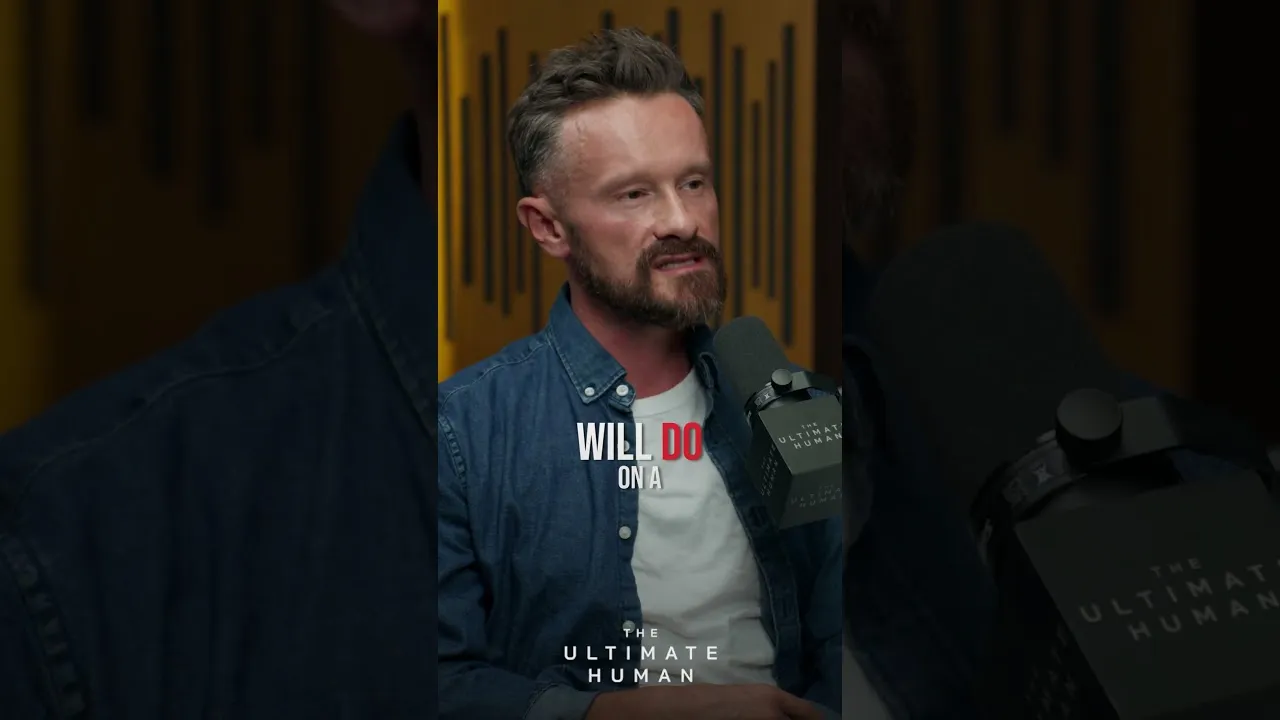
 Dr. Will Cole’s warning is built for a group chat: millennials, including people born in the 1990s, may be aging faster at the cellular level than people born in 1965. His nastier version is the one that will travel: some people in their 20s, 30s, and 40s have “senior citizen cells” and don’t know it.
So there’s people in their 20s, 30s, and 40s that have senior citizen cells and they don’t even know it.
That is a great podcast sentence and a slightly terrifying medical fortune cookie. On The Ultimate Human, Dr. Will Cole is selling the idea that the real health crisis isn’t just what hurts, breaks, or shows up on a standard lab report. It’s what is happening lower down, at the level of cellular health, before the body starts sending push notifications in the form of fatigue, pain, weight gain, anxiety, or disease.
The phrase is scary. The biology is less simple.
Cole’s claim sits in a real conversation about biological age, inflammation, cellular senescence, and the gap between how old you are and how old your body seems to be behaving. Fine. Bodies don’t age like iPhones, all at once, on a clean yearly schedule. Some systems wear down faster than others.
But “senior citizen cells” is not a diagnosis. It’s a billboard. The provided clip doesn’t name the study, the biomarker, the test, or the method behind the 1965 comparison, which matters because wellness media loves turning an interesting signal into an emergency siren. Cole may be pointing at something important. He is also wrapping it in language designed to make a 34-year-old stare at their smoothie like it betrayed them.
Living in our modern broken world with environmental toxins, eating clean alone isn’t going to cut it.
That’s the broader Cole thesis: modern life is not a neutral setting. It is an obstacle course of environmental toxins, stress, processed food, bad sleep, and emotional overload, all quietly billing your cells. He’s at his most persuasive when he argues against the fantasy that a salad can single-handedly defeat modernity. Eating clean is nice. So is flossing. Neither one turns you into a woodland elf immune to pollution, cortisol, and doomscrolling at 12:47 a.m.
The wellness move: toxins plus trauma plus hope
We know the things what stress and rage and shame and trauma will do to you on a cellular level.
This is where Cole’s argument gets both more humane and more slippery. He’s right that stress is not just a mood. Chronic stress can change sleep, appetite, hormones, inflammation, immune function, and behavior, which means it can absolutely become physical. The useful part is his refusal to separate the body from the life being lived inside it.
The slippery part is the all-purpose bucket. Toxins, trauma, shame, rage, food, spiritual disconnection, cellular aging, organ risk. Once everything is connected, the listener can start to feel responsible for everything. That’s the burden wellness often hands you with one palm while patting your shoulder with the other.
Still, Cole’s final turn is less apocalyptic than the opener. He isn’t saying younger adults are doomed to shuffle into the geriatric ward before brunch. He’s saying the earlier you take the cellular premise seriously, the more room you have to change inputs before outputs become symptoms.
when you know what you’re dealing with, you can do something about it.
- Is Dr. Will Cole saying millennials are literally older than boomers biologically?
- Not exactly. He’s arguing that some younger adults may be aging faster at the cellular level than expected, and he frames that against people born in 1965. The claim is about biological aging risk, not a simple swap where every millennial body is secretly 70.
- What does he blame for accelerated cellular aging?
- Cole points to a pileup of modern pressures: environmental toxins, stress, rage, shame, trauma, and what he calls a “toxic soup.” His argument is that clean eating alone can’t cancel out a whole environment that keeps pushing the body toward inflammation and breakdown.
- Should the “senior citizen cells” line be taken literally?
- No. It works as a wellness headline because it turns a complex idea, cellular aging, into a phrase you can panic-text to a friend. The underlying biology of cell aging and disease risk is serious, but the line itself is a siren, not a lab result.
Koa Smith says three grams of psilocybin mushrooms ended his post-concussion depression
The big-wave surfer’s story is powerful, but the leap from spiritual breakthrough to brain-injury treatment needs a warning label.
Dr. Jordan Metzl says sports medicine doctors will prescribe GLP-1s for arthritic knees within five years
The sports physician’s most striking claim wasn’t that exercise is medicine, it was that Ozempic-era drugs may become part of orthopedic care.

Martin Picard says some gray hairs can turn dark again in about a week
The mitochondrial scientist’s gray-hair claim is real enough to be fascinating, but not a permission slip to cancel your colorist.
Dr. Tara Narula Wants You to Stop Trying to Bounce Back
The cardiologist and TV medical correspondent makes the case that resilience isn't recovery, it's transformation, and your cardiovascular system is paying close attention either way.
The circuit, read weekly. No noise.