Jeff Grant says you're more likely to be struck by lightning than get a presidential pardon
On Nightmare Success, Grant turns the pardon fantasy into a brutal reentry math problem.
Listen on Nightmare Success · YouTube
 WATCH NOW↓
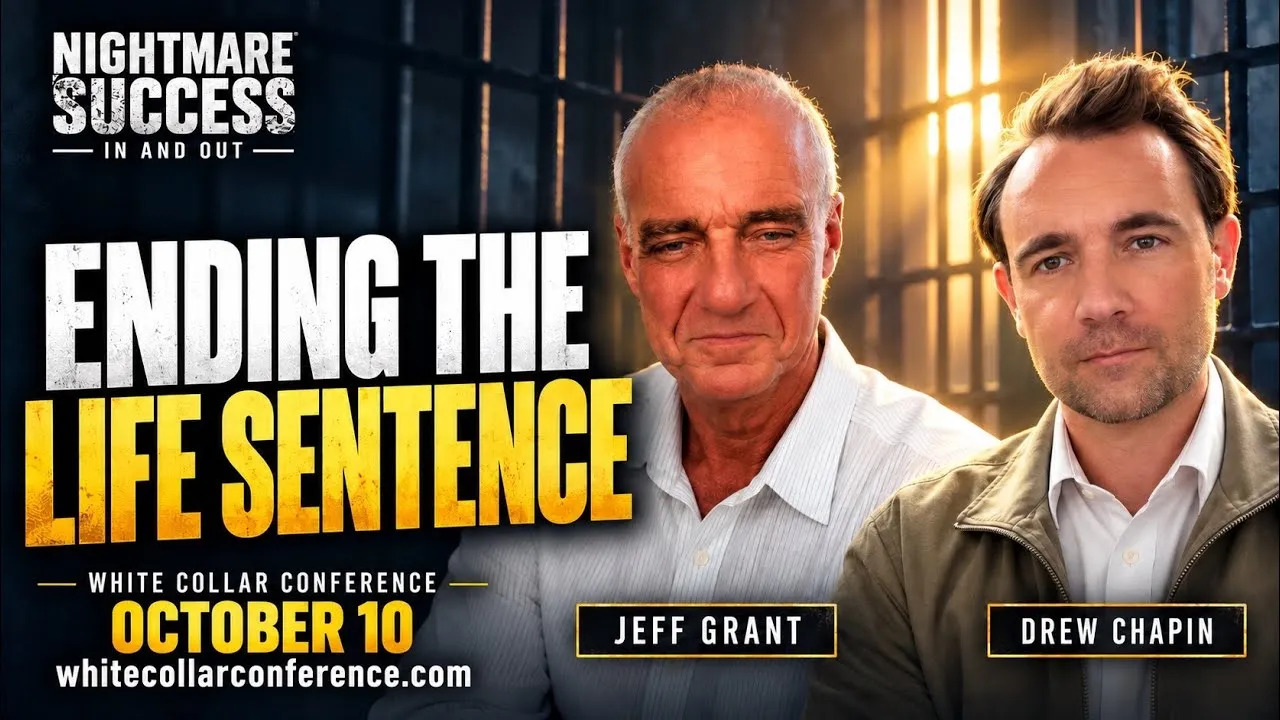
 Jeff Grant has a tidy little bucket of cold water for anyone treating a presidential pardon like the last scene of a redemption movie: you are more likely to get struck by lightning. On Nightmare Success, Grant used that comparison to puncture one of the most persistent myths in federal reentry, that a pardon is a realistic reset button for people trying to outrun a conviction.
The episode is dressed as a preview for the Oct. 10 White Collar Conference, whose theme is ending the white collar life sentence. Fair enough. But the useful thing here is not the event promo. It is the way Grant, Drew Chapin, and host Brent Cassity describe the post prison sentence as a bureaucratic ghost story: your punishment ends, then your Google results, job forms, licensing boards, housing applications, and social life keep reporting for duty.
أعني بصراحة، فرصتك في أن يصيبك البرق أكبر من فرصتك في الحصول على عفو فعلي.
The pardon lottery has a cover charge
Grant is not saying nobody should ever seek presidential pardons. He is saying people should stop mistaking the application for a magic eraser. That is the grown up, annoying, necessary point. A pardon may have practical value. It may have spiritual value. It may give someone a way to name remorse, repair, and time. But it can also make a person pay, again, for the privilege of asking.
That is the part the public tends to miss. The pardon is usually discussed like Monopoly’s Get Out of Jail Free card, which is exactly the wrong metaphor for someone who already went to prison, came home, and is still being punished by databases. Chapin says the application process can mean dragging old wounds into daylight, asking for letters, revisiting the case, and gambling your composure against a result that almost certainly will not come.
هذه المجموعة ليست فقط للتحضير للرحيل. إنها لمعرفة كيفية التعايش مع هذا في كل مرحلة، لأنك تدرك أنه لا توجد نقطة نهاية لهذه الجملة.
That line, no period at the end of the sentence, is the show’s whole theology. It is also where Grant’s lightning crack stops being just a grim joke. If the federal system gives people almost no ordinary way to clear or seal a record, then pardon culture becomes a kind of civic Powerball. Everyone knows the odds are terrible. People buy the ticket anyway because the alternative is admitting the system built no normal door.
Grant makes the policy case plainly. Many states have some form of expungement, sealing, or relief. The federal system basically does not. His answer is the Federal Expungement Initiative, a project he says has support from academics, policy people, lawyers, and business leaders, but also one that depends on politics, timing, and elected officials deciding that people with records are not forever radioactive.
The life sentence is now a search result
Chapin adds the distinctly 2025 horror note: even when a person tries to move forward, the internet and AI keep auditioning as parole officers. Employers are not just running formal background checks. They are asking tools to synthesize a person’s online life, which can become a background check wearing a fake mustache.
الكثير من أصحاب العمل بدأوا في استخدام أدوات الذكاء الاصطناعي لإجراء فحوصات خلفية زائفة، أليس كذلك؟ فحص خلفية ليس فحصاً حقيقياً تماماً، لكنه في نواحٍ كثيرة أعمق من فحص الخلفية العادي.
This is where Drew Chapin becomes the bleakly practical counterweight to pardon fantasy. His advice is not to disappear, because disappearing no longer works. His advice is to force yourself into the online conversation about yourself, to create a record that is not only the worst thing a prosecutor, reporter, or search engine ever said about you.
There is something slightly maddening about how reasonable that sounds. A person serves time, comes home, and then has to become a part time reputation manager, policy advocate, trauma narrator, job applicant, and search engine optimizer. The conference lineup, with Dickie Scruggs, Josh Smith, P.G. Sittenfeld, Emily O’Brien, and others, is built around that exact absurdity. These are people whose public stories did not end at sentencing, even when the court file did.
Grant’s lightning line is not a reason to give up on federal expungement. It is a reason to stop pretending mercy by miracle is a system. If the odds are that bad, the real work is not waiting for one signature from the White House. It is building a world where one old conviction does not get to keep introducing you forever.
- Did Jeff Grant really say lightning is more likely than a presidential pardon?
- Yes. Grant used the lightning comparison to make a practical point about federal pardons: they are rare, discretionary, and not something a person can sensibly build a life plan around. As exact math, the comparison depends on how you count odds, but as advice for someone with a federal record, it is grimly useful.
- Why does applying for a pardon hurt people after prison?
- Grant and Chapin describe the pardon process as emotionally expensive. It can force people to reopen old cases, ask for recommendation letters, explain themselves again, and put family members back inside a story they may have spent years trying to survive.
- Is there a federal expungement option for people with criminal records?
- Grant says no meaningful federal expungement path exists in the way many states have sealing, expungement, or other relief. That gap is the reason his group is pushing a Federal Expungement Initiative, though he admits the politics make it a long play.
Jennifer Michele Helm says she found out she was federally indicted by email after smoking a joint in Laguna Beach
The former luxury interior designer describes federal fraud charges arriving not as a dramatic knock at the door, but as an email interrupting a very California morning.
Stuart Anderson says admitting he saw red flags helped turn him into a federal fraud defendant
The former attorney says he thought he was helping investigators, then walked himself straight into the legal phrase every white-collar defendant learns too late.
William Noguera says he stayed on death row to get a Joseph Naso confession in a Berkeley cold case
The former San Quentin death row prisoner says his strangest act of accountability was delaying his own transfer so he could finish work on an unsolved murder.
Ryan Moser says he published more than 250 pieces during a 10-year prison sentence
The Nightmare Success intro sells Moser’s prison-to-newsroom story with one unusually concrete number, and it is the rare redemption-podcast detail that actually deserves a second look.
The circuit, read weekly. No noise.