Ryan Moser says he published more than 250 pieces during a 10-year prison sentence
The Nightmare Success intro sells Moser’s prison-to-newsroom story with one unusually concrete number, and it is the rare redemption-podcast detail that actually deserves a second look.
Listen on Nightmare Success · YouTube
 WATCH NOW↓
 The most interesting thing in this Nightmare Success episode is not that prison changed Ryan Moser. Podcasts love that sentence. The thing that makes you sit up is the number: Ryan Moser is introduced as having been published more than 250 times while serving a 10-year prison sentence.
تم نشر أعمال رايان موزر أكثر من 250 مرة أثناء قضاء فترة عقوبته التي دامت 10 سنوات.
That is a real claim. Not a misty slogan. Not a LinkedIn phoenix post with a sunrise stock photo. Two hundred and fifty published pieces from inside prison is specific enough to argue about, search for, and verify. It turns the episode from another purpose-after-pain testimonial into something closer to a newsroom origin story with bars on the windows.
The available transcript here is only the show’s opening setup, so let’s not pretend we have Moser walking us through every editor, rejection, draft, and deadline. The 250 figure comes from the host’s introduction, not a quoted answer from Moser in the excerpt. That matters. But the setup is unusually concrete, and the named institutions make the arc more than inspirational vapor.
The byline count is the whole hook
Prison transformation stories often lean on the same three notes: addiction, rock bottom, purpose. This one has all of that, yes. Moser is described as someone whose addiction “destroyed everything” in his life before a 10-year sentence. But then the show gives the story a professional spine: he took a writing class, got published by The Marshall Project, and later wrote for The Philadelphia Inquirer and national outlets.
شارك في دورة للكتابة ثم نُشرت أعماله في مشروع مارشال، ومن هناك انطلقت مسيرته.
That sequence is the part worth caring about. A writing class in prison can sound like a soft-focus montage until you add The Marshall Project, one of the defining American outlets for criminal justice reporting. Suddenly “found purpose” means something more practical: learned to report, wrote clean enough to survive editing, got through whatever restrictions incarceration put between him and the outside world, and kept going.
There is also a small trap here. If you sand the story down too much, you get the tidy version: prison broke him open, writing saved him, now cue the strings. That version is comforting, and a little too convenient. Prison is not a fellowship program with worse food. Publishing from inside is not merely a triumph of attitude. It means writing under surveillance, scarcity, stigma, and delays that would make most freelancers develop a permanent eye twitch.
Don’t confuse purpose with a clean ending
The host frames Moser’s story as a clean moral lesson: choose the right track, find your purpose, and your ambitions can still happen. Fine. There is truth in that, and there is also a motivational-poster aftertaste. The stronger version is less cute: one incarcerated person found a craft with public accountability, and editors on the outside treated his work as work.
لكنه وجد غايته.
That is the part a transcript cannot flatten into uplift. Purpose is nice. A byline is paperwork. A published story has dates, editors, links, corrections, readers, and consequences. If Moser really built a 250-piece record while incarcerated, the lesson is not that suffering automatically produces wisdom. Plenty of suffering produces nothing but more suffering. The lesson is that access to one serious outlet, one class, one editor willing to read past the prison address, can become infrastructure.
For listeners, that changes the takeaway. The question is not whether a man can reinvent himself after prison. The question is how many other people already have the discipline, the story, and the eye, but never get the first editor to say yes.
- What is the big claim about Ryan Moser in this episode?
- The episode’s introduction says Moser’s work was published more than 250 times while he was serving a 10-year prison sentence. That is much more specific than the usual redemption-story fog, and it gives the interview a real hook: not just that he found purpose, but that he built a measurable writing career under prison conditions.
- How did Ryan Moser reportedly start writing from prison?
- According to the show’s setup, Moser took a writing class while incarcerated, then had work published by The Marshall Project. From there, the host frames his journalism career as taking off, eventually leading to work for The Philadelphia Inquirer and other national publications.
- Is this a prison redemption story or a journalism story?
- It is both, but the journalism part is what makes it less generic. Addiction, prison, and purpose are familiar podcast ingredients. The sharper angle is that Moser’s transformation is tied to bylines, editors, and publication, which are harder to fake than a vague claim about finding meaning.
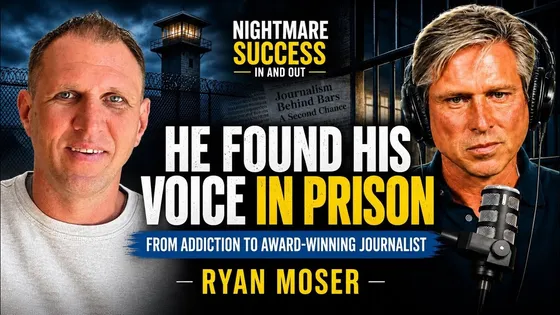
Ryan Moser says prison journalism let him leave prison with $10,000 and a career
The former incarcerated writer tells Nightmare Success that bylines, mentors, and paid prison journalism gave him a reentry plan most people never get.
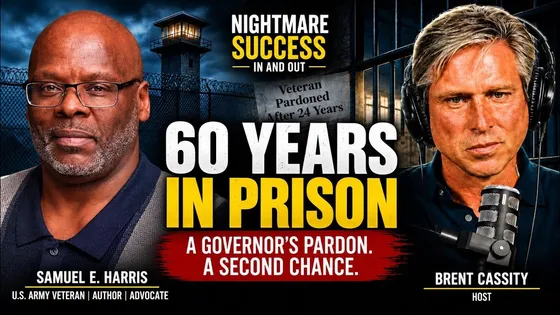
Samuel E. Harris says he wrote 1,084 prison letters before Governor Glenn Youngkin pardoned him
On Nightmare Success, Harris describes clemency less as a miracle than as a paperwork siege, after a 220-year sentence and 24 years behind bars.
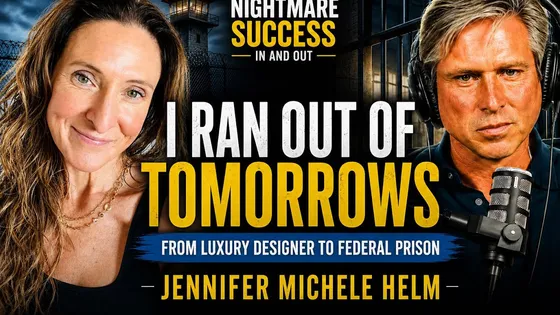
Jennifer Michele Helm says she found out she was federally indicted by email after smoking a joint in Laguna Beach
The former luxury interior designer describes federal fraud charges arriving not as a dramatic knock at the door, but as an email interrupting a very California morning.
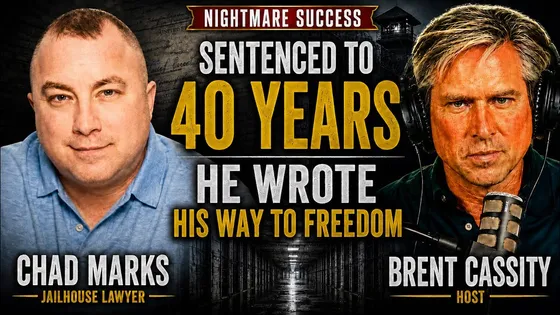
Chad Marks says the Supreme Court killed the 924(c) compassionate release argument that freed him, and people are going back to prison
The jailhouse lawyer story is gripping, but the nastier reveal is that Marks says he escaped through a legal door just before it closed on everyone behind him.
The circuit, read weekly. No noise.