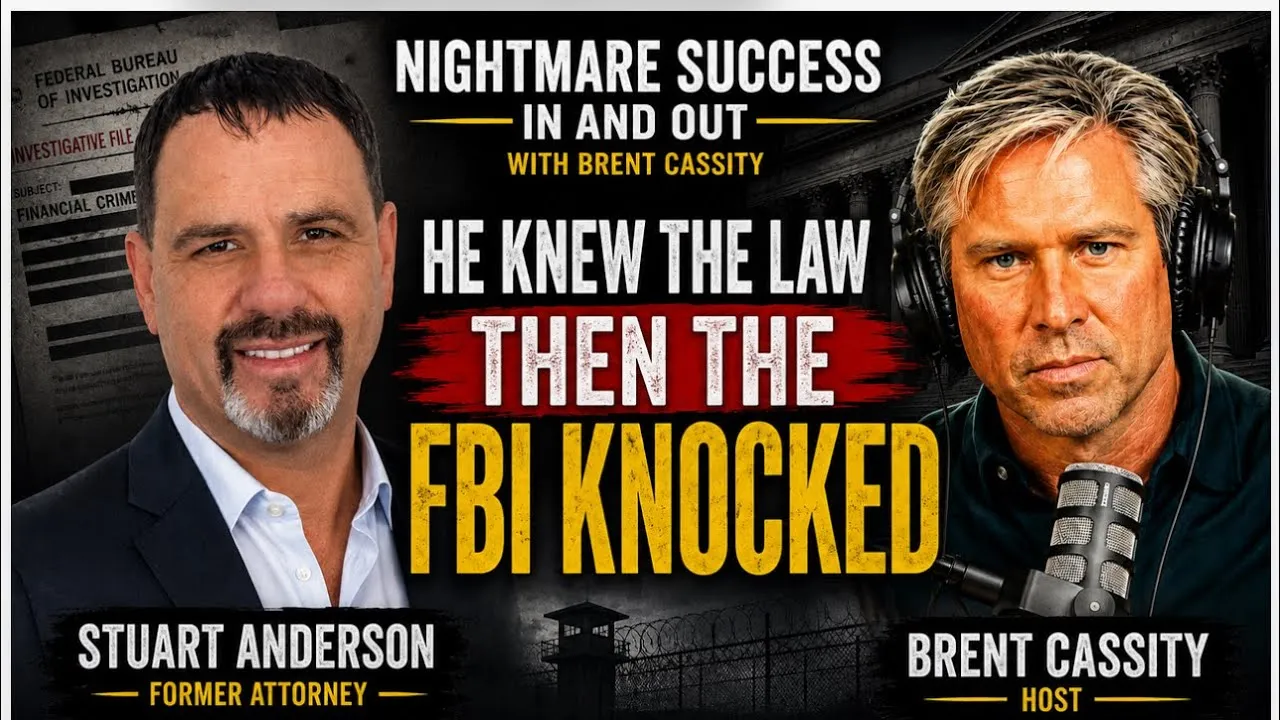
Stuart Anderson says admitting he saw red flags helped turn him into a federal fraud defendant
The former attorney says he thought he was helping investigators, then walked himself straight into the legal phrase every white-collar defendant learns too late.
Listen on Nightmare Success · YouTube
 WATCH NOW↓
 Stuart Anderson says the phrase that helped wreck his life was not a confession, it was basically, yes, I saw red flags. On Nightmare Success, the former attorney argues that one admission gave prosecutors the willful blindness theory they needed to turn his escrow side work into a federal fraud case.
That is the nightmare version of being too polite to law enforcement. Anderson, a civil attorney by background, says he opened the door to federal agents thinking he could clear up a messy Las Vegas escrow dispute. Instead, he says, the agents walked him through documents, asked whether he noticed problems, handed him a target letter, and left him standing there like a man who had just discovered the floor was not included in the house.
My heart started to sink cuz I had a really bad feeling that this was not what I should have been doing. This is not where I what I thought this was all about.
The ankle-biters were not ankle-biters
Anderson’s version of the case is specific and, frankly, the kind of thing lawyers tell other people not to do right before doing it themselves. He says brokers asked him to serve as an attorney escrow agent. Money came in. Once clients received what he describes as bonds, standby letters of credit, or bank comfort letters, he wired the money out and took a small fee. Over four years, he says, about $5 million passed through his account, not into his pocket.
Then clients started complaining. One went after his bar license. Anderson says the bar accepted his explanation that he was not acting as counsel in those transactions. That should have been the eject button. Instead, he stayed close enough to the business to remain useful to the people running it and visible to prosecutors once the guarantees were allegedly exposed as fake.
His defense, in plain English: I was a service provider, not a schemer. The government’s likely answer: you were an attorney, you saw smoke, and you kept taking the fee. That is where white-collar crime stops feeling like a morality play and starts feeling like a machine that grinds verbs into felonies.
That’s the only way they got me is my opening my mouth and saying, “Did you see the red flags?” I said, “Well, I sort of The minute I said that ties them into something called willful blindness.
Willful blindness is a brutal little trapdoor
Anderson is not a neutral narrator. Nobody tells the story of their own guilty plea from a mountaintop of perfect objectivity, especially after losing a law license, money, status, and years of freedom. His repeated insistence that he did not know the documents were fake is exactly what you would expect him to say.
But the legal warning checks out. Willful blindness is not some TikTok legal hack, it is a real prosecutorial tool. If a jury believes a defendant deliberately avoided learning the truth, the absence of a smoking-gun email saying, hello, I am committing fraud today, may not save him. Anderson’s admission that he noticed red flags did not create the entire case. It made the case easier to explain.
Which is not a statutory crime. It is what they would use to describe to a jury that even if you didn’t, you should have known, especially being an attorney, you should have known it and you looked the other way.
That is why the episode’s real value is not the redemption arc, though Anderson does get to one. It is the awkward, expensive, humiliating lesson in criminal procedure: if federal agents are in your living room asking tidy questions about messy money, the interview is not customer service. Anderson says he thought he was helping. The agents, according to his telling, already had a target letter ready.
He pleaded guilty, cooperated, hoped for less, and got 48 months. He says even his lawyer was stunned. The judge was not.
My point is that most 99% of the time they already know what they’re going to do. It doesn’t matter what you say or what your counsel says.
The sentence after the sentence
Anderson served time at Yankton during COVID, which meant lockdowns, limited movement, and family visits so restricted he told relatives not to come. After prison came the halfway house, ankle monitor, post-RDAP requirements, and the special purgatory of being technically out but still controlled by the system. This is where his story becomes less about one bad interview and more about federal prison as a tail that keeps wagging the dog.
Now he works with the Justice Restoration Foundation on justice reform, and yes, that is the clean podcast ending. Former lawyer falls, suffers, helps others. Fine. The less tidy part is better: a trained attorney says he forgot the first rule every cop show has been screaming since the Nixon administration. Do not explain yourself to the feds in your living room.
When you talk about white collar, when you talk about anything that has the big F word, fraud, you are absolutely persona non grata no matter what.
- What was Stuart Anderson accused of doing?
- He says he handled escrow work tied to investment transactions where money came into his account and was wired out after supposed guarantees were confirmed. According to him, the guarantees later turned out to be fake, and the arrangement became a Ponzi-style fraud case. He pleaded guilty and received a 48-month federal prison sentence.
- Why does Anderson think talking to agents hurt him?
- He says he let federal agents into his house and answered questions because he thought he could explain his limited role. When he acknowledged seeing red flags, he believes that gave prosecutors the hook to argue willful blindness, meaning he should have known something was wrong even if he did not create the fake documents.
- Is Anderson's claim believable?
- It is legally plausible and emotionally convenient at the same time. His own story includes warning signs, including a bar complaint connected to the deals and angry clients who had not been paid. Still, the warning he gives is not exotic jailhouse wisdom. It is basic survival advice in a federal investigation: get a criminal defense lawyer before you talk.
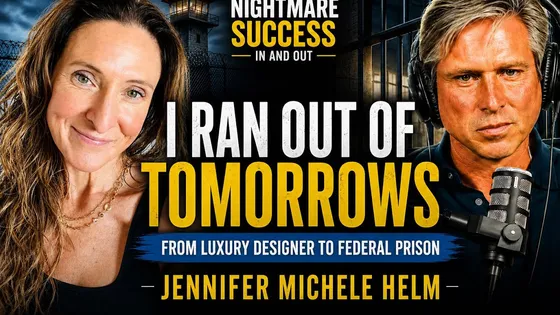
Jennifer Michele Helm says she found out she was federally indicted by email after smoking a joint in Laguna Beach
The former luxury interior designer describes federal fraud charges arriving not as a dramatic knock at the door, but as an email interrupting a very California morning.
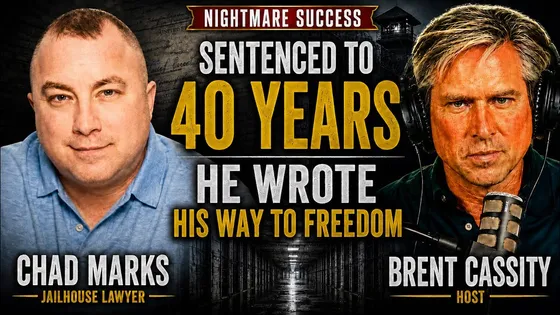
Chad Marks says the Supreme Court killed the 924(c) compassionate release argument that freed him, and people are going back to prison
The jailhouse lawyer story is gripping, but the nastier reveal is that Marks says he escaped through a legal door just before it closed on everyone behind him.
Ryan Moser says he published more than 250 pieces during a 10-year prison sentence
The Nightmare Success intro sells Moser’s prison-to-newsroom story with one unusually concrete number, and it is the rare redemption-podcast detail that actually deserves a second look.
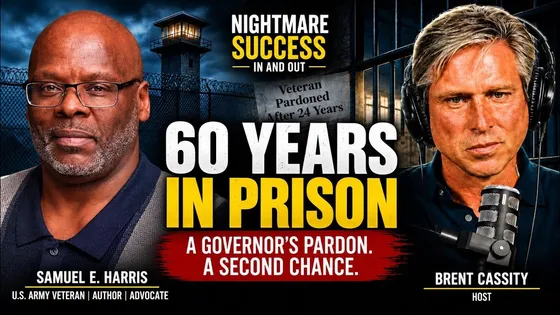
Samuel E. Harris says he wrote 1,084 prison letters before Governor Glenn Youngkin pardoned him
On Nightmare Success, Harris describes clemency less as a miracle than as a paperwork siege, after a 220-year sentence and 24 years behind bars.
The circuit, read weekly. No noise.