John Paul DeJoria says he helped convince Muammar Gaddafi to release the Lockerbie suspects
The Paul Mitchell and Patrón co-founder used a book-promo detour into Lockerbie diplomacy to sell his bigger religion: product quality, persistence, and weaponized niceness.
Listen on YouTube · Spotify · Apple Podcasts
 WATCH NOW↓
John Paul DeJoria said on Young and Profiting that he helped convince Muammar Gaddafi to release the two Pan Am Flight 103 suspects to stand trial in The Hague. DeJoria framed the Libya story as proof that being kind and direct can work even on dictators.
That is not the standard billionaire-podcast detour. Usually the founder anecdote peaks at sleeping in a car, borrowing money from Mom, or discovering that black-and-white packaging looks expensive when you could only afford cheap ink. DeJoria brought all of that, too. Then, with the calm of a man ordering a second espresso, he dropped himself into the history of the Lockerbie bombing.
I’m the guy that went into Libya and convinced Colonel Gaddafi to release the two suspected terrorists
The claim arrives while John Paul DeJoria is promoting his book and explaining why, in his worldview, niceness is not a soft skill. It is a tool. A weapon with a smiley face sticker on the handle. He says he had Gaddafi laughing within minutes after the Libyan leader supposedly wanted to kill him, then uses the story to land the line that may be the most DeJoria sentence imaginable.
Being nice even works and being real even works on jerks.
The claim is huge. The proof here is not.
The public history of Pan Am Flight 103 does not usually read like a John Paul Mitchell Systems case study. The surrender of the two Lockerbie suspects followed years of sanctions, negotiations, United Nations pressure, and high-profile diplomacy involving figures such as Nelson Mandela. DeJoria saying he helped is not the same as DeJoria being the hinge of the whole event.
So the right verdict is not to laugh it off, and not to swallow it whole. It is a remarkable first-person claim, delivered without receipts in the transcript, from a man whose entire public persona is built on improbable escalation: homeless, then hair care titan, then tequila baron, then billionaire philanthropist, then apparently a side character in late-20th-century diplomacy. The story may be true in the way rich-person stories are often true, meaning there was a meeting, there was access, there was a role, and the retelling has been polished until every surface reflects the narrator.
The rest of his gospel is more checkable
What makes the Libya claim feel less random is that it is only the wildest version of the same lesson DeJoria keeps selling. He does not believe in persuasion as a one-time trick. He believes in staying around long enough that the other person reorders the experience. The product has to work. The promise has to hold. The salesperson has to knock again after being ignored 50 times.
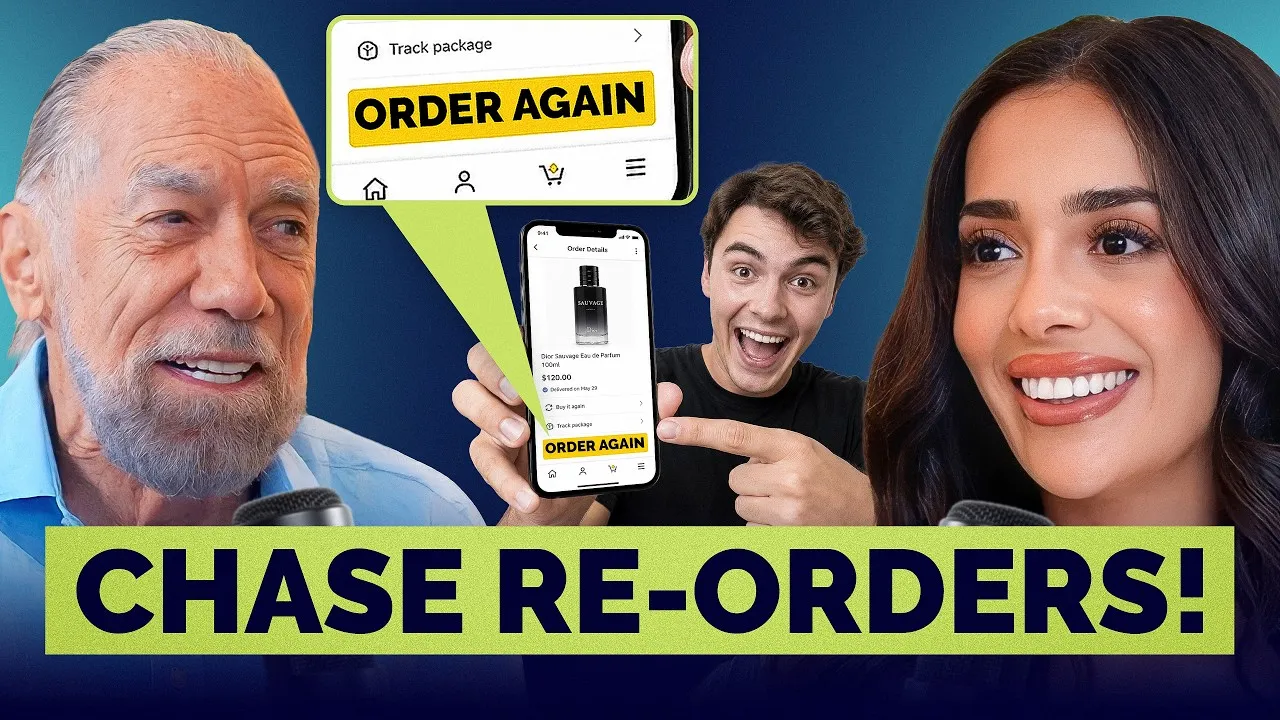
Don’t don’t go in the selling business. Go in the reorder business.
That line is the commercial spine of the episode. He applies it to encyclopedias, Paul Mitchell shampoo, and Patrón. He says great marketing cannot rescue a product that people do not want again, which is both old-school and newly useful in an economy stuffed with influencer launches that feel engineered to get one purchase before the customer notices the candle smells like airport soap.
DeJoria’s best business stories are not about genius. They are about constraints. Paul Mitchell starts with $700, a PO box, Xeroxed invoices, a friend with an answering machine, and the accidental invention of unisex black-and-white packaging because color cost too much. Patrón starts as tequila so expensive distributors thought it was dead on arrival, then becomes a premium category through sampling, bar-by-bar grinding, and the magic phrase, “treat yourself.”
This is where his credibility is strongest. On entrepreneurship, he is not selling a fantasy of frictionless abundance, even though he does wander into universe-talk about words creating luck. He is mostly selling the unglamorous stuff: ask for smaller orders, get better terms, prove demand, do the calls, protect the people who first believed you.
Why did we turn down our word for money? Because we had absolutely nothing.
That quote is about why he says he refused to take Paul Mitchell fully retail and abandon salons. It also explains why the Gaddafi story fits his self-mythology. DeJoria’s whole pitch is that loyalty, personal charm, and stubborn follow-through are not decorative values. They are operating systems. Sometimes that means a hairdresser recommends your conditioner. Sometimes, apparently, it means you hug a dictator for a disposable-camera photo.
The listener is left with two questions, one practical and one absurd. The practical one: is your product good enough for a reorder without a paid-media IV drip? The absurd one: if DeJoria is going to tell the Gaddafi story again, who was in the room, and where are the receipts?
- What did John Paul DeJoria say about Gaddafi?
- DeJoria said he went into Libya and helped convince Muammar Gaddafi to release the two suspects in the Pan Am Flight 103 case so they could go to trial in The Hague. He also said Gaddafi wanted to kill him at one point, then DeJoria had him laughing within minutes.
- Is John Paul DeJoria's Gaddafi story proven in the episode?
- No. The episode gives DeJoria's version, but it doesn't provide documents, another witness, or a detailed timeline. The claim is memorable and plausible as a behind-the-scenes anecdote only in the loose podcast sense, not as settled diplomatic history.
- What was DeJoria's main business lesson on Young and Profiting?
- His repeated lesson was to build products people reorder, not products that need constant selling. He tied that idea to Paul Mitchell, Patrón, door-to-door sales, and even his broader faith in persistence: keep knocking, make the product good enough to come back to, and don't sell out the people who helped you.

Kelly Roach says 65 to 70 percent of growth comes from relationships you don't need to sell
The sales coach's Miracle Hour pitch is less funnel wizardry than CRM hygiene, which is boring right up until the money shows up.

Alfred Mai says his two-person card game outsold Uno on Amazon after a single viral tweet
A sudden social media spike turned a weekend side project into Amazon's top toy, prompting an immediate exit from corporate tech.

Chandler Bolt says his book brought in roughly $7 million in business revenue in one year
The selfpublishing.com founder’s big flex is less about Amazon royalties than the oldest trick in business clothing: use the book as the prettiest brochure in the room.

Daniel Lubetzky says he gives more than $25 million a year to charity but still won’t waste yogurt
The Kind founder’s most revealing flex on Young and Profiting wasn’t the multibillion-dollar exit, it was the penny-pinching moral code behind it.
The circuit, read weekly. No noise.