Kevin Spacey says he's been stopped 70 times a day in Europe by fans asking when he's going back to work
On Club Random, Spacey makes his case that nine years of industry exile is enough, and somehow the most revealing number he offers is 70.
Listen on YouTube
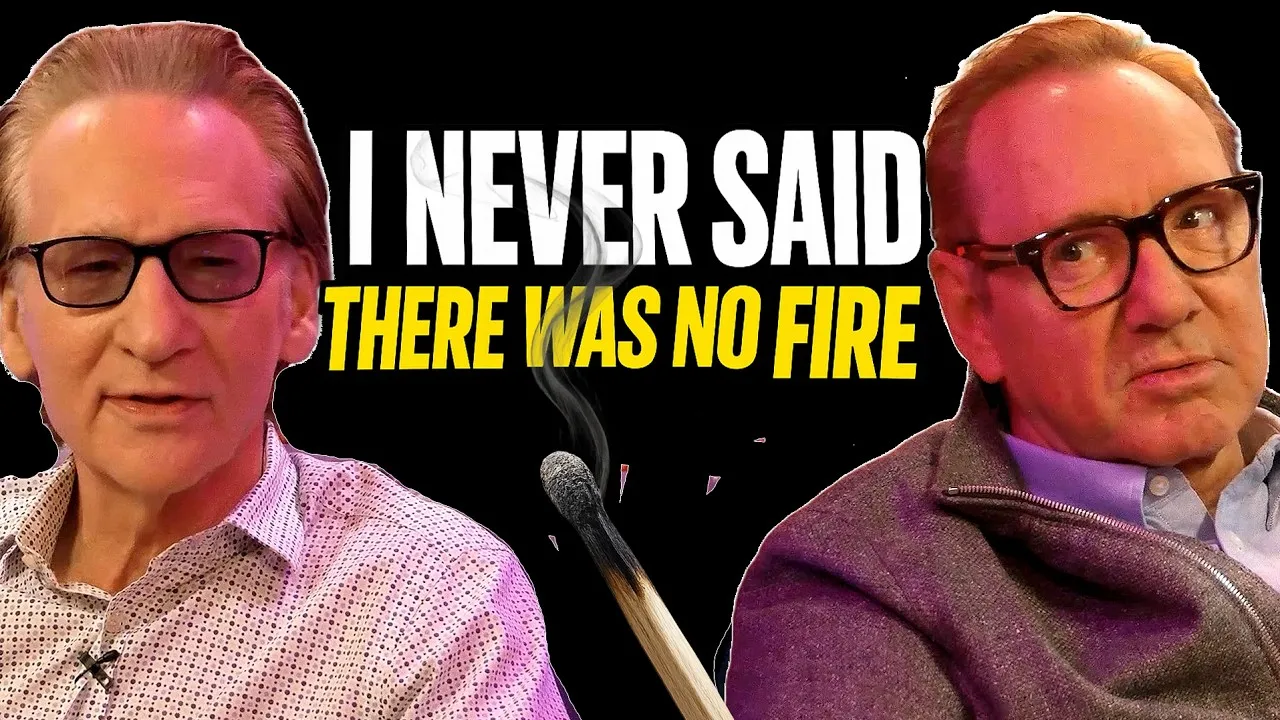 WATCH NOW↓
 Kevin Spacey wants you to know that Europe loves him. Seventy times a day, by his own count, strangers stopped him on the street during a six-month backpacking trip in 2019 to say they missed him and to ask when he was coming back to work. No hat. No glasses. No hiding. Just Kevin Spacey, a backpack, and an apparently inexhaustible supply of supportive Europeans. That is the number he leads with when making his case that the punishment is now finished.
Bill Maher’s Club Random is exactly the venue Spacey needed for this conversation: low-research, high-candor, a host who will raise an eyebrow and then shrug and move on. Maher admits upfront he doesn’t remember the names of accusers, and Spacey, who spent years being advised by his partner Evan to stay quiet while cases wound through court, is clearly relieved to finally be in a room where the vibe is ‘let’s figure out what actually happened’ rather than ‘read the indictment.’
Maher’s framing is blunt and, honestly, kind of clarifying. He goes by numbers. One accuser: not sure. Twenty: too much smoke. It is a crude heuristic, but Spacey’s response is more interesting than a flat denial. He does not say nothing happened. He says the cases that went to juries, he won, five times over, and that some accusations had a grain of truth reshaped into something unrecognizable, while others were constructed entirely from fiction.
It just wasn’t a raging forest fire. It was a small kitchen fire that could have been put out with an extinguisher.
That line is doing a lot of self-exculpatory work, and Maher lets it pass without much pushback. The Anthony Rapp case gets the most detailed treatment. Spacey says the whole accusation collapsed in federal court in 2022 because Rapp had built his story around a bedroom in an apartment Spacey supposedly rented, and Spacey was actually living in a studio. No bedroom, no door, no foundation. A friend of Rapp’s testified he had only ever been to the apartment once, to meet Spacey’s dog. Whether you find that fully exonerating or just legally insufficient probably depends on how much you already trust the speaker.
I hit on a lot of guys.
The Sentence He Served Without a Judge
Spacey’s real argument is not strictly legal. It is about proportionality. He spent 2018 wearing a mask in public before masks were a thing, went through extensive therapy, and emerged on the other side of a years-long industry blackout. He compares his situation to a professional athlete benched for seven games after an accusation, then returned to the lineup. Maher, to his credit, pushes back gently, noting that some athletes never came back. But the broader point lands: Spacey thinks nine years of show business exile is a sentence most people would consider served.
I think people now look at this and think maybe nine years has been enough.
The 70-times-a-day figure is almost certainly inflated, or at minimum represents the most generous days of a long trip. But the phenomenon it describes is real. Spacey notes that the people who say terrible things about him online are not people he has ever actually encountered in person. Maher agrees he has had the same experience. There is a meaningful gap between the verdict of social media and the reactions of strangers in a grocery store, and Spacey has decided to build his entire rehabilitation argument on that gap. He is betting that the real world is softer than the internet, and in Europe at least, he may be right.
I’ve not met one of them in real life.
None of this resolves the underlying questions, and Maher never pretends it does. What the episode actually is, stripped of the legal arguments and the backpacking anecdotes, is a very famous man making a direct appeal to the audience’s sense of fairness. He won in court. He lost his career anyway. He wants to know if that is permanent. The answer, whenever it comes, will not come from a jury.
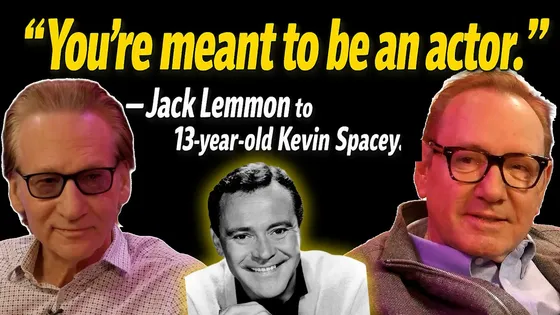
Kevin Spacey says Netflix is shelving Gore, a completed Gore Vidal movie he calls one of his best films
Spacey told Bill Maher that Netflix should release or give up the finished Gore Vidal film, and he made the pitch with maximum self-interest and one genuinely sharp point.
Kevin Spacey says Netflix has shelved his completed Gore Vidal film and should give it to Paramount
On Club Random, Spacey made his cleanest case for a comeback by arguing that Netflix is punishing an entire finished movie over allegations against him.
Kevin Spacey says Anthony Rapp's accusation collapsed because Spacey lived in a studio apartment with no bedroom
On Club Random, Spacey walks through the detail that sank Anthony Rapp's case, and explains why Elton John showed up in a British courtroom on his behalf.

Kathy Griffin says she hasn't been in the black for six years since the Trump head photo
On Club Random, Griffin makes the cancellation sound less like a scolding and more like a long, expensive layoff with lawyers.
The circuit, read weekly. No noise.