Lex Fridman's guest says Navier-Stokes blowups are not black holes in water
The fun part is not that the math might explode, it is that the water probably won't.
Listen on YouTube · Spotify · Apple Podcasts
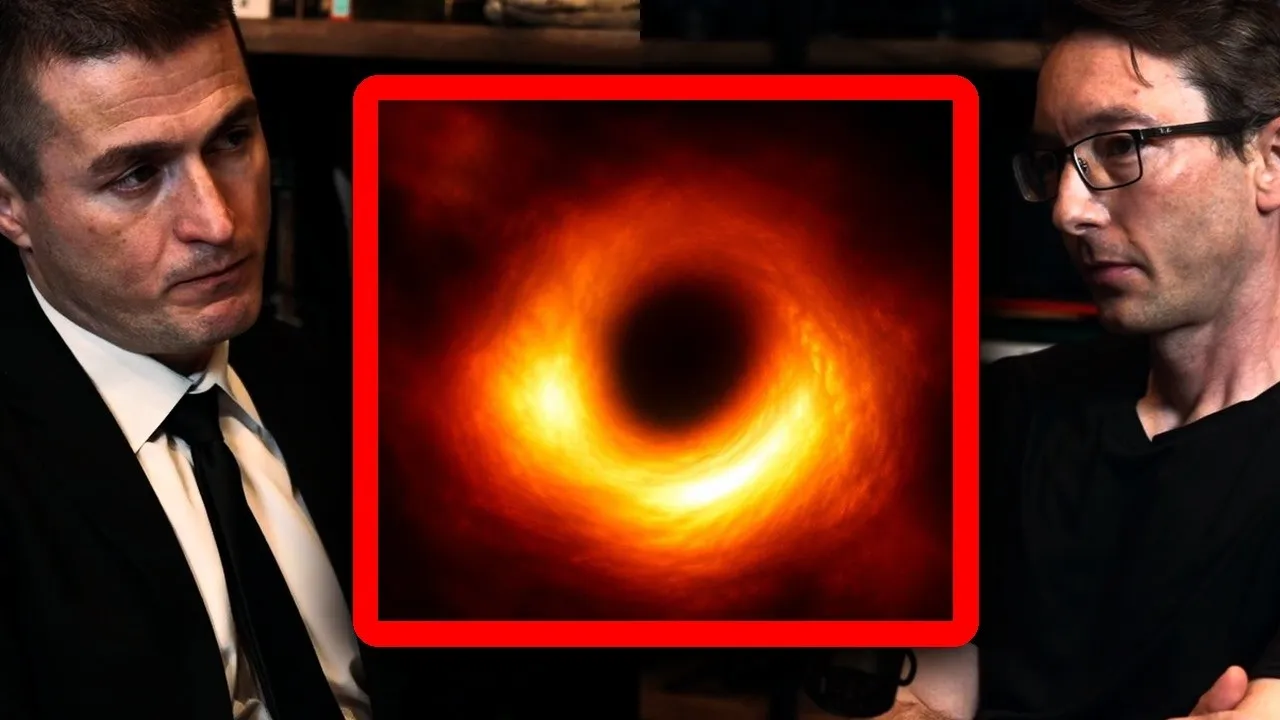 WATCH NOW↓
On Lex Fridman Podcast, Lex Fridman’s guest says a Navier-Stokes blowup would not be the fluid-dynamics version of a black hole, because real fluids stop behaving like continuous fluids once you zoom down to molecules. The claim is wonderfully deflating: the universe hands physicists an infinity, and the engineer in the room says, actually, that is just where your model expires.
That is the little fight inside this clip. Lex wants the grand physics story. General relativity produced weird infinities, Karl Schwarzschild found the math, and later humanity got black holes, the most metal prediction in science. So why not imagine the Navier-Stokes equations doing the same thing for water, air, vortices, and all the messy stuff that makes airplanes shake and coffee swirl?
these equations are an exceptionally good model of how fluids work at a certain scale.
That line is the whole answer in miniature. Navier-Stokes is not reality carved into stone tablets. It is an extremely successful continuum model. It treats fluid as smooth stuff, not as a deranged crowd of molecules bouncing around like commuters after a signal failure. Push the model far enough and, the guest says, you do not discover a tiny aquatic event horizon. You discover that you are no longer talking about a fluid.
By the time they blow up, it stops being a fluid.
There’s no black holes. Like other physics takes over.
Lex wants a portal. The guest sees a warning label.
Lex’s instinct is not silly. It is basically the romance of theoretical physics: every place where an equation breaks is a crack in the wall. Newton gives way to Einstein. Classical intuition gets eaten by quantum mechanics. A singularity is not just a math error, it is a flare gun.
where equations break down could, and maybe statistically high likelihood, is a window, a door in a breakthrough of needing some other discovery.
The guest does not deny the romance. They just separate two questions that people love to mash together. One question is physical: what does actual water, air, or blood do at tiny scales? The answer there is boring in the best way, molecules. The other question is mathematical: can the idealized equations develop infinite velocity or vorticity in finite time? That question is still a monster, famous partly because the Clay Mathematics Institute made the existence and smoothness problem one of its Millennium Prize Problems.
So the verdict is split, and that is what makes the exchange useful. As physics prophecy, the black-hole analogy is overcooked. A Navier-Stokes singularity would not mean your sink is hiding a baby Kerr metric. As mathematics, though, the mystery is still huge. These equations run the world of fluid dynamics, from drag on wings to turbulence in medical devices, and we still do not fully know what behaviors their ideal form permits.
Does it blow up in finite time or not? That’s like the zeroth order version of the bigger question
The practical prize is not a water singularity. It is control.
The sneaky interesting turn is that the guest does not reduce the whole thing to chalkboard sport. Better command of these equations could mean better command of flows. Birds and insects already shape vortices with obscene grace. Engineers, by comparison, are still out here bolting wings onto metal tubes and pretending flapping is beneath us.
Lex brings up Richard Feynman’s old point that nature and technology often solve the same problem in alien ways. Birds fly one way. Planes fly another. Large language models now prove things in a way that does not feel much like a human mathematician sweating over a notebook. The joke writes itself, and the guest even gets there first: maybe birds look at planes and have existential crises.
But the serious stake is control. If we understood all the weird, delicate structures that Navier-Stokes can produce, we might not get black holes in water. We might get aircraft with less drag, artificial hearts with safer internal flows, and machines that treat turbulence less like weather and more like choreography.
all of our science fiction technology would be kind of accelerated if we had better ability to control these flows.
- What did Lex Fridman's guest say about Navier-Stokes blowups?
- Lex Fridman's guest said that if the Navier-Stokes equations blow up, that does not mean real water creates a black-hole-like object. The equations are a superb model at ordinary fluid scales, but at tiny scales the continuum model fails and molecular physics takes over.
- Why did Lex compare Navier-Stokes blowups to black holes?
- Lex pointed to general relativity, where an apparent mathematical blowup once looked like a problem in the equations and later became connected to black holes. His point was that breakdowns in equations can sometimes act like doors into deeper physics.
- Is the Navier-Stokes blowup problem still important if fluids are made of molecules?
- Yes. The guest framed the problem as a basic test of what the equations themselves allow. Even if it does not give engineers a literal new phase of water, understanding whether solutions blow up in finite time gets mathematicians and physicists closer to knowing what the equations can contain.
Steven Brunton says insects correct for wind gusts faster than their brains can respond
The applied mathematician’s best point is not that flies are tiny pilots, it’s that they’re tiny control systems with better instincts than our robots.
Don Lincoln says one gram of antimatter would take a billion years to make at Fermilab's old rate
The Fermilab physicist turned antimatter from Star Trek fuel into a brutal production math problem.
Anthony Kaldellis says Constantinople became a 500,000 person city by importing senators and stealing Rome’s grain
The Byzantine historian’s best point is that Constantinople was not a miracle city. It was an imperial relocation project with free bread and a moving truck full of senatorial servants.

Michael Kofman says Prigozhin had no chance of overthrowing Putin in the Wagner mutiny
The Russia analyst recasts the 2023 march on Moscow as a doomed pressure play, then argues Wagner's real afterlife was inside the Russian army.
The circuit, read weekly. No noise.