Maria Malik says reposting her forced marriage story got 20 million LinkedIn views
The speaking coach’s best personal-branding advice is also the most uncomfortable: the story you’re afraid to repeat may be the one that changes your career.
Listen on YouTube · Spotify · Apple Podcasts
 WATCH NOW↓
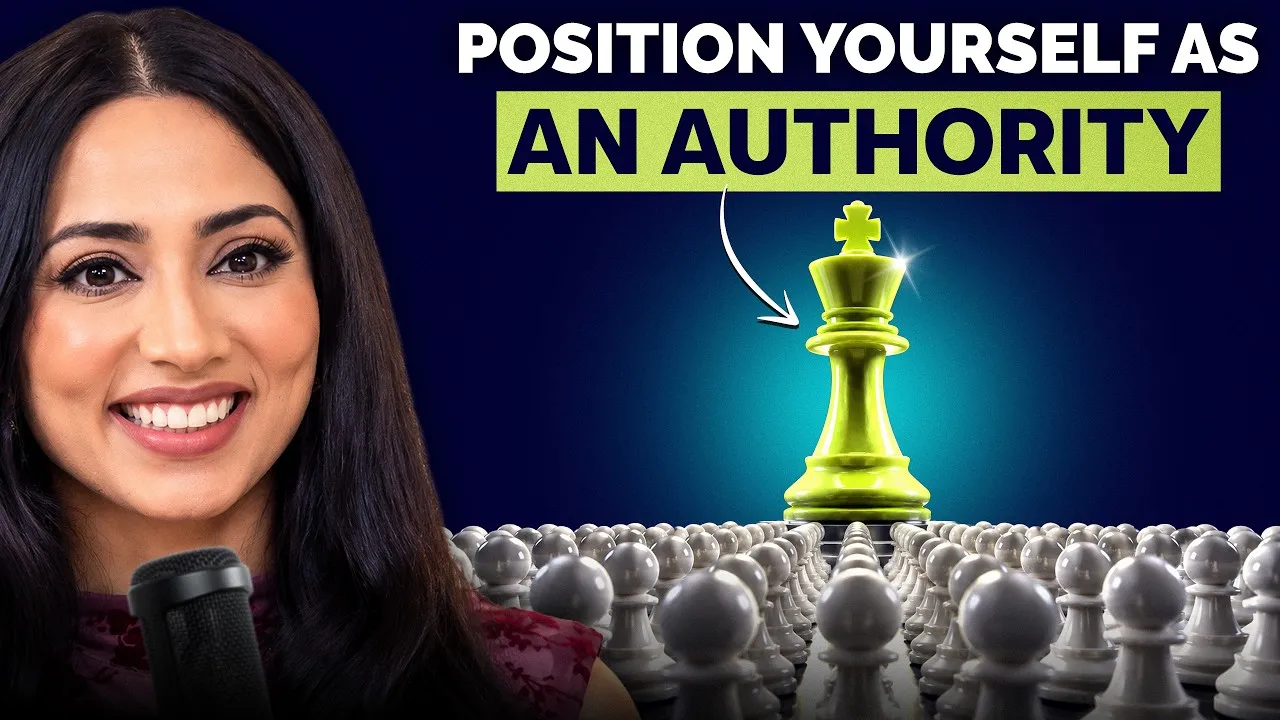
Maria Malik said on Young and Profiting that the second time she posted the same story about being forced into marriage at 17, it got 20 million views on LinkedIn. The claim is not just that vulnerability performs well. It is that the repost, not the first confession, was the rocket.
Listen, LinkedIn has a strange stomach. It will ignore a perfectly useful career tip, then inhale a raw life story, a founder lesson, and a slightly too polished selfie before lunch. Malik’s story is the rare case where the personal-branding gospel actually collides with something heavy enough to make the phrase “content strategy” feel obscene.
When I was 17 years old, my parents took me back to Pakistan and got me to a man married to a man I didn’t know.
Maria Malik, an executive speaking coach who teaches introverts how to command a room without cosplaying Tony Robbins, told Hala Taha that the forced marriage became part of the fire behind her career. She said she came back to Canada, pushed to finish high school, fought cultural pressure to go to university, and fought to get divorced. The biographical details matter here because her viral post was not a random “overcame adversity” template. It was the origin story behind the business she now runs.
The uncomfortable algorithm lesson
Malik’s most useful claim is also the one that will make normal people want to throw their phones into a lake: she says the same story didn’t just work once. It worked bigger the second time.
The second time I told it, I the exact same story I posted. The second time it got 20 million views and that’s when I started getting the phone calls.
That is a very LinkedIn sentence. Awkward, revealing, and accidentally ruthless. The first version, Malik said, got 1 or 2 million views. Most people would call that a lifetime win and go lie down. Her coach told her to tell it again. The repost became the one people apparently could not stop sending around.
There’s a clean marketing lesson inside this and a grim little aftertaste around it. The clean lesson: if a story resonates, don’t assume you exhausted it. Change the hook, change the frame, change the timing. The same true thing can find a different audience later. The grim part: platforms reward the repeated packaging of pain, and anyone pretending otherwise is selling you a ring light.
You basically are rinsing and repeating 40 stories a thousand times each over and over again in different ways.
Is the 20 million claim the point, or the bait?
The 20 million number is Malik’s claim, and the episode doesn’t independently verify it. So treat it as a self-reported metric, not a court filing. Still, it sounds plausible in the way modern platform miracles often do: a personal story, a clear villain, a hard-won transformation, and a professional lesson stapled to the end. LinkedIn loves that combination because it lets readers feel moved and productive at the same time.
The better test is whether Malik’s advice is useful without the huge number. It is. She and Taha both argue that personal branding is not about inventing a persona. It is about building a repeatable bank of stories that explain who you are, what you know, and why people should trust you. Taha calls it a story journal. Malik calls the ability to put what’s in your head onto paper “game over.” Fine. A little LinkedIn-brained, but not wrong.
The catch is that not every private wound belongs online, and not every audience deserves your full autobiography. Malik’s story worked because it connected directly to her public work: voice, fear, authority, immigrant family pressure, and the cost of staying quiet. A weaker version of this advice becomes trauma karaoke. A stronger version asks a sharper question: what story explains your authority without eating you alive?
It liberated me, hala, because it was something I was carrying with me. It’s as like guilt somehow like it was my fault that I went through that.
That line is why the claim is more interesting than a growth hack. Malik is not just saying “be vulnerable for reach.” She is saying the post changed her relationship to a story she had been carrying as shame. The brand benefit came after the psychic benefit, at least in her telling. If you reverse that order, you get the worst kind of creator economy advice: bleed first, optimize later.
So the verdict is split. As a social strategy, “repeat the story that already hit” is brutally practical. As life advice, it needs a warning label. The internet can amplify a confession, but it can’t decide whether you were ready to make it.
I got so many messages, hala, from men and women saying, “Thank you so much for talking about this because my sister’s going through this or I went through this and I was so ashamed and I felt like my life was over and you talking about it is making me realize, wait a second, there’s still so much more out there for me.”
- What did Maria Malik say about her LinkedIn story?
- Maria Malik said the second time she posted the same story about being forced into marriage at 17, it got 20 million views on LinkedIn. She framed it as proof that one powerful story may need to be told more than once before it reaches the right people. The useful lesson is not “turn your trauma into content,” which is bleak. It is that repetition, timing, and clarity matter as much as the raw story itself.
- Did Maria Malik say she was forced into marriage at 17?
- Yes. Malik said her parents took her back to Pakistan when she was 17 and married her to a man she didn’t know. She described later fighting to return to Canada, finish high school, attend university, get divorced, and build a career on her own terms.
- What was Maria Malik’s LinkedIn advice?
- Malik and Hala Taha argued that LinkedIn rewards storytelling, not just credentials. Taha suggested keeping a “story journal” of life moments, failures, family history, and career turning points. Malik’s own example pushes the point further: a story can perform modestly once, then explode when retold with the right timing and hook.
Lewis Howes says he called his podcast The School of Greatness because his ego needed to die
On Young and Profiting, Howes makes the rare personal-branding confession that the brand was partly built to keep himself from becoming the whole point.

Adam Grant says your frenemies are unhealthier than your enemies
The organizational psychologist argues that the friend who sometimes cheers and sometimes snipes is worse for your body than the person you know to avoid.
Lisa Curtis says Kuli Kuli will let retail shelves run out before Amazon
The Kuli Kuli founder described Amazon as so punishing when a brand stocks out that her mostly retail business now protects Amazon inventory first.
Chandler Bolt says his book brought in roughly $7 million in business revenue in one year
The selfpublishing.com founder’s big flex is less about Amazon royalties than the oldest trick in business clothing: use the book as the prettiest brochure in the room.
The circuit, read weekly. No noise.