Martin Picard says Alzheimer's isn't caused by amyloid plaques, it's an energy disorder
The mitochondrial scientist makes a clean break from the story most people learned about dementia, though his replacement theory needs more humility than the podcast gives it.
Listen on YouTube · Spotify · Apple Podcasts
 WATCH NOW↓
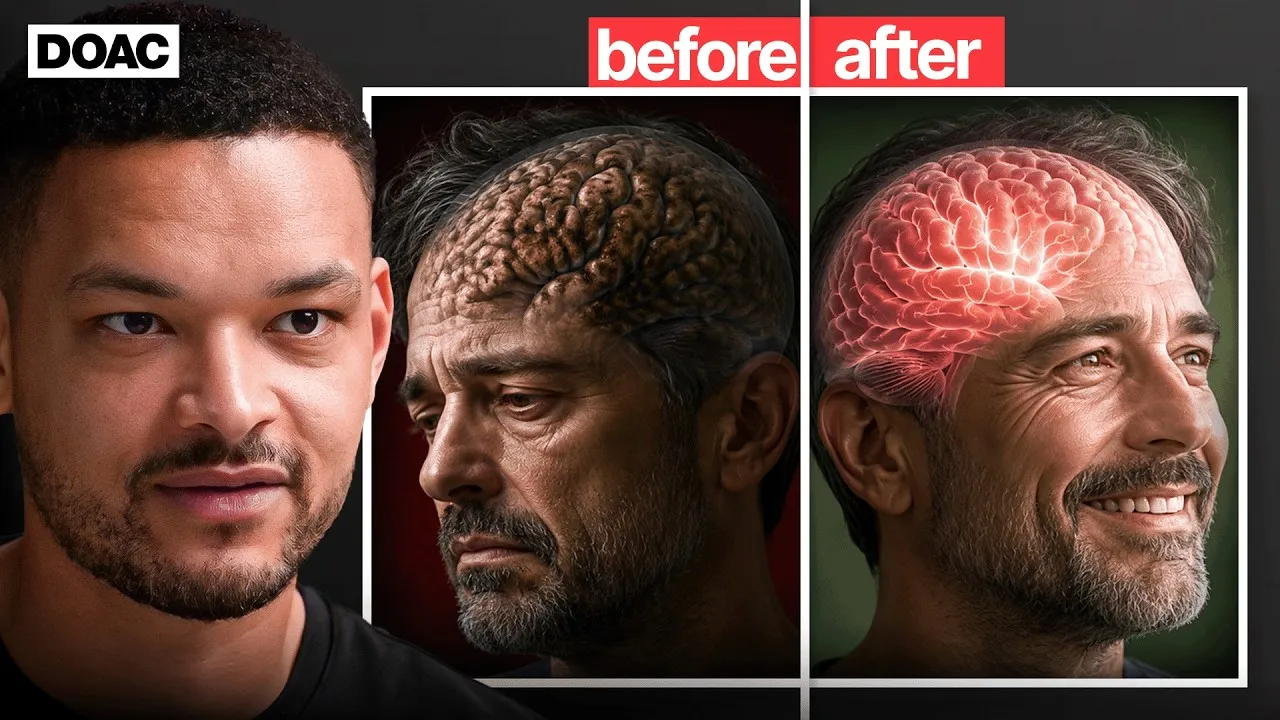
The protein gunk theory of Alzheimer’s gets treated here like an old sofa dragged to the curb. Martin Picard, talking on The Diary of a CEO, says the familiar story that amyloid plaques and tau tangles cause dementia is not just incomplete, but wrong.
that is not the truth
That is the kind of sentence that makes a podcast clip sprint barefoot across Instagram. It also needs a seatbelt. Picard is not some wellness cowboy yelling at a PET scan. He studies mitochondria, the tiny energy machinery inside cells, so of course his theory of Alzheimer’s disease starts with fuel, flow, resistance, and breakdown. Still, the move from “amyloid is not enough” to “amyloid is not the truth” is a big leap in a lab coat.
The plaque theory gets demoted
Picard’s case is simple and sharp. Some people have Alzheimer’s symptoms without visible protein deposits. Some people have lots of amyloid plaques and tau tangles and still think normally. To him, those mismatched cases blow up the clean causal story most of us absorbed through decades of news coverage, drug ads, and reassuring diagrams of a brain slowly being colonized by bad confetti.
You can have people zero protein deposit in the brain and they have full-blown Alzheimer’s and dementia. And you have the other extreme people with loads of amaloid plaques and towangles completely normal cognition.
The fair read: Picard is right to attack the cartoon version. Alzheimer’s research has spent years wrestling with the fact that amyloid burden and symptoms do not line up neatly in every patient, and recent anti amyloid drugs have produced modest benefits, not cinematic reversals. The less fair version would be to toss plaques into the medical junk drawer. Biology is rarely that obedient. Plaques can be markers, contributors, consequences, or accomplices without being the lone villain.
His real villain is glucose traffic
Picard’s replacement theory is that dementia is a disorder of energy. In early disease, he says, affected brain regions may burn more energy as they struggle to compensate. Later, they become hypometabolic, meaning they burn less. That is when memory, planning, emotional regulation, and the rest of the fragile human operating system begin to sputter.
my hunch is that Alzheimer’s and dementia more generally is a disorder of energy and specifically it’s a disorder of you know increased energy resistance
This is where the phrase “type three diabetes” enters, with all the subtlety of a TED Talk title. Picard says that in dementia, the brain is burning less energy and glucose has a harder time getting inside. Push too much sugar through the system for too long, he argues, and cells protect themselves by becoming resistant. The metaphor is electrical, almost kitchen appliance scary: jack up the voltage on a delicate lamp and eventually something starts to fry.
There is a reason this lands. It gives people something to do. Move more. Eat less sugar. Stop pretending the office muffin is a personality trait. Picard ties physical inactivity, overeating, diabetes, and Western diets to worse energy flow, then points to ketones as a cleaner path into the brain. He is careful in one place, admitting he does not know the full literature on hunter gatherer dementia rates. Steven Bartlett then reads out claims about the Hadza and rural populations, and the podcast glides a little too smoothly from “interesting correlation” to “case closed against the Western breakfast aisle.”
ketones can uh, you know, enter the brain and be metabolized more easily and can even kind of improve cognition
The diet advice is less shocking than the dementia claim
Once Picard gets from dementia to food, the episode becomes more familiar, intermittent fasting, fewer snacks, a smaller eating window, skepticism toward breakfast, and the idea that most of us are eating for boredom, stress, or reward rather than hunger. His mitochondrial framing gives the advice a fresh paint job, but the car is parked in the same lot as every modern metabolic sermon.
The strongest version of Picard’s claim is not that sugar personally mails you Alzheimer’s. It is that dementia should be understood through metabolism as much as pathology slides. That is useful. It challenges the old plaque fairy tale without replacing it with a cereal box morality play.
If Picard is right, the question for listeners is brutally practical: are you treating your brain like an organ with an energy budget, or like a cloud account with unlimited storage?
- What does Martin Picard say actually causes Alzheimer's?
- Picard says the better model is not protein gunk mechanically wrecking the brain, but a failure of energy flow. In his telling, vulnerable brain regions first burn more energy to compensate, then become less metabolically active, which lines up with memory loss, mood changes, and cognitive decline.
- Is he saying amyloid plaques and tau tangles don't matter at all?
- He says they are not the driver of dementia, pointing to people with severe cognitive symptoms and little protein deposit, and others with heavy plaque burden but normal cognition. That is a strong claim. The safer version is that plaques and tangles are not the whole disease, even if they may still be part of the biology.
- Why does he connect Alzheimer's to type 3 diabetes?
- Picard links the phrase to glucose resistance in the brain. He argues that when the brain is sick, it burns less energy and has more trouble getting glucose inside cells, which makes dementia look less like a simple plaque problem and more like a metabolic failure.

Martin Picard says Steve Jobs's reality distortion field was an energetic quality, not just charisma
The mitochondrial scientist turns Steve Jobs lore into a theory of human energy, and yes, the metaphor is doing push-ups.

Martin Picard says some gray hairs can turn dark again in about a week
The mitochondrial scientist’s gray-hair claim is real enough to be fascinating, but not a permission slip to cancel your colorist.

Christopher Kerr says nearly 90 percent of dying patients see dead loved ones before death
The hospice doctor’s claim is stronger as end-of-life research than as proof of an afterlife, but it is specific, startling, and harder to dismiss than a campfire story.

Alex Hormozi says AI can’t replace MrBeast because the $5 million prize has to be real
Hormozi’s best anti-AI argument isn’t that humans are magical, it’s that someone still has to be accountable when the money, reputation, or car is on the line.
The circuit, read weekly. No noise.