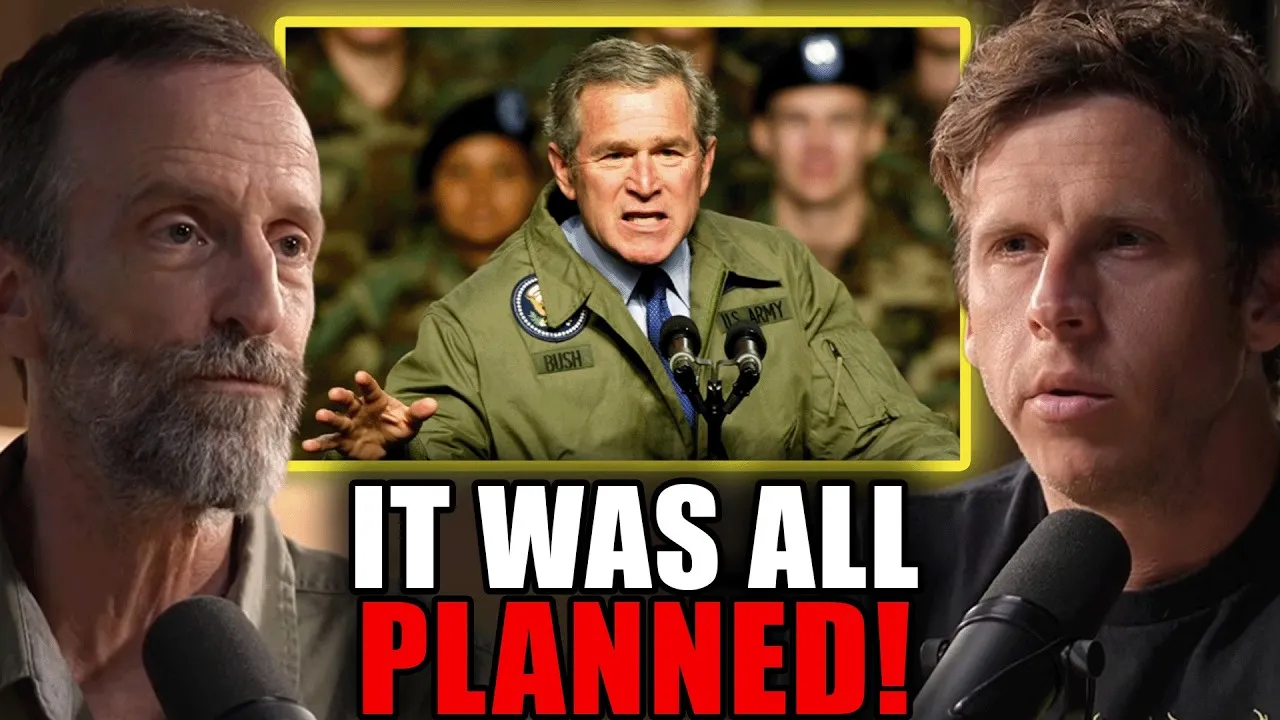
Scott Horton says the Iraq War was planned in 1992 by the same neocons who wrote a plan for Netanyahu in 1996
The antiwar author lays out the paper trail connecting Paul Wolfowitz's 1992 global dominance memo to a literal strategy document his colleagues wrote for the Israeli prime minister four years later.
Listen on YouTube
 WATCH NOW↓
 The Iraq War did not begin in 2003. According to Scott Horton, it began on paper in 1992, when Paul Wolfowitz and a tight circle of neoconservatives wrote a classified memo arguing that America should use its post-Cold War window to become the unchallengeable military and financial power on earth, forever. Everything else, the WMD claims, the Office of Special Plans, the Ahmed Chalabi circus, was downstream of that document.
Horton, an antiwar author and radio host who has spent two decades in the weeds of this material, walked Danny Jones through the lineage with the patience of someone who has watched the general public forget it three separate times. The argument is not conspiratorial in the tinfoil sense. The documents are real, the names are public, and several of the people involved have confirmed the broad strokes on television. What Horton does is connect them into a single throughline, which turns out to be more damning than any one document alone.
The Paper Trail
Start with the Defense Planning Guidance for fiscal year 1994, written at the end of the first Gulf War by Wolfowitz, Zalmay Khalilzad, and Scooter Libby. It was leaked to the New York Times, became a minor scandal, got rewritten, and then said essentially the same thing with better manners. America would dominate Europe, Eurasia, and East Asia so completely that Russia, China, and Europe combined would not even consider mounting a challenge. From that seed, Horton traces a direct line to a 1996 document called ‘A Clean Break,’ written by Richard Perle, David Wurmser, and Douglas Feith as a strategy memo for Benjamin Netanyahu on the occasion of his first election as Israeli prime minister. The recommendation: forget land-for-peace, pursue dominance over your neighbors, and start by removing Saddam Hussein from Iraq.
This was a plan that they wrote for Netanyahu in 1996. This is when he’s incoming to be prime minister of Israel for the first time.
The logic of ‘A Clean Break,’ as Horton tells it, was a Rube Goldberg contraption that depended on about six things going right in sequence, none of which had any historical basis. Remove Saddam, install a Hashemite king from Jordan’s royal family in Baghdad, the Hashemite king’s claim to descent from the prophet Muhammad would hypnotize Iraq’s Shia majority into compliance, the compliant Shia would then tell Hezbollah to stop being friends with Iran and start being friends with Israel, and someone would build an oil pipeline from Kirkuk to Haifa. Horton is not being uncharitable here. That is what the document says. And the entire scheme rested on the assurances of Ahmed Chalabi, an Iraqi Shia exile who had been convicted in absentia in Jordan for embezzling millions from his own bank and whose CIA-backed coup attempt in 1995 had already collapsed.
Ahmed Chalabi assures us that this is how it works, right? And so, well, what the hell, we’re spending the time on it. This was the idiot Rube Goldberg scheme.
Wesley Clark’s Memo and the List of Seven
The thread connecting the 1992 memo to the actual 2003 war runs through Wesley Clark, the four-star general who commanded NATO forces in Europe under Bill Clinton. Horton says Clark told him directly, in a televised debate on Piers Morgan’s show, that Wolfowitz had pulled him aside in 1991 and said the U.S. now had a window to go into the Middle East and remove the former Soviet client states, meaning Syria and Iraq especially. Then, in October or November 2001, two months after September 11th, a Pentagon officer showed Clark a memo listing seven countries to be hit in five years: Iraq, Syria, Lebanon, Libya, Somalia, Sudan, and Iran.
He comes back a couple of weeks later and the same guy says, ‘Hey, there’s this memo.’ And it says that they want to hit seven countries in five years.
Horton’s verdict on all of it is blunt: this was not strategic miscalculation. It was ideological capture. The same people who wrote a strategy document for the Israeli government went on to staff the Office of Special Plans under Douglas Feith, which produced the cherry-picked intelligence that sold the war to Congress and the public. The thinking behind Iraq War II, as he puts it, was ‘absolute idiot thinking.’ He means that sincerely, not as provocation. The plan failed on its own terms before the first bomb dropped because the history of every precedent, including the British-installed Hashemite monarchy that collapsed in the 1950s, said it would.
If David Wormser had known his history at all, he would know that no, putting a Hashemite in Baghdad is not going to be a magic spell over the Shiite population there.
Is Horton’s framing self-serving? Somewhat. He is an antiwar advocate with a book to sell, and collapsing two decades of foreign policy into a single neocon conspiracy flattens a lot of institutional inertia, congressional cowardice, and post-9/11 public panic that also fed the war. But the documents he cites are real, the names check out, and Wesley Clark’s account has been on the record for twenty years. The claim that Iraq War II was planned before September 11th is not a fringe position. It is, at this point, close to the historical consensus. Horton just says it faster and angrier than most historians will.
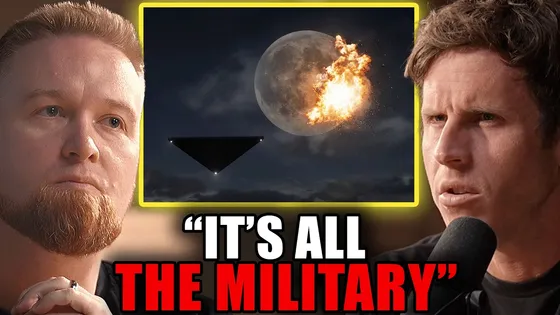
Darcy Weir says the US Air Force planned to nuke the moon in 1958 to flex on the Soviets
The UFO documentary filmmaker revisits Project A119, a Cold War scheme that proves our actual space history is much weirder than the flying saucer rumors.

Ioan Grillo says Mexican cartels are dropping fire extinguisher bombs from drones to empty villages
The cartel arms race is not just bigger guns, Grillo argues, it is cheap drones, hacked phones, and a grim little feudal project in the mountains.
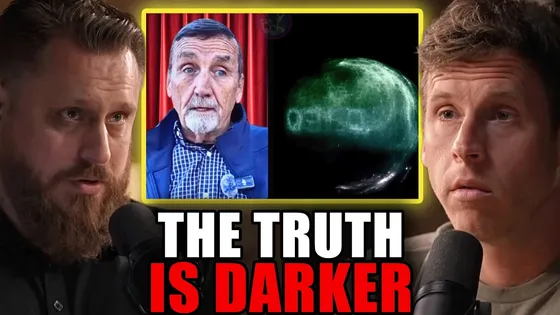
Nathaniel Gillis says Chris Bledsoe's 'Merlin' label means a category of UFO contactee, not the wizard
On Danny Jones Podcast, Gillis turns the goofiest-sounding Bledsoe lore into a darker theory about government study, contactees, and weaponized ridicule.
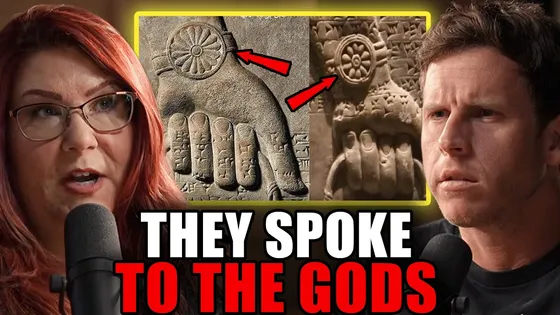
Heather Lynn says the Anunnaki wristwatches were poppy cuffs from Nimrud, not alien watches
On Danny Jones, Lynn gives the ancient aliens internet a delightfully terrestrial answer, then pushes it into a bigger claim about opium, mushrooms and Mesopotamian altered states.
The circuit, read weekly. No noise.