Maureen Callahan says Jason Sudeikis is a mean guy and a piece of hot garbage
The celebrity nice-guy brand takes another dent as Callahan and Rob Shuter argue that the Ted Lasso star’s image is starting to crack.
Listen on YouTube · Spotify · Apple Podcasts
 WATCH NOW↓
 Maureen Callahan did not nibble around the edges of Jason Sudeikis’s reputation. She called him a mean guy, then upgraded the insult to “a piece of hot garbage,” which is less a critique than a trash-can lid being slammed in an alley.
The target is not just Jason Sudeikis. It’s the whole Sudeikis industrial complex, the cuddly-sweater aura of Ted Lasso, the carefully misted nice-guy glow that celebrity culture loves to project onto men who play wounded decency for a living. Callahan’s read is simple: don’t buy it.
Jason Sudeikis is a mean guy. He’s a piece of hot garbage. I’m very happy Olivia Wilde got out of that marriage. Who wouldn’t run off with Harry Styles?
Subtle, no. Searchable, absolutely. The line has the clean burn of a group chat screenshot and the moral certainty of someone who has decided the nice-guy act is evidence, not defense.
The Ellen comparison is the real accusation
Rob Shuter gives Callahan’s insult its operating theory. He says the Sudeikis image problem got worse after Hannah Waddingham spoke about their relationship as love-hate and described him as difficult. From there, Shuter reaches for the comparison every celebrity with a smiley public brand fears: Ellen DeGeneres.
We’d heard the rumors, we’d heard that he was difficult, but when she said in an interview with Variety, this was not a really hard interview. It’s kind of a soft cover story for her to volunteer that they had a love-hate relationship, that he was difficult, was a bombshell.
It’s like the Ellen story. Once the dam breaks, everybody will tell you the truth.
That is the segment’s most telling move. The Ellen comparison is not about one bad quote or one bad day. It’s about a familiar celebrity arc: public kindness as costume, workplace whispers as counterprogramming, then one sanctioned quote that lets everyone else stop pretending.
Is that fair to Sudeikis? Based only on what’s offered here, it’s more theory than dossier. Callahan and Shuter don’t present a stack of new evidence. They present a vibe, a handful of public breadcrumbs, and a very marketable suspicion: that the man who made America cry about biscuits and belief signs may not be nearly as lovable when the cameras stop rolling.
Nice-guy branding is now a liability
The nastiest part of the argument is also the most culturally useful. Shuter is not just saying Sudeikis behaved badly. He is saying the insistence on being seen as good is itself suspicious. That’s catnip for celebrity gossip, because it turns reputation into a trap: the nicer the image, the harder the fall.
The people that are the worst are the ones that want us to think they are the best.
Callahan even floats Tom Hanks as a future subject for the same theory, which is both hilarious and radioactive. It tells you how expansive this suspicion has become. The culture no longer just doubts villains. It doubts saints. Maybe especially saints.
The problem is that this logic can get lazy fast. A public persona is not an alibi, but it also isn’t a confession. Some beloved performers are probably exhausting. Some are probably fine. Some may simply be famous enough that every awkward divorce quote becomes a referendum on their soul.
Still, Callahan’s line will travel because it punctures the exact balloon Sudeikis has been floating under for years. If the Ted Lasso halo keeps dimming, the next question is not whether people liked the character. It’s how much of the character they thought they were buying in the man.
- What exactly did Maureen Callahan say about Jason Sudeikis?
- Callahan said her operating theory is that Jason Sudeikis is a mean guy, then escalated it to calling him a piece of hot garbage. She framed Olivia Wilde leaving him as understandable, even joking that anyone might run off with Harry Styles.
- What did Rob Shuter add to the Jason Sudeikis claim?
- Shuter argued that Sudeikis has had bad press lately and connected that to Hannah Waddingham speaking publicly about a difficult love-hate dynamic. His bigger point was that once one person breaks the seal on a celebrity’s reputation, others start talking.
- Is the claim against Jason Sudeikis proven here?
- No. The segment presents a strong gossip-world read, not a courtroom brief. Callahan and Shuter make a case from image management, recent press, and industry whispers, but the claim is more reputational grenade than documented exposé.

Rob Shuter says Today made him call gossip 'celebrity buzz' before its tabloid makeover
The gossip columnist argues NBC's morning flagship isn't newly tabloid, it just stopped pretending the towels were the classy part.
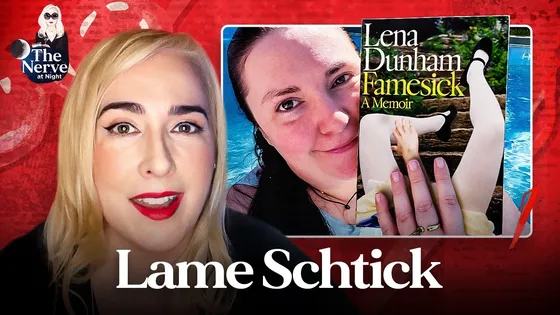
Maureen Callahan says Lena Dunham unloaded on Bruce Springsteen about Jack Antonoff in a Mayfair nightclub
Callahan’s read of Fame Sick is that Dunham protects Taylor Swift, punishes Jack Antonoff, and saves the wildest therapy session for Bruce Springsteen.

Maureen Callahan says Jack Schlossberg’s Caroline Kennedy campaign video proves the Kennedy brand is tarnished
The jab is brutal, and a little too pleased with itself, but the central point is sharp: dynastic glamour can look desperate when the heir starts losing.

Maureen Callahan says Paramount slapping Mark Ruffalo as anti-Semitic is Hollywood’s canary in the coal mine
The claim is not just that Ruffalo picked a fight with David Ellison, it’s that Paramount’s response signals a new studio posture toward anti-Israel celebrity politics.
The circuit, read weekly. No noise.