Pierre Rogers says he got one interview after 1,500 job applications following federal prison
On Nightmare Success, Rogers turns a familiar reentry complaint into a brutal number: 1,500 applications, one interview, then the realization that nobody was opening the door.
Listen on Nightmare Success · YouTube
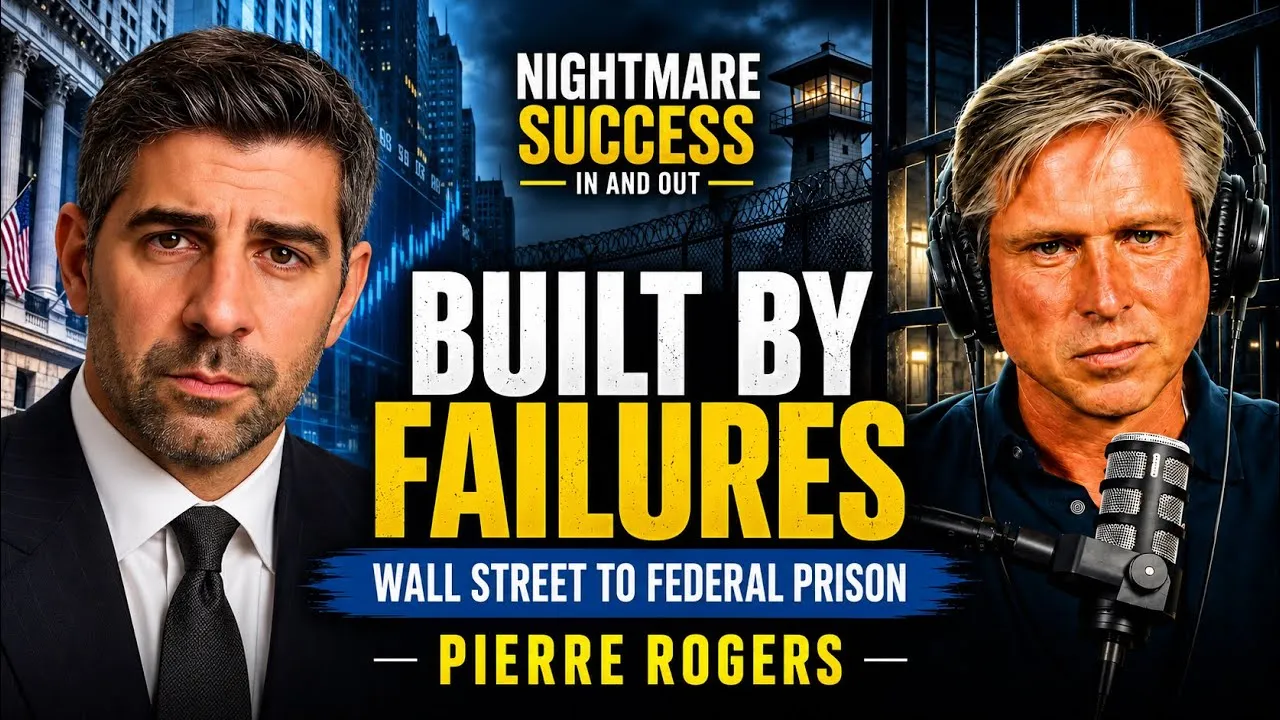 WATCH NOW↓
Pierre Rogers said on Nightmare Success that after leaving federal prison, he submitted a little over 1,500 job applications and received only one interview. Rogers, a former finance executive and entrepreneur, used the number to argue that reentry for people with criminal records is less a second chance than a locked vestibule with fluorescent lighting.
That is the detail that sticks. Not the Ferrari before 30. Not the Wall Street hustle. Not even the midnight arrest story, though that one comes with the full prestige-TV lighting package: Hawaii, 3 a.m., cold hotel room, wife calling from California to say armed men are at the house. The 1,500-to-one ratio is the episode’s coldest statistic because it lands after all the redemption language has already done its pushups. America loves a comeback story. America is less excited about interviewing the comeback.
Rogers’ story, as he tells it to host Brent Cassity, starts in poverty in North Conway, New Hampshire, moves through institutional finance and startup life, then collapses into a federal case involving fraudulent government loan applications. He says his CFO, also his best friend of more than 20 years, inflated payroll numbers on PPP loan applications and stole from him personally. But Rogers is careful, maybe obsessively careful, not to present himself as merely the wronged guy in the room. He hired the person. He was the leader. He ignored warnings. That matters, because the episode’s strongest section is not a plea for pity. It is a grim little audit of consequences.
أنا مسؤول بنسبة 100%عن كل ما حدث. لقد وظفت هذا الشخص، ولم أشرف عليه بشكل صحيح. كنت قائد هذه المنظمة.
The comeback hit the HR filter
After prison, Rogers says the official rule was simple: find work. The actual rule was nastier: find work while carrying a record that makes employers vanish before the real conversation begins. This is where reentry stops being a slogan and becomes a spreadsheet from hell.
قدمت ما يزيد قليلاً عن 1500 طلب وظيفة.
وحصلت على مقابلة واحدة فقط من بين 1500 طلب.
The claim is specific enough to be useful and brutal enough to be credible. Rogers says he applied for roles that fit his background and for low-paid remote data-entry work, overnight shifts, retail jobs, Walmart-style shelf-stocking, Starbucks-type openings, anything that might satisfy the requirement and produce a paycheck. One interview. Out of 1,500.
Is that number independently verified in the episode? No. Cassity does not stop the tape and demand a Google Sheet. But as a claim about federal prison reentry, it tracks with the larger, ugly truth: a criminal record is one of the few credentials that makes you overqualified for shame and underqualified for everything else. Rogers had finance experience, leadership experience, startup experience, sales experience. Then one checkbox turned him into a liability before anyone had to say the illegal part out loud.
Cassity, who has his own federal prison history, sharpens the point rather than softening it. He argues that while many kinds of discrimination are legally forbidden, discrimination against someone with a felony record remains built into ordinary life: jobs, housing, licenses, memberships, the dull machinery of permission. He also mentions the much-cited figure of roughly 80 million Americans with criminal records, which turns Rogers’ anecdote into something larger than one ex-executive’s bruised ego.
Rogers’ best line is corny because it had to become real
The motivational pivot arrives exactly where you expect it to arrive, wearing the expected shoes. Rogers says he eventually realized he could not keep trying to walk through someone else’s door. He had to build his own. On most podcasts, this is where the LinkedIn confetti cannon goes off. Here, because the preceding number is 1,500, the line earns more patience than it normally would.
المشكلة هي أن عليّ أن أبني بابي بنفسي.
Rogers is now building a public life around that idea. He talks about going to Washington, meeting with people connected to the Bureau of Prisons, speaking on ethics and leadership, visiting prisons, and writing under the banner Built by Failures. He also works at a software company making AI avatar videos, which is either a tidy symbol of reinvention or the most 2026 job description imaginable. Probably both.
The episode is better when Rogers is concrete than when he is inspirational. His prison stories have the ring of specific memory: the man called The Rock telling him to hold his head high, the terrifying-looking Pacific Islander in the food line who breaks down when Rogers tells him drug dealing still taught him supply, demand, logistics, and sales, the free can of Folgers from a stranger after a commissary fight. Those scenes complicate the cartoon version of prison as either pure danger or pure redemption. Mostly it sounds like a place where people are starved for dignity and occasionally pass it around like contraband.
Rogers’ big idea, that failure can become an asset, is not new. Every airport bookstore has been selling that sentence in hardcover since the dawn of rolling luggage. What makes his version worth hearing is the invoice attached to it: a wrecked reputation, 18 months served, a family shaken, a best friend turned cautionary tale, and then 1,500 applications for one interview. That is not failure as branding. That is failure as an applicant tracking system deleting your name before lunch.
If Rogers is right, the listener’s takeaway is uncomfortably practical: don’t wait until a crisis to learn whether your career depends on one gatekeeper, one reputation, one clean background check, one friend you never audited. Build the door before you need it.
- What did Pierre Rogers say about job applications after prison?
- Pierre Rogers said he submitted a little over 1,500 job applications after leaving federal prison and got only one interview. His point was not that he lacked experience, since he had spent years in finance and entrepreneurship, but that a criminal record can close the door before a background check even happens. The number is the episode’s sharpest argument for how reentry works in practice: lots of rhetoric about second chances, very few actual callbacks.
- Why did Pierre Rogers say he had to build his own door?
- Rogers said repeated rejection made him realize the problem was not just a wall in front of him, but the absence of any door he could legally or professionally walk through. Instead of waiting for an employer to overlook his record, he concluded he had to create his own opportunity. It is motivational-poster language, sure, but the 1,500-applications detail gives it teeth.
- What was Pierre Rogers convicted over?
- Rogers described the case as involving PPP loans and inflated payroll figures tied to his company’s CFO, whom he also says was his close friend. He repeatedly says he accepts full responsibility as the leader who hired and failed to supervise that person. The episode is careful to frame the legal disaster as both betrayal and leadership failure, not as pure innocence.
Jennifer Michele Helm says she found out she was federally indicted by email after smoking a joint in Laguna Beach
The former luxury interior designer describes federal fraud charges arriving not as a dramatic knock at the door, but as an email interrupting a very California morning.
Stuart Anderson says admitting he saw red flags helped turn him into a federal fraud defendant
The former attorney says he thought he was helping investigators, then walked himself straight into the legal phrase every white-collar defendant learns too late.
Dickie Scruggs says inmates were relieved he was a 'real criminal' and not a child molester
The former King of Torts gives a bleakly funny account of how status works inside federal prison, where even disgrace has its own hierarchy.
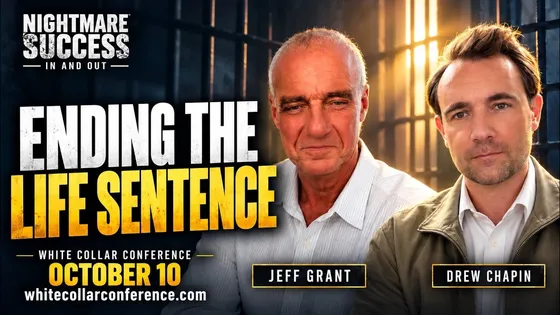
Jeff Grant says you're more likely to be struck by lightning than get a presidential pardon
On Nightmare Success, Grant turns the pardon fantasy into a brutal reentry math problem.
The circuit, read weekly. No noise.