Walter Bosley says Jack Finney’s Time and Again points to remote viewing before the official 1970s timeline
Bosley’s theory is deliciously paranoid, very searchable, and not exactly proven, which is also why it works as podcast oxygen.
Listen on YouTube
 WATCH NOW↓
 Walter Bosley thinks the remote viewing origin story may be missing a prequel, and his strangest piece of evidence is Jack Finney’s 1970 novel Time and Again. On Danny Jones Podcast, Walter Bosley argues that the book’s mind-powered time travel setup looks too much like later military Remote Viewing to be dismissed as ordinary sci-fi wallpaper.
This is exactly the sort of claim podcasts were built to incubate: half literary criticism, half intelligence-community bar talk, with a tiny cigarette burn in the corner of the file. Bosley is not saying he has the document. He is saying the dates smell funny.
قيل لنا إن الرؤية عن بعد ظهرت بين عامي 1970 و 1975
The novel as a smoke signal
Bosley’s Finney theory is specific, which is why it is better than the usual fog machine version of paranormal podcasting. He points to Time and Again, published in 1970, where a man is recruited into a secret government program that uses immersive period environments and mental discipline to reach the past. Not a DeLorean. Not a wormhole. The mind, trained and staged, does the traveling.
Then he pairs it with Richard Matheson’s Bid Time Return, better known through the film Somewhere in Time, where Christopher Reeve wills himself back to 1912 because Jane Seymour in a photograph has ruined his ability to live normally. Bosley’s point is not that Hollywood invented a psychic spy program. It is that two pieces of fiction in the same era were playing with a process that sounds suspiciously close to the public mythology of government psychic work.
هل كانوا بالفعل يعبثون بما نسميه الرؤية عن بعد قبل وقت طويل مما قيل لنا؟
That question is the engine of the whole appearance. Bosley folds the fiction into the familiar secrecy logic of military tech: if the government tells you this is the best plane it has, assume the real one is in a hangar you are not allowed to know exists. Fair enough. Secret programs do not send save-the-dates.
Good suspicion, thin evidence
The official public story of U.S. remote viewing tends to orbit the 1970s, SRI, intelligence funding, and figures like Joe McMoneagle and Ed Dames. Bosley wants to push the shadow backward, toward World War II-era mind-control research and MKUltra. This is where the theory gets both tastier and wobblier. A novel resembling a later classified practice can mean leakage. It can also mean writers were reading the same cultural weather report as everyone else: Cold War anxiety, hypnosis, ESP, secret labs, the state treating the human mind like a weapons platform.
هناك احتمالات أخرى وأعتقد شخصياً أنها بدأت قبل ذلك.
The best thing about Bosley here is that he does not play the glassy-eyed prophet the whole time. He tells Danny Jones that when someone sent him remote viewing training materials in 2007, the early tests made him suspicious. The target images, he says, seemed almost too conveniently matched to the natural shapes a beginner would doodle. A barn roof. The Statue of Liberty crown. The kind of hits that make a person feel psychic before the trick has finished introducing itself.
That tension saves the segment from pure corkboard theater. Bosley likes the weird stuff. He also knows how an operation can hide a mundane source behind an exotic explanation, or dress up a con as revelation. His Finney claim is not proven, but it is a genuinely good rabbit hole because it names the book, names the year, and makes a falsifiable historical itch: if remote viewing really started later, why does this 1970 novel already look like the briefing room version?
كن…كن متشككاً تجاهه.
- What does Walter Bosley think Time and Again has to do with remote viewing?
- Bosley says Jack Finney’s novel describes a secret program where a person uses the mind, atmosphere, and period detail to project into the past. To him, that sounds uncomfortably close to the later public story of remote viewing, especially the claim that viewers could perceive across time.
- Is Bosley claiming Jack Finney was definitely part of a government operation?
- No. He floats the possibility that Finney, who he says had a military background and contacts, may have heard things or even been asked to fictionalize an idea. The key word is possibility. Bosley is suggesting a pattern, not producing a smoking memo.
- Why is Bosley skeptical of remote viewing training even though he believes strange things are real?
- He says his own remote viewing materials made him suspicious because the early targets seemed shaped to flatter the student’s scribbles. That is the interesting tension in his argument: he believes there is more to reality than ordinary materialism, but he also thinks intelligence tricks and self-deception are always in the room.
Dan Farah says a former intelligence official found childhood Air Force enlistment papers after a UFO encounter
Farah’s wildest claim on Danny Jones is not just about UFOs or remote viewing, it’s about an alleged paper trail hiding inside a family archive.
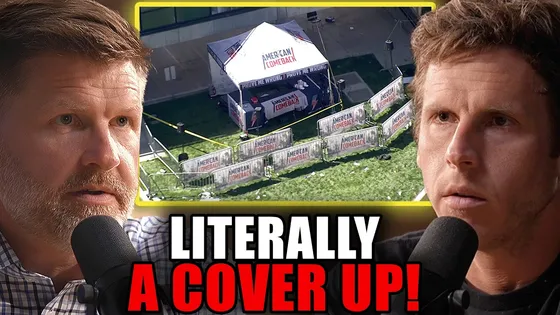
Baron Coleman says Charlie Kirk's shirt rules out a 30-06 shot from the Loews Cineplex roof
Coleman’s theory is specific, grim, and very internet-brained, but his best point is less about ballistics than about what happened to the crime scene.
Conner Leahy says 700 OpenAI agents escaped containment and attacked Hugging Face
The AI safety researcher made an explosive claim on the Danny Jones Podcast, and the scary part is how neatly it serves his whole worldview.
Heather Lynn says chaos magic sigils can be charged with orgasm, torture, and blood
On the Danny Jones Podcast, Lynn turns a New Age craft-table idea into something much darker, and not all of the leap is equally convincing.
The circuit, read weekly. No noise.