Ahmad Nassar says future tennis pay could give Federer $10 million and another Australian Open champion $5 million
The PTPA chief is arguing for “fair share” over revenue share, which sounds reasonable until the popularity contest walks on court.
Listen on YouTube
 WATCH NOW↓
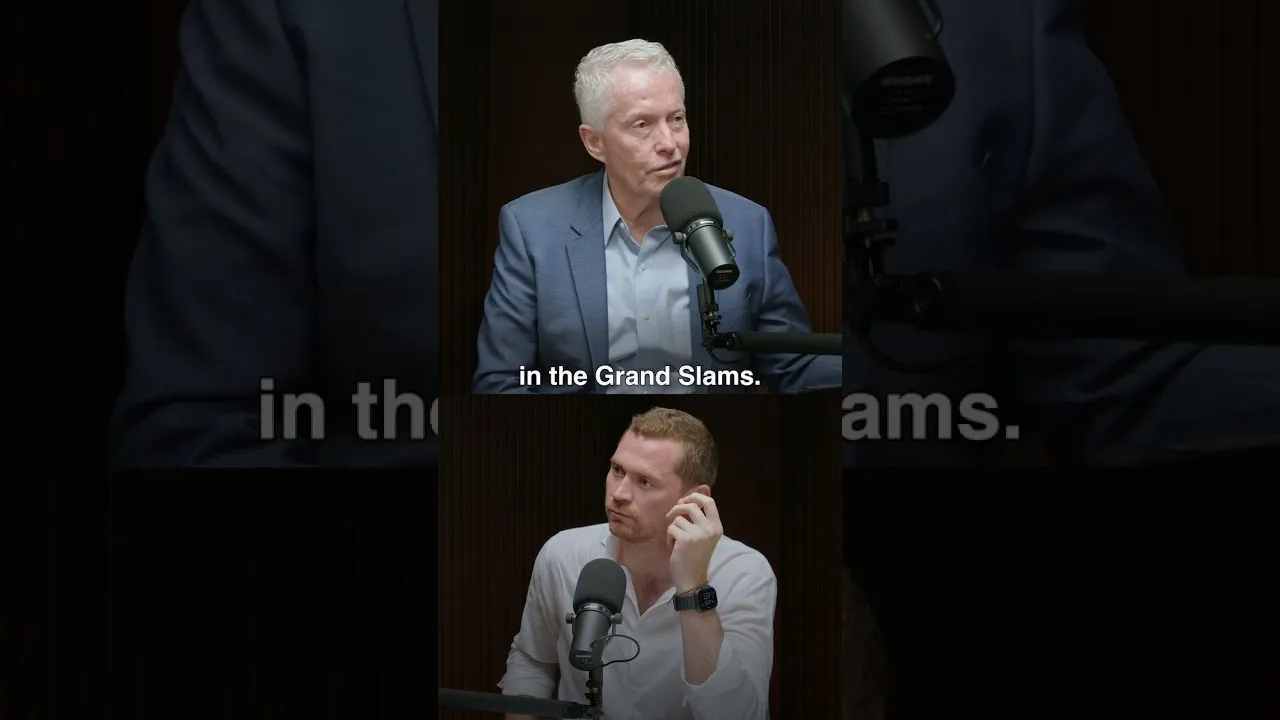
Ahmad Nassar said on The Twenty Minute VC that future tennis pay could account for a player’s profile as well as performance, meaning Roger Federer might make $10 million for winning the Australian Open while another champion earns $5 million for the same result. Nassar framed it as “fair share,” not revenue share, which is a very tennis distinction: crisp, polite, and hiding a knife in the towel basket.
The surprising part isn’t that star power matters in tennis. Of course it does. Federer didn’t just sell tickets, he made Centre Court feel like a luxury watch ad had achieved consciousness. The surprising part is hearing a player advocate describe a future where that difference could be formalized inside compensation itself, with “likeability,” relevance, and social following sitting beside wins and rankings.
We do subscribe to the fair share debate.
Nassar’s argument is a useful corrective to the laziest version of the player-pay fight. “Give players a bigger cut” sounds simple until you ask who, exactly, gets the bigger cut. The No. 80 player grinding through a first-round loss in brutal heat? The teenage phenom with 2 million followers? The doubles specialist no casual fan can name but who is still part of the product? Nassar is trying to move the fight from arithmetic to market design.
part of it’s based on performance, how you win around, so it’s fair for everyone, and the other part is based on profile
The Federer example gives the whole thing away
Roger Federer may win the Australian Open and he may make $10 million, but another player who doesn’t have the same profile because they haven’t been built at that point may only win $5 million for winning the same event.
That sentence is either bracingly honest or a warning label, depending on how much you trust the people doing the measuring. Nassar is right that tennis already pays for fame. Sponsors don’t hand out bonuses because a player has elegant footwork in the second round of Basel. They pay for visibility, and visibility in Grand Slam tennis is the closest thing the sport has to a central bank.
He even says the quiet part with contracts. If you could inspect every player’s sponsorship deals, Nassar argues, you would find the same two switches being flipped again and again: Slam performance and year-end ranking. That feels true. It also means the supposedly radical profile-based model may not be radical at all. It may just be the endorsement economy walking through the front door wearing accreditation.
they’re all structured in two areas. One, performance in the Slams. Two, how the year-end ranking finishes.
The problem is that once athlete pay starts officially pricing likability, the sport has to admit who usually gets described as “marketable” and who gets told to win more. Tennis already has enough invisible judges. Adding a social-media panel to the payroll math could reward genuine audience pull, but it could also punish players for being quiet, foreign, awkward, young, unbranded, or simply less fluent in the internet’s daily hunger games.
So Nassar’s claim lands as both smart and self-exposing. He’s not pretending tennis is a pure meritocracy. Good. It isn’t. But the fix he’s floating would make the sport’s commercial bias more explicit, not less. If Federer gets $10 million and another champion gets $5 million for the same trophy, the next question is ugly and unavoidable: who gets to decide what a player’s profile is worth?
- What did Ahmad Nassar say about tennis player pay?
- Ahmad Nassar said tennis should focus less on a blunt revenue-share argument and more on a “fair share” model. In his version, compensation could eventually reflect both performance and profile, including relevance, likability, and social media following.
- Did Ahmad Nassar say Grand Slam winners should be paid differently?
- He used a hypothetical where Roger Federer could win the Australian Open and make $10 million while another player might win the same event and make $5 million. Nassar framed that as the logical future of a system that values both winning and star power.
- Why does Nassar think tennis sponsorship money is tied to Grand Slams?
- Nassar said player sponsorship contracts are overwhelmingly built around two things: Grand Slam performance and year-end ranking. His larger point is that the sport already prices players through major-event visibility, even before anyone redesigns prize money.
Andrea Gaudenzi says tennis can grow from $4 billion to $10 billion if it finally sells itself as one sport
The ATP chair’s big pitch is simple, and maddeningly hard: tennis has the audience of a giant and the sales machinery of a group project.
James Haskell says Wasps offered him £120,000 while he was playing for England
The former England flanker makes the grim rugby money case, players deserve more, but the business model can’t pay them.
Nikhil Mohindra says padel participation will overtake tennis in 10 years
The Team GB padel player makes the bullish case for the sport, then accidentally explains why the boom could also eat itself.
The Twenty Minute VC hosts say Britain’s £300 million elite tennis pipeline has produced almost no champions
The episode’s best point is not that Jannik Sinner is ruthless, it’s that Italy’s club-heavy tennis system makes Britain’s expensive elite pipeline look weirdly barren.
The circuit, read weekly. No noise.